
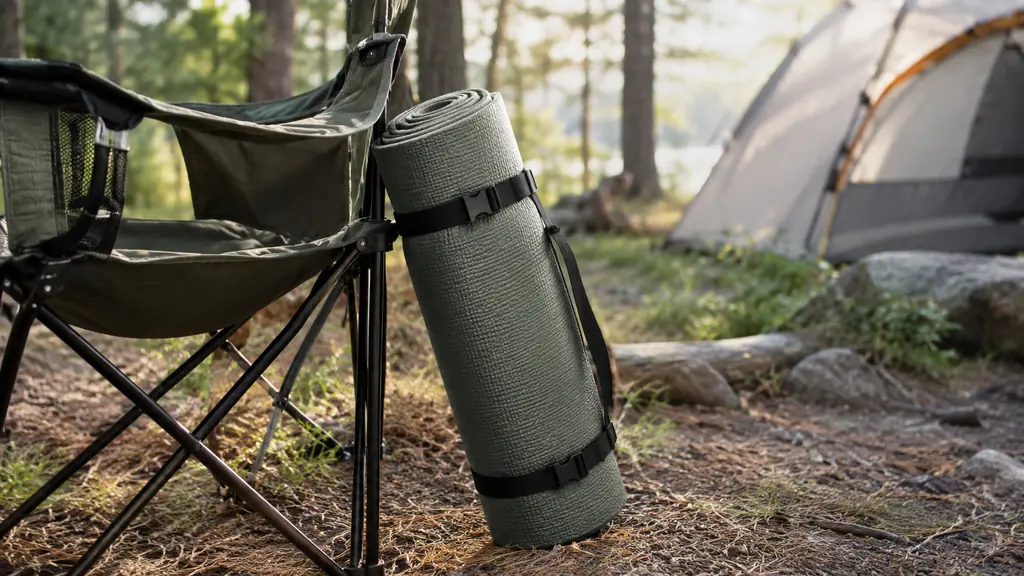
My lower back has been the boss of my gear closet since I turned fifty. I retired from teaching PE two years ago, and the same back that let me demonstrate a proper squat to a room of ninth graders now talks to me every morning after a bad night on the ground. So when I finally traded my cheap inflatable pad for a Therm-a-Rest Z Lite Sol, I did not buy it because it was trendy. I bought it because I was tired of waking up sore, and I wanted to see if a folding foam pad could actually carry a grown man through a full season of Kentucky and Tennessee nights.
This is that season, written down. Twenty-two nights total: a handful of solo overnights in Red River Gorge, two weekend trips on the Sheltowee Trace, one wet stretch at Big South Fork, and a long week in the Smokies with Dana along for the car-camping half. I slept on the Therm-a-Rest Z Lite Sol every one of those nights, and I kept notes on the things that matter to a fifty-four-year-old backcountry sleeper: comfort, warmth, weight, and whether the thing falls apart in a pack.
The Quick Verdict
The Z Lite Sol is the best foam pad I have used for my back, my pack, and my patience. It is not the most comfortable pad on earth, and it will never be that. But it is light, tough, simple, and it lets me sleep well enough to hike the next day. For a weekend backpacker with a cranky spine, that is the whole job.
Amazon Check Today's Price →A foam pad that finally let my back sleep through the night
I carried the Therm-a-Rest Z Lite Sol for a full season of solo overnights and weekend trips. If you want the same pad I used, check the current price on Amazon before you buy anything else.
Amazon Check Today's Price on Amazon →How I've Used It
I bought the Z Lite Sol in early spring, right before the first solo trip of the season. My old pad was a cheap inflatable from a big-box store, the kind that weighs more than it should and sounds like a crinkly chip bag every time you roll over. I had woken up on the ground twice that winter, and my back was done with it. I wanted something I could trust not to leak, and I wanted to know what I was giving up in comfort by going back to foam.
The pad lives in my TETON Sports Explorer 65L pack, strapped to the outside on the side where it does not dig into my back. On solo trips I sleep in my Naturehike Cloud-Up 2 tent, and I lay the pad directly on the tent floor with my sleeping bag on top. On car-camping trips with Dana, I use it the same way, just on a bigger tent floor. I also used it as a sit pad on every lunch break, every stream crossing, and every time I stopped to catch my breath on a climb. That is the part of the review the spec sheet does not tell you: this pad gets used all day, not just at night.
The first night out was a Friday in late March. I parked at a trailhead on the Sheltowee Trace, hiked about two miles in, and set up the Naturehike Cloud-Up 2 next to a creek that was running high from the rain. I unrolled the Therm-a-Rest Z Lite Sol on the tent floor, crawled in with my bag, and lay there for ten minutes just feeling the surface. That first night I woke twice, once at 1 a.m. and once at 4 a.m., and both times I noticed the ridges under my hip before I fell back asleep. By the second trip, a weekend at Red River Gorge, I stopped noticing them altogether. I also started keeping the notebook in the side pocket of my pack, and I wrote down the temperature, the elevation, and a one-line verdict on the pad after every night. That habit is the only reason I can tell you this season's numbers with any confidence.
Why I Switched from Inflatable to Foam
I will be honest: I did not want to switch. Inflatable pads are more comfortable, and everyone on the trail seems to have one. But I had three specific problems that foam solved. First, my inflatable leaked. It was not a dramatic blowout, just a slow hiss that left my hip on the ground by three in the morning. Second, the crinkle noise woke me up every time I turned. Third, I was tired of the ritual: blow it up, find the leak, patch it, hope it holds. The Therm-a-Rest Z Lite Sol fixed all three on the first night, and it has not failed once since.
The decision came on a February night on the Sheltowee Trace, a month before I bought the Z Lite Sol. I woke at 3 a.m. with my left hip on the tent floor and that familiar slow hiss somewhere under my shoulder. I spent twenty minutes in the dark with a patch kit, found the leak along a seam, patched it, pumped the pad back up, and lay down. It held for maybe an hour. The second time I woke, I did not patch it again. I just rolled onto my side and slept on the tent floor with my pack under my hip. The next morning I packed up, drove home, and ordered the Therm-a-Rest Z Lite Sol. That trip also settled the crinkle question. My old pad crinkled with every shift, and I had gotten so used to it that I did not realize how much it was costing me until the first quiet night on the foam.
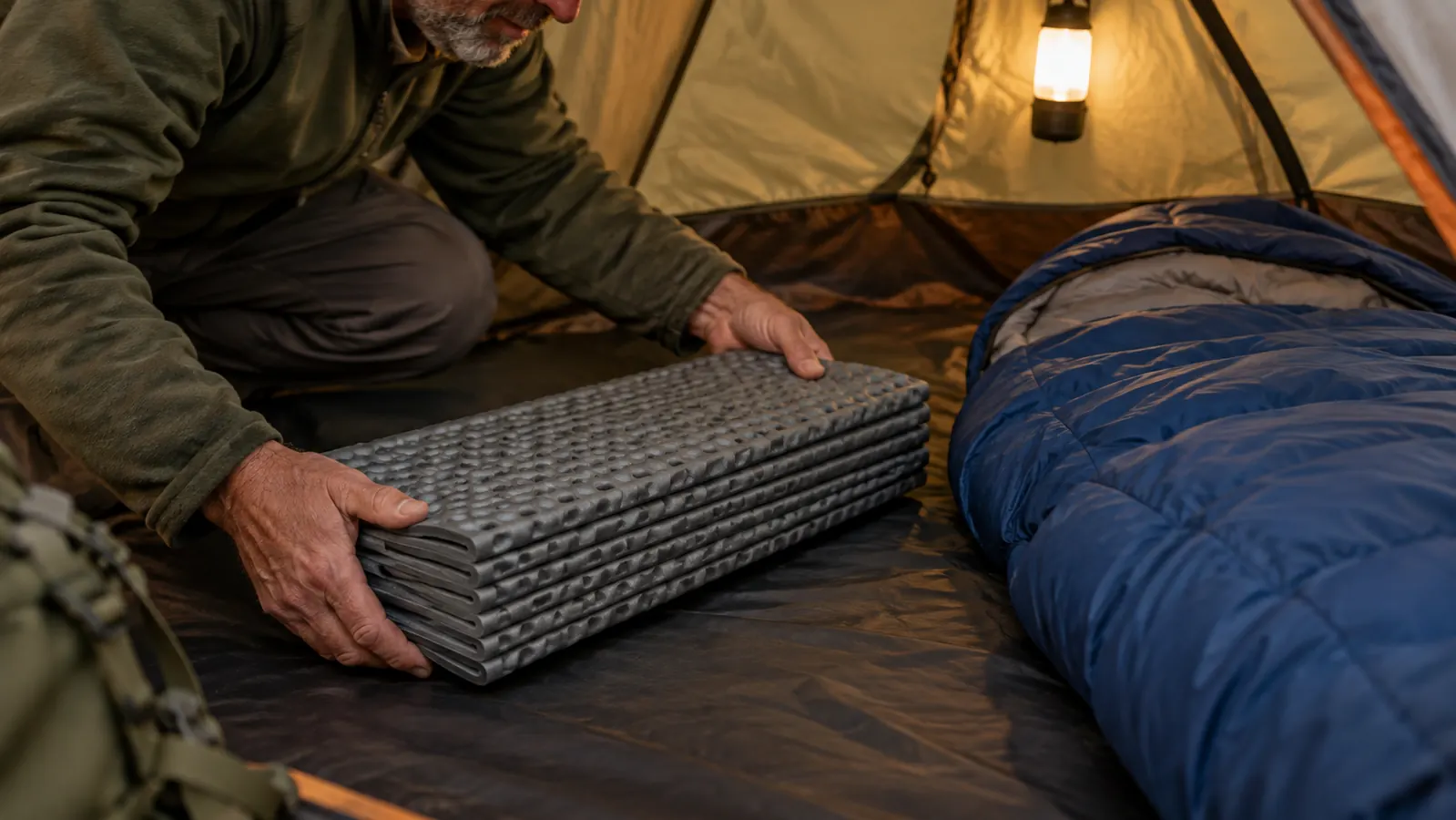
The tradeoff is real, and I am not going to pretend otherwise. Foam is firmer than air, and the egg-crate surface takes a night or two to get used to. The first night I slept on it, I woke up twice thinking about the ridges under my hip. By the third night, I stopped noticing them. My back, on the other hand, noticed the difference immediately. I wake up with less stiffness on the Z Lite Sol than I did on my old inflatable, and that is the reason I have not gone back.
I woke up with less stiffness on the Z Lite Sol than I did on my old inflatable, and that is the reason I have not gone back.
Weight, Fit, and How It Carries
Before the season I weighed both pads on the bathroom scale. My old inflatable with the pump sack and the patch kit came in at about two and a half pounds. The Therm-a-Rest Z Lite Sol was roughly a pound and a half, and that pound made itself felt on every climb. I carry it strapped to the outside of my TETON Sports Explorer 65L, on the side away from my bad knee, and it stays put. It does not flop, it does not snag on branches, and it does not shift when I lean the pack against a tree. The only fit issue is the length. I am six feet tall, and my heels hang off the end by a few inches. On the coldest night at Big South Fork I slid my pack under my feet and slept fine, but I want to be honest that a taller sleeper will be making that adjustment every night.
It folds into a compact stack, which is the part that surprised me most. I expected a foam pad to be bulky and awkward, the way the cheap ones were when I started camping twenty years ago. The Z Lite Sol folds down tight and tucks under the top flap of my pack without eating the whole bag. It is not as small as an inflatable packed away, but it is small enough that the difference never bothers me on the trail.
One thing I learned the hard way: the pad is not a full-length mattress for a tall person. I am six feet tall, and my feet hang off the end by a few inches. That sounds like a small thing, but on a cold night those few inches matter. I solved it by putting my pack under my feet, which works fine. If you are over six feet, know that you will be making the same adjustment.
Warmth and the Cold Nights
The coldest test came in October at Big South Fork. The forecast said the low would be around forty, but a front moved through and the temperature dropped to the low thirties by midnight. The wind came over the ridge in gusts, and the tent walls shook hard enough that I checked the stakes twice. I slept warm the whole night. My sleeping bag was the same twenty-degree bag I have used for years, and on my old pad I would have felt the cold seeping up through the floor by 2 a.m. On the Z Lite Sol, the ground never once reached me. The reflective layer is the reason, and I am convinced it is not a gimmick. I also noticed the moisture difference on the humid nights in the Smokies. The foam surface stayed dry against my sleeping bag, and when I sat on the pad in a light rain at lunch, it was dry again by the time I made camp.
I slept on the Z Lite Sol in temperatures down to the mid-thirties, and I never once felt the cold coming up through the ground. That is the job of a sleeping pad, and this one does it well. The reflective surface is not a gimmick. I noticed the difference on the coldest night of the season, a windy night at Big South Fork when the temperature dropped harder than the forecast said. My sleeping bag was the same one I always use, and I slept warm while the wind shook the tent.
The foam does not absorb moisture, which matters more than you might think. My old inflatable would get damp on the outside on humid nights, and I would wake up feeling clammy. The Z Lite Sol stays dry, and it dries fast if it gets wet. I sat on it in the rain more than once, and it was ready to sleep on by the time I crawled into the tent.
Durability After a Full Season
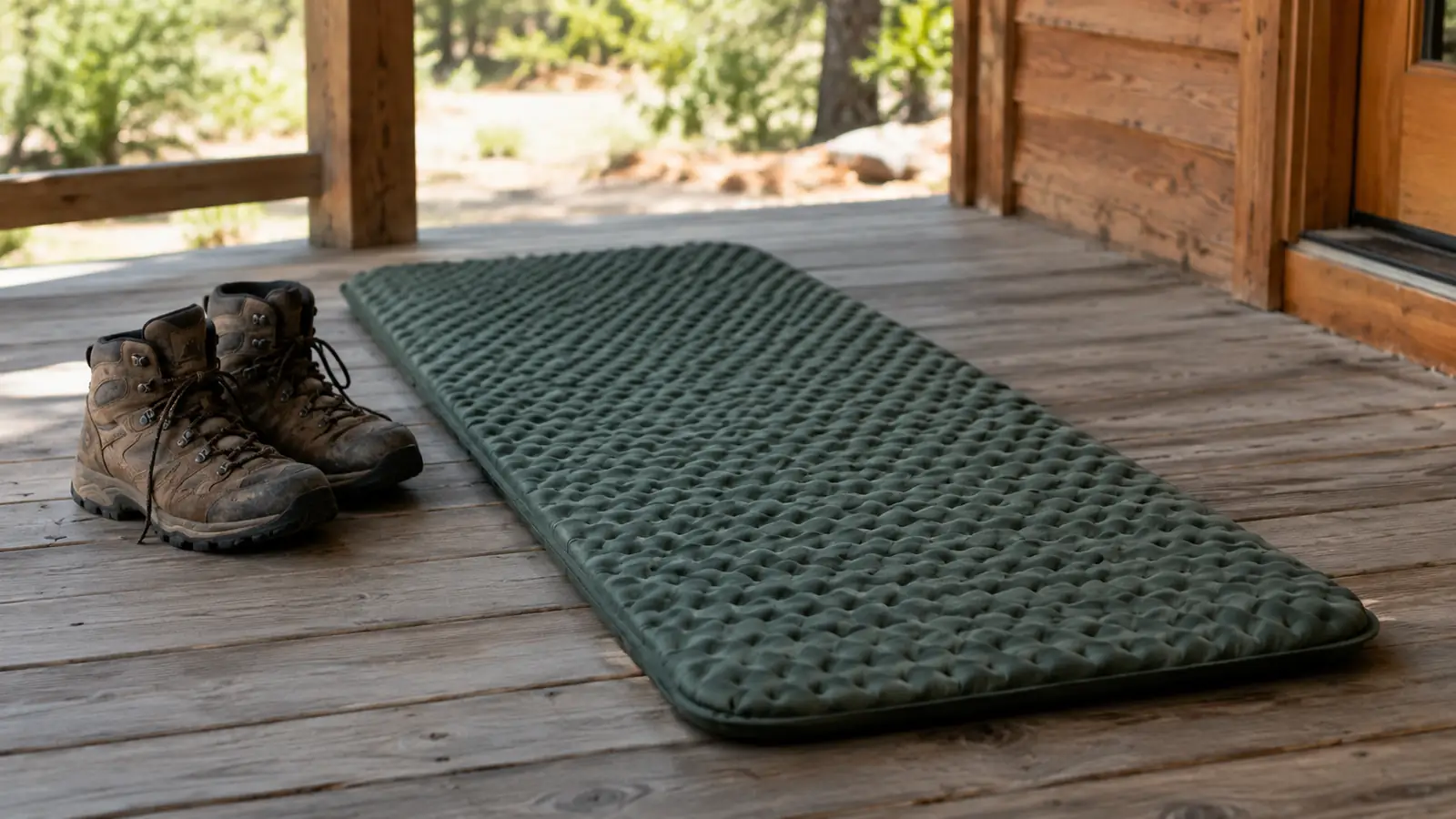
I am hard on gear. I drop my pack, I sit on rocks, I drag things across gravel. After twenty-two nights, the Therm-a-Rest Z Lite Sol looks almost new. There are a few small scuffs on the bottom from being dragged across campsites, but no tears, no crushed sections, no signs of the foam breaking down. The folding hinges are still tight, and the pad still lays flat when I unroll it. I checked the hinges on the last trip of the season, the week in the Smokies, and they were as stiff as the day I bought it. For a piece of gear that costs what this costs, that kind of durability is the whole point.
The one thing I would warn people about is the strap. The strap that holds the pad rolled up works fine, but it is easy to lose if you are not careful. I keep mine tucked inside the fold when I unroll the pad, and I have not lost it yet. It is a small thing, but it is the kind of small thing that turns into an annoying thing on day three of a trip.
What I Liked
- Light enough that I stopped noticing it after the first mile
- Never leaked, never failed, never needed a patch kit
- Warm on nights down to the mid-thirties
- Tough as nails after a full season of abuse
- Doubles as a sit pad on every lunch break
- No crinkle noise when you roll over
Where It Falls Short
- Firmer than an inflatable, and the ridges take a couple of nights to get used to
- Not full length for a six-foot sleeper; my feet hang off the end
- The strap is easy to lose if you are not careful
- Not as plush as a thick air pad on a bad night
Who This Is For
This pad is for the weekend backpacker who is tired of waking up on the ground. It is for the person who wants gear that works every time, without a pump, without a patch kit, without a prayer. It is for the side sleeper with a cranky back who is willing to trade a little plushness for a lot of reliability. If you are the kind of person who packs once and wants to stop thinking about your sleep system, the Therm-a-Rest Z Lite Sol is worth a serious look. I am that person, and it is the pad I reach for every single trip.
Who Should Skip It
If you are a side sleeper who needs a thick, plush pad to sleep at all, this is not it. If you are over six feet and do not want to improvise a foot box, look at a longer pad. If you are a car camper who wants hotel comfort in a tent, get an inflatable and a pump. And if you are someone who thinks of a sleeping pad as a luxury item rather than a tool, the firm foam will probably disappoint you. The Z Lite Sol is honest gear for honest sleepers, and it is not trying to be anything else.
The pad I reach for on every trip now
After a full season of sleeping on it, I have no plans to switch back to inflatable. If you want the same Therm-a-Rest Z Lite Sol I used for all twenty-two nights, check the current price on Amazon.
Amazon Check Today's Price on Amazon →