
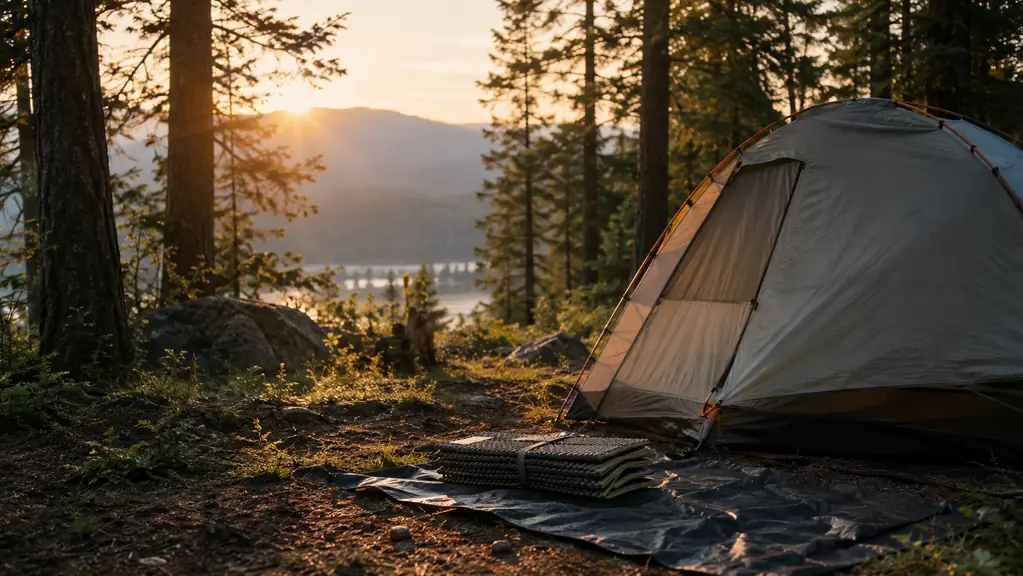
The short answer: if you sleep on your side, toss a lot, or wake up with a sore hip, an inflatable pad wins on comfort almost every time. If you want a pad you can strap to the outside of your pack, drop on bare ground, and never worry about puncturing, the Therm-a-Rest Z Lite Sol is the one I reach for. I have used the Z Lite Sol for two full seasons now, mostly in Red River Gorge and along the Sheltowee Trace, and I have also spent plenty of nights on a friend's inflatable pad to remind myself what I am giving up. This is the honest comparison I wish I had read before I bought my first backpacking pad.
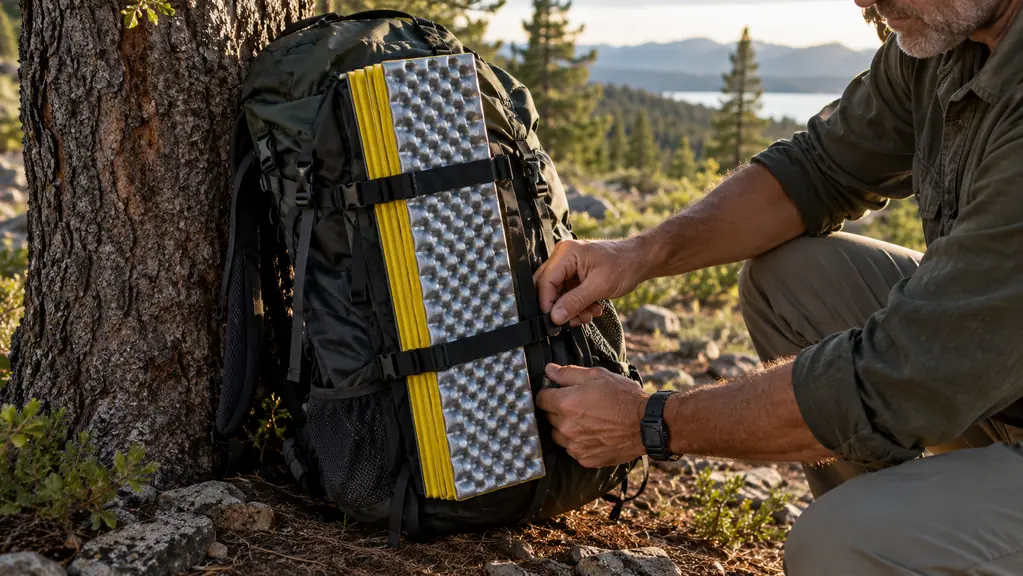
The Z Lite Sol is the foam pad in Therm-a-Rest's lineup that folds into an accordion stack. It weighs about 14 ounces, which is close to what a lot of inflatable pads weigh, but it packs completely differently. Inflatable pads roll down to the size of a water bottle. The Z Lite Sol folds into a block roughly the size of a camp chair, which is why you see it strapped to the outside of packs more often than inside. That one difference drives most of the decision, and it is the reason I own the Z Lite Sol instead of an air pad. Before I bought the Z Lite Sol, I slept on a cheap foam pad from a big-box store, the kind that comes rolled in a plastic strap. It worked, but it was thin and slippery, and my sleeping bag slid off it by midnight almost every trip. I picked this one up two springs ago after a night at Red River Gorge when I woke up on bare tent floor twice. The first trip with it was a two-nighter on the Sheltowee Trace in early May, and I have not thought about my pad since. That is the whole review in one sentence.
My short answer: The Z Lite Sol is the right pad for backpackers who value durability and simplicity over plush comfort. It is not the right pad for side sleepers with sensitive hips.
If you want a pad that will never leave you sleeping on cold ground, the Z Lite Sol is the one.
Two seasons, dozens of nights, zero punctures. It is the most dependable piece of gear I own.
Amazon Check Today's Price on Amazon →The 30-Second Comparison
Here is the whole argument on one page. I compared the Z Lite Sol against a typical inflatable pad in the same weight class, the kind you find in every outdoor store. The winner column is my honest call after sleeping on both.
| Therm-a-Rest Z Lite Sol | Typical Inflatable Pad | |
|---|---|---|
| Weight | About 14 ounces, no pump or patch kit needed | About 13 to 16 ounces before you add the pump sack |
| Packed size | Folds into a block the size of a camp chair, rides outside the pack | Rolls down to the size of a water bottle, fits inside the pack |
| Durability | Solid foam, nothing to puncture, drop it on rocks without a care | A single thorn or dog claw can end the night |
| Comfort | Firm and flat, fine for back sleepers, tough on hips | Thicker and cushioned, noticeably better for side sleepers |
| Warmth | R-value around 2.0, enough for three-season use | Varies widely, some inflatables are warmer, some are colder |
| Setup | Unfold and it is ready, no inflation, no leak check | Needs 5 to 10 minutes of blowing and fiddling after a long day |
| Best for | Backpackers who want a pad they never think about | Sleepers who want the closest thing to their bed at home |
Where the Z Lite Sol Wins
The Z Lite Sol wins the durability argument so completely that I stopped worrying about my pad somewhere in the first month. An inflatable pad is a balloon. It is a carefully glued balloon that you trust to hold air all night, and every rock, stick and pinecone under your tent is a potential 2 a.m. problem. The Z Lite Sol is a slab of closed-cell foam. There is nothing to puncture, nothing to leak, nothing to patch. I have laid mine directly on gravel at a car-camping site, on bare dirt under a tarp, and inside my Naturehike Cloud-Up 2 on rocky tent pads in the Smokies. It has never once let me down. The only time I have ever worried about it was the day I set my pack down on a patch of broken glass at a gravel pull-off near Big South Fork. I flipped the pad over expecting the worst, and there was not even a mark. You cannot do that with an air pad, and you cannot do it with a cheap foam pad either, because the cheap ones dent and flatten after a season of use. This one still springs back to the same firm shape it had the day I unfolded it. That story is why I stopped thinking about durability altogether.
It also wins on simplicity. After a 12-mile day on the Sheltowee Trace, the last thing I want to do is blow up a mattress. With the Z Lite Sol, I unroll it, drop my sleeping bag on it, and I am done. My friend with the inflatable pad spends a solid five minutes puffing into his valve, and he does it again the next morning to pack it. That does not sound like much until you are tired and cold and all you want is to get horizontal. The Z Lite Sol is also the best camp chair I own. I fold it into a low seat, lean it against a log, and sit on it for an hour while dinner cooks. Try that with an inflatable pad and you will hear what a stressed seam sounds like.
The weight story is the surprise. People assume foam pads are heavy, but the Z Lite Sol is about 14 ounces. That is the same ballpark as a lot of inflatable pads, and it is lighter than the ones that add a built-in pillow and a thicker profile. When I carry it strapped to the outside of my TETON Sports Explorer 65L, I barely notice it. That matters to me because of my left knee and my lower back. A pad that rides outside the pack instead of taking up room inside means I can carry my food bag and water where they belong, close to my back, without shifting everything around.
Two seasons, dozens of nights, zero punctures. I have never once woken up on the cold ground with the Z Lite Sol, and that is more than my friend with the inflatable can say.
Where the Inflatable Wins
I will not pretend the inflatable does not win the comfort argument, because it does, and it is not close. On my friend's pad, a two-inch inflatable with a foam top layer, I slept through the night without waking once. On the Z Lite Sol, I wake up one or two times most nights to shift position. I am a back sleeper, so the firm, flat surface works for me. My wife Dana, who sleeps on her side, tried the Z Lite Sol on a car-camping trip and lasted about an hour before she asked for the inflatable mattress from the family tent. If you are a side sleeper, or you have a bony hip that complains on hard surfaces, the inflatable pad is the honest recommendation. That is the tradeoff, and I want to be straight about it.
The inflatable also wins on packed size, and this is the argument that makes some backpackers choose it. A typical inflatable pad rolls down to the size of a large water bottle and slides into your pack like it is not there. The Z Lite Sol folds into a block about 20 inches long and 5 inches thick, which is too bulky for the inside of most packs. You strap it outside, where it catches branches on tight trails and makes your pack wider. On the narrow, rhododendron-choked sections of the Sheltowee Trace, I have had to stop and untangle my pad from a branch more than once. If you hike a lot of tight brush, or you want everything inside your pack, the inflatable is the better fit. One afternoon last June, on the stretch of the Sheltowee between the suspension bridge and the rock shelter, my pad snagged a dead rhododendron branch and popped the strap loose. I did not notice until I stopped for water and found the pad hanging sideways off my pack. It took me two minutes to re-strap it, but it was two minutes I did not need. My friend with the rolled inflatable walked past me on that same section without once catching his pack on anything. That is the honest case for the inflatable: on brushy trails, a pad that lives inside your pack is one less thing to babysit. I still choose the foam pad anyway, because for me the trade is worth it.
The pad that has never failed me on the trail.
Dozens of nights in the Gorge and the Smokies, and the Z Lite Sol is still going strong. If that is what you want from a pad, this is the one.
Amazon Check Today's Price on Amazon →
Warmth, Weight and the Details That Matter
The Z Lite Sol has an R-value around 2.0, which is enough for the three-season camping I do in Kentucky and Tennessee. I have used it down to about 35 degrees with a 20-degree sleeping bag and slept warm. Below that, I would want more insulation under me, because the ground steals heat no matter how good your bag is. Some inflatable pads have higher R-values, some have lower ones, and a lot of cheap inflatables are barely insulated at all. If you camp in cold weather, check the R-value of whatever you buy instead of assuming a thicker pad is warmer. The coldest night I have spent on it was a late-November trip in the Gorge when the thermometer read 34 degrees at first light. I was warm enough, but I could feel the cold through the pad at my hips, and I was glad I had laid the Z Lite Sol on top of a closed-cell sit pad that night. My friend's inflatable, rated around 4.5, kept him warmer on that same trip, but he also spent ten minutes blowing it up in 40-degree air. For the shoulder-season nights I do, the R-value is enough. If I were planning a winter trip, I would look at a warmer pad, and I would not pretend the foam one was the right tool. For the three seasons I actually camp, it has never been the thing that kept me awake.
The Therm-a-Rest Z Lite Sol is also one of the most comfortable pads to sit on at camp, which is a use nobody talks about. I use mine as a kneeling pad when I set up the tent, a seat around the fire, and a place to lay out gear while I organize my pack. An inflatable pad does none of those jobs well. For car camping with Dana, I bring both: the inflatable mattress for the family tent and the Z Lite Sol for the ground, the camp chair, and the afternoon nap in the sun.
Who Should Buy Which
Buy the Therm-a-Rest Z Lite Sol if you are a back sleeper who wants a pad that cannot fail, if you hike trails with branches and brush that would shred a balloon, or if you want one piece of gear that doubles as a camp chair and a kneeling pad. Buy it if you are new to backpacking and want to remove one more thing that can go wrong on your first overnight. Buy it if you are tired of waking up on the ground at 2 a.m. with a flat pad under you. That is a problem the Z Lite Sol simply cannot have.
Buy an inflatable pad if you sleep on your side, if you have hip or shoulder pain on firm surfaces, or if you want the smallest possible packed size so everything fits inside your pack. Buy it if you mostly car camp and comfort matters more than weight. And buy it if you are willing to carry a patch kit and check for leaks before every trip. For a lot of people, that comfort is worth the extra fuss. I am not here to talk anyone out of a good night's sleep. I am here to tell you that I made the other choice, and I am happy with it.
If you want to read more about how the Z Lite Sol has held up over a full season of use, my long-term review covers the details. And if you are trying to decide between any foam pad and any air mattress, I wrote a longer piece on why foam pads beat air mattresses for the kind of weekend trips I do.
My honest pick after two seasons: the Z Lite Sol.
It is not the plushiest pad you can buy. It is the one I trust. See what it costs today and decide for yourself.
Amazon Check Today's Price on Amazon →