
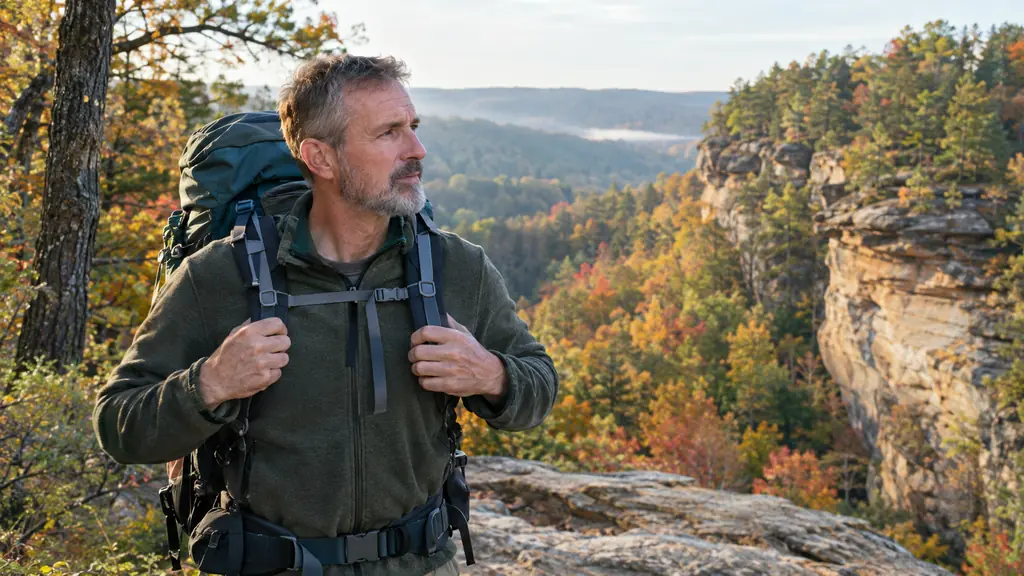
I spent most of last fall carrying the TETON Sports Explorer 65L through the Red River Gorge, and I have a pretty good idea by now what a pack does to my back after eight hours. I am 54, a retired high school PE teacher from outside Louisville, and my left knee and lower back have strong opinions about gear. The Explorer 65L did not send me home early once.
This is the pack I bought for weekend overnight trips after years of making do with a cheap big-box frame pack. I carried it on the Sheltowee Trace, in the Big South Fork, and on a wet October trip in the Smokies. I loaded it with my Naturehike Cloud-Up 2 tent, my Therm-a-Rest Z Lite Sol pad, my Sawyer Squeeze, and food for two nights. This review is about how it actually behaved over one full season.
The Quick Verdict
A comfortable, well-organized 65-liter pack that does everything a weekend backpacker needs, at a price that leaves room for better boots. It is not the lightest or the most refined, but it fits me better than packs that cost twice as much.
Amazon Check Today's Price →If you are shopping for a first real backpacking pack, this is the one I would start with.
The TETON Sports Explorer 65L has carried my full overnight kit through a season of Kentucky and Tennessee trails without breaking down. Check today's price on Amazon and see if it fits your frame.
Amazon Check Today's Price on Amazon →How I've Used It
I bought the Explorer 65L in late August and used it on every overnight trip I took through the end of November. That is five trips, about 40 trail miles total, with the heaviest load around 32 pounds. The first was a two-nighter on the Sheltowee Trace the weekend after Labor Day, 11 miles in to a campsite near a creek crossing and 11 miles back out. The last was a cold one in mid-November back on the Sheltowee Trace, where the temperature dropped to 28 degrees overnight and the pack spent the night under the vestibule of my Naturehike Cloud-Up 2. I am not a thru-hiker and I do not pretend to be. I am a weekend guy who likes to sleep on the ground and wake up sore in the right places.
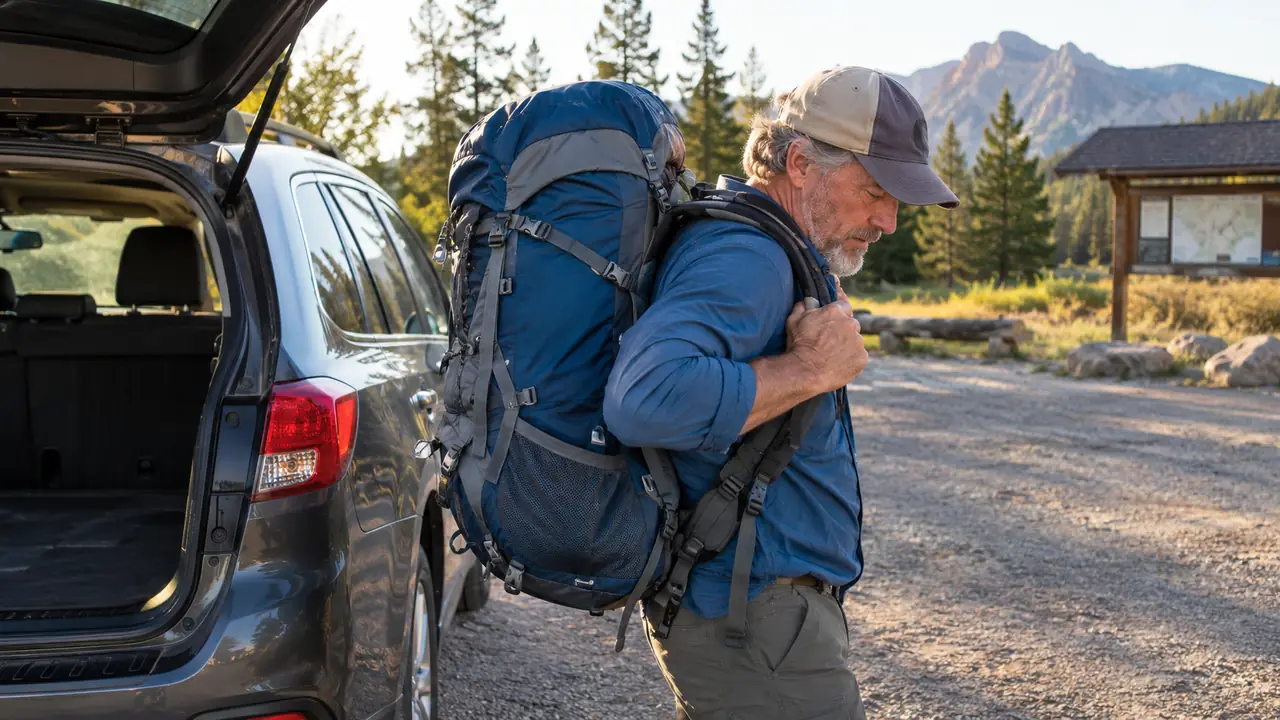
Most of my trips start at a trailhead in the Red River Gorge. I drive a 2016 Subaru Outback, so the pack rides in the back until I get there. I load it the night before, keep the heavy stuff close to my back, and use the compression straps to pull everything tight. On the trail I use Black Diamond Trail trekking poles, and the pack's side pockets hold my Sawyer Squeeze and a 1-liter bottle.
The one thing I did not do was baby it. I dropped it on rocks, leaned it against damp tree trunks, and left it in the back of the Outback during a rainy weekend. On the Big South Fork trip in October I set it down on a gravel bar to filter water and watched it slide a few feet into a patch of thorns. I pulled it out, brushed it off, and kept walking. It came out of the season with a few scuffs and no broken zippers, which is more than I can say for the last pack I owned.
I also took it on one shorter trip where I carried less than 20 pounds just to see how it rode when it was not full. A pack that only feels good when it is stuffed is not much use to me, because some weekends I just want a light load and a short walk. The Explorer 65L handled that too, which is not something I can say for every pack I have tried.
The Fit Was the First Thing That Won Me Over
Fit is the reason most packs end up in the back of a closet. My lower back starts complaining about twenty minutes into a hike if the hip belt sits too high or the shoulder straps pull too hard. With my old pack I tried every fix I could think of, a padded hip belt cover, a sternum strap moved up, even a stuff sack jammed under the shoulder straps, and none of it helped because the frame itself was the problem. The Explorer 65L has an adjustable torso, which means you can move the shoulder harness up or down to match your back length. I set mine and did not touch it again all season.
The hip belt is the part that surprised me. It wraps around my hips and takes most of the load off my shoulders, which is exactly what a pack should do. On the first trip I had to tighten it a few times as the padding settled, but by the third trip it felt like it had been made for me. By late October I could set it once at the trailhead and not touch it until I stopped for lunch. My left knee still gets cranky on descents, but the pack never made it worse.
I have also used it with a loaded pack on a few day hikes to test how it rides without a full load. It is a little tall when it is empty, but once you cinch the compression straps it stays close to your back. That matters when you are ducking under blowdowns on the Sheltowee Trace.
One thing I learned the hard way is that a pack fit changes when you add or remove weight. The Explorer 65L lets me adjust the sternum strap and hip belt on the move, which sounds minor until you are 3 miles in and your shoulders start talking. I stopped twice on the first trip to make small adjustments, and that was it.
What the 65L Carries (and What It Doesn't)
The 65-liter capacity is enough for a three-season weekend kit, and it is honest about it. I fit my Naturehike Cloud-Up 2, my Therm-a-Rest Z Lite Sol strapped to the outside, a down quilt, a camp stove, food for two nights, and a change of clothes. I did not have to strap things to the outside except the pad, and I never felt like I was playing Tetris with my gear. On the Smokies trip I weighed everything before I packed it: 2 pounds 10 ounces for the tent, 14 ounces for the pad, 2 pounds for the quilt, and the rest was food and water. The whole load came to about 30 pounds with two liters of water, and the pack swallowed it without shifting my center of gravity.
The main compartment opens like a suitcase, which sounds like a small thing until you have spent a rainy evening digging to the bottom of a top-loader. The sleeping bag compartment is separate, and the front pocket has enough organization for a map, a headlamp, and a small first aid kit. The side pockets are deep enough for a 1-liter bottle, though I would not trust them with a wide-mouth Nalgene on a rough scramble.
What it does not carry well is a bear canister. I tried one on a Smokies trip and it ate up most of the main compartment, which meant my quilt had to go on the outside under the lid strap. If you hike in areas that require a hard-sided canister, you will want a bigger pack or a different way to carry it. For the Gorge and most of Kentucky, where I can hang a bear bag, the 65L is plenty.
It also handles a weekend of car camping better than I expected. I used it to haul a sleeping bag and a few extras from the Outback to a campsite, and the compression straps kept everything tight. The same pack that does my solo overnights can do family duty without looking ridiculous.
How It Handled Wet Weather, Dirt, and a Full Season
The Explorer 65L is not a lightweight pack. It is a 4-pound-ish frame pack that feels solid when you pick it up. On wet days the fabric sheds water well, and the included rain cover stayed put through a steady October drizzle in the Smokies. That was the trip where it rained from mid-morning until nearly dark, and I stopped twice to check the cover because I did not trust it. It never slipped. I would still put my sleeping bag in a dry bag, because no pack is truly waterproof, but I never had a wet quilt.
The zippers are the part I was most worried about, because cheap packs usually fail there first. Mine never jammed, even after a dusty trip in the Big South Fork. The stitching on the shoulder straps looks clean after a season of use, and the compression straps still hold tension. I cannot promise it will last ten years, but it has earned its place in my gear closet.
The frame is a simple internal frame with plastic stays. It does not have the fancy load-transfer of a pack that costs three times as much, but it does not need it for a 30-pound weekend load. I carried 32 pounds on the first trip and the frame handled it without flexing in a way that hurt my back.
I also left it in the back of the Outback for a few days after one trip, which is not the kind thing to do to a pack. It came out with a little dust and no damage. The fabric is not the toughest I have ever felt, but it is tougher than the price suggests, and that is the trade-off I signed up for.
Where the TETON Sports Explorer 65L Falls Short
I want to be straight about the things I did not love. The hip belt padding is stiff for the first few trips. It broke in, but the first two outings left me with a couple of sore spots that I did not expect. If you have a sensitive waist, plan to wear it around the house for an afternoon before your first real hike.
The hydration sleeve is on the inside of the pack, and routing the hose out the top is a little awkward. My first attempt was to thread the hose out the side port, but it kinked every time I swung my right arm, so I gave up on that before the first mile. I ended up running it over my shoulder and tucking it under the sternum strap. It worked, but it took a few tries to get it right. I also wish the side pockets had a small drain hole, because a wet bottle sitting in the bottom of the pocket soaks everything around it.
The adjustment system is simple. You can move the shoulder harness up and down, but you cannot fine-tune the angle the way you can on a pack with more adjustment points. For my frame it was fine. For someone with a very short or very long torso, it might not be.
I also want to be honest about the weight. This is not the pack you want if you are trying to get your base weight under 20 pounds. It is a sturdy, comfortable pack that weighs what it weighs, and I accepted that trade-off when I bought it. If you are counting ounces, look elsewhere.
What I Liked
- Adjustable torso fit that I set once and never touched again
- Comfortable hip belt that kept weight off my shoulders on 8-mile days
- Suitcase-style opening and separate sleeping bag compartment make packing easy
- Included rain cover held up through a full day of drizzle
- Solid zippers and stitching after a full season of hard use
Where It Falls Short
- Hip belt padding is stiff for the first few trips
- Hydration hose routing is awkward and took trial and error
- Side pockets are not great for wide bottles
- Frame is heavier than some comparably sized packs
I carried 32 pounds on the first trip and the frame handled it without flexing in a way that hurt my back. That is the whole job of a pack, and it did it.
Who This Is For
This pack is for the weekend backpacker who wants one pack that can do overnight trips, short multi-day trips, and the occasional car-camping haul without a second mortgage. It is also for anyone with a back like mine who needs a pack that can be adjusted to fit, not the other way around. If you are new to backpacking and you are not sure what you need, the TETON Sports Explorer 65L is a forgiving place to start.
I have recommended it to two friends this season. One is a guy in his sixties who wanted a pack for the Smokies, and the other is a younger hiker who wanted to start doing overnights without spending a fortune. Both of them came back with the same reaction I had: it fits, it carries, and it does not fight you.
Who Should Skip It
If you are a thru-hiker counting every ounce, this is not the pack for you. There are lighter options that will save you a pound or more, and that matters when you are walking 20 miles a day for months. If you need to carry a bear canister or a winter load, you will want more volume. And if you have a very short torso or a very specific shoulder fit, you should try the pack on in person before you buy it.
I would also say this: if you already own a pack that fits you well and you are happy with it, you do not need this one. The Explorer 65L is a great value, but it is not magic. It is a solid tool that does the job, and the best gear is the gear you already trust.
The TETON Sports Explorer 65L earned its place in my gear closet.
After one season in the Red River Gorge, the Sheltowee Trace, and the Smokies, this is the pack I reach for first. Check today's price on Amazon and see if it fits your frame.
Amazon Check Today's Price on Amazon →