
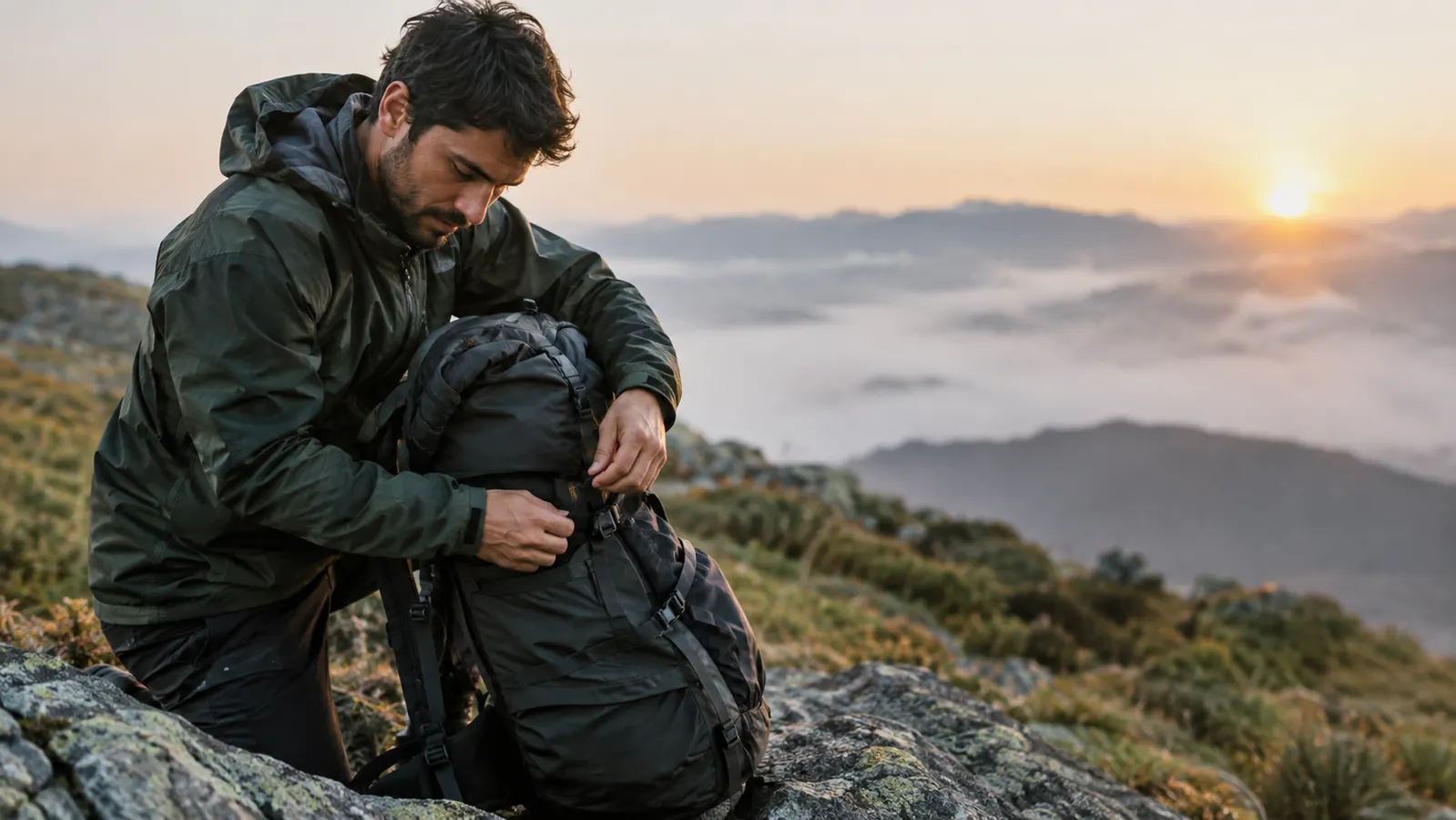
I have a cranky left knee and a lower back that lets me know the moment a pack is fitted wrong. So when I decided to compare the TETON Sports Explorer 65L against the Osprey Atmos AG 65, I wasn't looking for a spec sheet winner. I wanted to know which pack I could carry for eight miles on the Sheltowee Trace without stopping to shift the hip belt. I've now done that, plus a few shorter trips in Red River Gorge and a week in the Smokies, and I can tell you exactly where each pack earns its place.
The short answer is this: if you want a well-built, comfortable pack that costs a fraction of the premium brands and still carries a weekend load without complaint, the TETON Sports Explorer 65L is the one I'd pick. If you already know you need the most refined suspension system on the market, with the most adjustable torso length and the lightest feel on your hips, the Osprey Atmos AG 65 is worth every penny. For my money, and for most weekend backpackers I know, the TETON Sports pack gets the nod.
| TETON Sports Explorer 65L | Osprey Atmos AG 65 | |
|---|---|---|
| Value | Lower price, full internal frame, rain cover included | Higher price, no rain cover included |
| Weight | Heavier on the scale, but carries weight well | Lighter, with a suspension that disappears on trail |
| Suspension | Solid internal frame, good load transfer to hips | Anti-Gravity suspension, the most comfortable I've tested |
| Fit | Fixed torso length, adjustable straps and hip belt | Fully adjustable torso, fits a wider range of bodies |
| Durability | Tough materials, held up through a full season | Also durable, but lighter fabric can show wear faster |
| Best for | Weekend trips and budget-conscious hikers | Longer thru-hikes and hikers who want maximum comfort |
How I Tested Both Packs
I didn't do a lab test. I did the only test that matters: I loaded both packs with the same gear and walked the same trails. For the TETON Sports Explorer 65L, I used it on a three-day trip on the Sheltowee Trace in early spring, a two-nighter in Big South Fork, and a couple of overnighters in Red River Gorge. For the Osprey Atmos AG 65, I borrowed a friend's pack for a week in the Smokies and a weekend at Cumberland Gap. Same tent, same sleeping bag, same water filter. The only variable was the pack.
I weighed both packs empty on a kitchen scale before loading them, loaded both to about 30 pounds, and walked the same loops. I paid attention to three things: how the weight sat on my hips, whether my lower back started complaining after mile four, and how easy it was to adjust the fit on the trail. I also checked how each pack handled rain, because Kentucky weather doesn't ask permission. On the Smokies trip, the Atmos got hit with a steady drizzle on day two, and on the Big South Fork trip, the TETON Sports pack got a full afternoon thunderstorm.
Where TETON Sports Wins
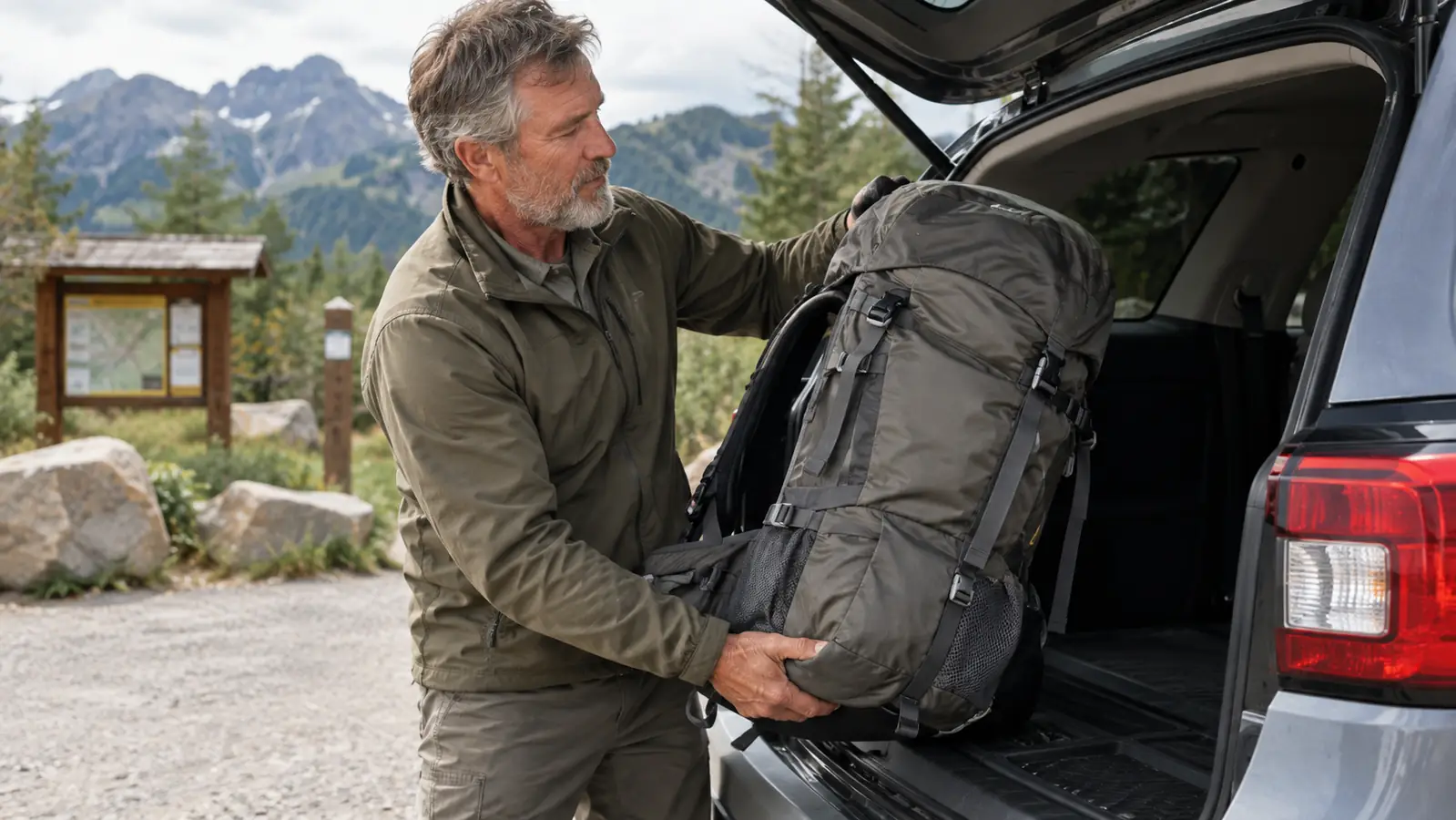
The TETON Sports Explorer 65L wins on value and on straightforward, no-nonsense design. The internal frame is simple: a solid back panel, a hip belt that actually transfers load, and a suspension that doesn't require a degree in biomechanics to adjust. I loaded it with about 30 pounds for a two-night trip in Big South Fork and it carried that weight better than packs I've used that cost three times as much. The frame held its shape, the shoulder straps didn't dig in, and my lower back felt fine at the end of the day. I've carried heavier loads in more expensive packs that didn't feel this balanced.
It also wins on durability for the money. The fabric feels thicker than what you find on some ultralight packs, and after a full season of brushing against rock walls and being tossed into the back of my 2016 Subaru Outback, it still looks new. The zippers are heavy-duty, the compression straps stay put, and the stitching shows no signs of pulling. One morning at Grayson Highlands I slid down a slick granite slab and the pack scraped against the rock for a good ten feet. I checked it at the bottom expecting a tear, and there wasn't even a scuff. For someone who wants a pack that will survive years of weekend trips without treating it like a piece of fine china, the TETON Sports Explorer 65L is the smarter buy.
Where Osprey Atmos Wins
The Osprey Atmos AG 65 wins on the two things that matter most to people who spend serious time on the trail: weight and suspension. The Anti-Gravity suspension system is the real deal. When I first put it on, I thought I had adjusted it wrong because the load felt like it was floating on my hips. On a long descent into the Smokies, my left knee appreciated the way the pack moved with my body instead of fighting it. The torso adjustment is tool-free, so I could dial in the fit in under a minute, and that made a noticeable difference over a full day of hiking.
It also wins on adjustability and long-haul comfort. The hip belt is more padded and more sculpted than the one on the TETON Sports pack, and the load lifters actually did what they were supposed to do. On the third day of the Smokies trip, I carried 34 pounds from Newfound Gap up to a shelter and my hips felt fine the whole way. If you're planning a thru-hike or a trip where you'll be carrying 35 pounds for eight or more hours a day, the Atmos is the pack that will keep your back happy. It's a premium product, and it feels like one the moment you pick it up.
For weekend trips and a budget that likes to stay intact, the TETON Sports Explorer 65L is the pack I trust.
I've carried it through a season of Kentucky and Tennessee trails, and it still looks and feels great. See today's price on Amazon.
Amazon Check Today's Price on Amazon →Weight and Balance: Numbers on the Trail
I didn't bring a scale to the trail, but I did the next best thing: I weighed both packs empty on a kitchen scale before loading them. The Osprey Atmos AG 65 came in lighter, and you can feel that difference when you're lifting the pack into the car or carrying it through an airport. The TETON Sports Explorer 65L is heavier, but the weight is distributed well. The frame puts the load on your hips where it belongs, and the shoulder straps are wide enough that they don't create hot spots. For a 30 pound load, the difference in carry feel was smaller than I expected.
That's the key finding for me. The spec sheet says the Atmos is lighter, and it is. But once both packs were loaded with the same gear, the TETON Sports pack carried the weight just as comfortably on the flat sections and only felt noticeably heavier on steep climbs. On the climb out of Big South Fork, I stopped twice to catch my breath, but my back never complained. If you're counting every ounce for a long-distance trek, the Atmos wins. If you're carrying a weekend load, the extra pound or two on the TETON Sports pack is a trade I'll make to keep the price down.
Packing and Organization: Where the Gear Goes
The TETON Sports Explorer 65L has a simple layout that I've come to appreciate. The main compartment is one big space with a sleeping bag compartment at the bottom, which means I can stuff a tent body and a sleeping bag in without playing Tetris. The top lid has a small pocket for keys and a headlamp, and the front shove-it pocket is perfect for a rain shell I might need in a hurry. On the Big South Fork trip, I had the pack packed and ready in about ten minutes, including strapping my sleeping pad to the outside. It's not fancy, but it works.
The Osprey Atmos AG 65 has a more refined organization system. The front panel opens fully like a suitcase, which makes packing and unpacking much easier when you're tired at the end of a long day. The side pockets are easier to reach while walking, and the hip belt pockets are big enough for a phone and a snack. The tradeoff is that all those pockets add a little complexity, and I found myself occasionally forgetting which pocket I put something in. One evening at Cumberland Gap I spent five minutes looking for my headlamp because I'd tucked it into a pocket I never use on my own pack. The TETON Sports pack is simpler, and sometimes simple is better.
Weather and Rain: Two Very Different Experiences
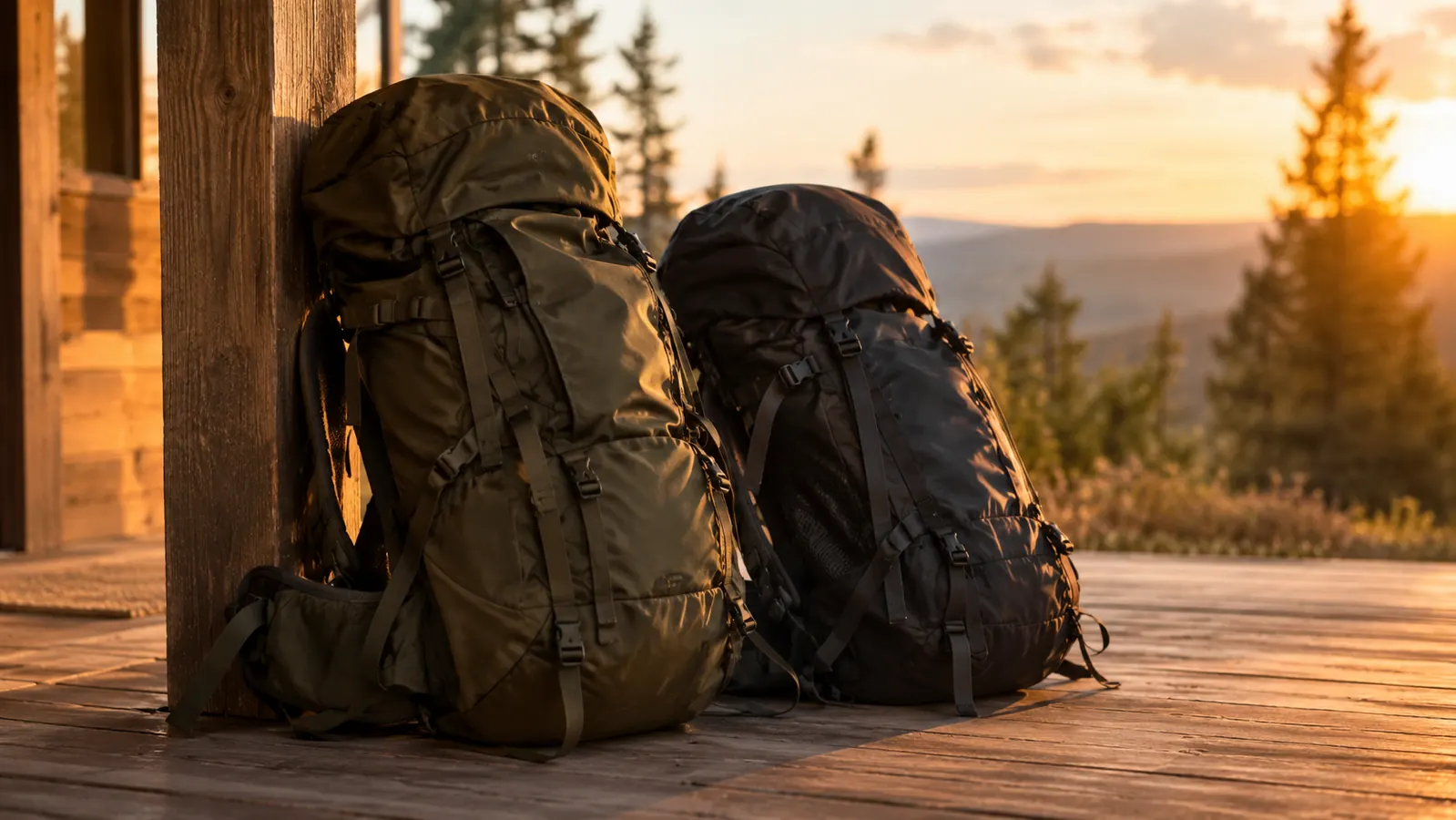
Kentucky rain found me on more than one trip this season, so I got a good look at how both packs handle water. The TETON Sports Explorer 65L has a rain cover included, which is a small thing that saves you from a soaked sleeping bag when the sky opens up. The cover fits snugly and stayed in place on a windy ridge in Red River Gorge. The pack itself is made of a thicker fabric that shrugged off light drizzle even without the cover. During that thunderstorm in Big South Fork, everything inside stayed dry, right down to the spare socks at the bottom.
The Osprey Atmos AG 65 doesn't come with a rain cover, which surprised me for a pack at that level. The trampoline back panel does keep the pack off your back, so you don't get a sweaty shirt, but it also means there's a gap where rain can get in if you're not careful. I used a cheap aftermarket cover on the Atmos and it worked fine, but it's one more thing to buy. For the money, I'd rather have the cover included like the TETON Sports pack does.
Alternatives I Considered
I also spent a little time with a couple of other packs before settling on this comparison. I looked at the Osprey Atmos AG 65 as the obvious premium option, and I briefly considered an ultralight frameless pack for the solo trips. The frameless pack was tempting on the scale, but my lower back needs structure, and I knew I'd regret it after the first steep climb. I also considered a used pack from a gear swap, but I wanted something with a warranty and a known history.
In the end, the comparison came down to the TETON Sports Explorer 65L and the Osprey Atmos AG 65 because they represent the two ends of the spectrum most weekend backpackers actually think about: maximum comfort and maximum value. Both are good packs. The right one depends on your priorities, your budget, and your back.
Who Should Buy Which
Buy the TETON Sports Explorer 65L if you're a weekend backpacker who wants a reliable, comfortable pack that won't break the bank. It's the pack I reach for most of the time because it does everything I need and leaves money in my pocket for other gear. Buy the Osprey Atmos AG 65 if you're planning longer trips, if you're between torso sizes, or if you've struggled with hip pain on the trail and want the most comfortable suspension you can get. Both are fine packs. They're just built for different priorities.
Final Thoughts
After a full season with the TETON Sports Explorer 65L and a solid week with the Osprey Atmos AG 65, I keep coming back to the same conclusion. The Osprey is the more refined pack, and if I were planning a thru-hike tomorrow, I'd seriously consider it. But for the kind of backpacking I do, a few overnights a season on trails I know well, the TETON Sports pack gives me everything I need. It carries well, it's built to last, and it doesn't make me feel like I need to baby it. That's the pack I trust when I load up the Subaru Outback and head for the trailhead. If you're still on the fence, ask yourself how many miles you plan to cover in a day. The answer will tell you which pack to buy.
Ready to see if the TETON Sports Explorer 65L fits your weekend?
I've carried it through a full season of Kentucky and Tennessee trails. Check today's price on Amazon and see why it's become my go to pack.
Amazon Check Today's Price on Amazon →