

I'll be honest with you: I carried a bad pack for years before I knew it. Shoulder straps digging in, the load swaying with every step, my lower back complaining by the time I hit camp. Then I spent a full season with the TETON Sports Explorer 65L, and I finally understood what an internal frame actually does for a weekend trip.
I'm Wes, a retired PE teacher from outside Louisville. I've been camping for about twenty years, backpacking for eight, and my lower back keeps a close score of every pack I've owned. Here are the ten reasons the Explorer is the pack I reach for when I'm heading out for two or three nights.
A weekend pack that carries its weight
The TETON Sports Explorer 65L has been my go-to pack for two and three night trips all season. If you want the short version before the long one, here it is.
Amazon Check Today's Price on Amazon →The Ten Reasons
The hip belt carries the weight, not your shoulders
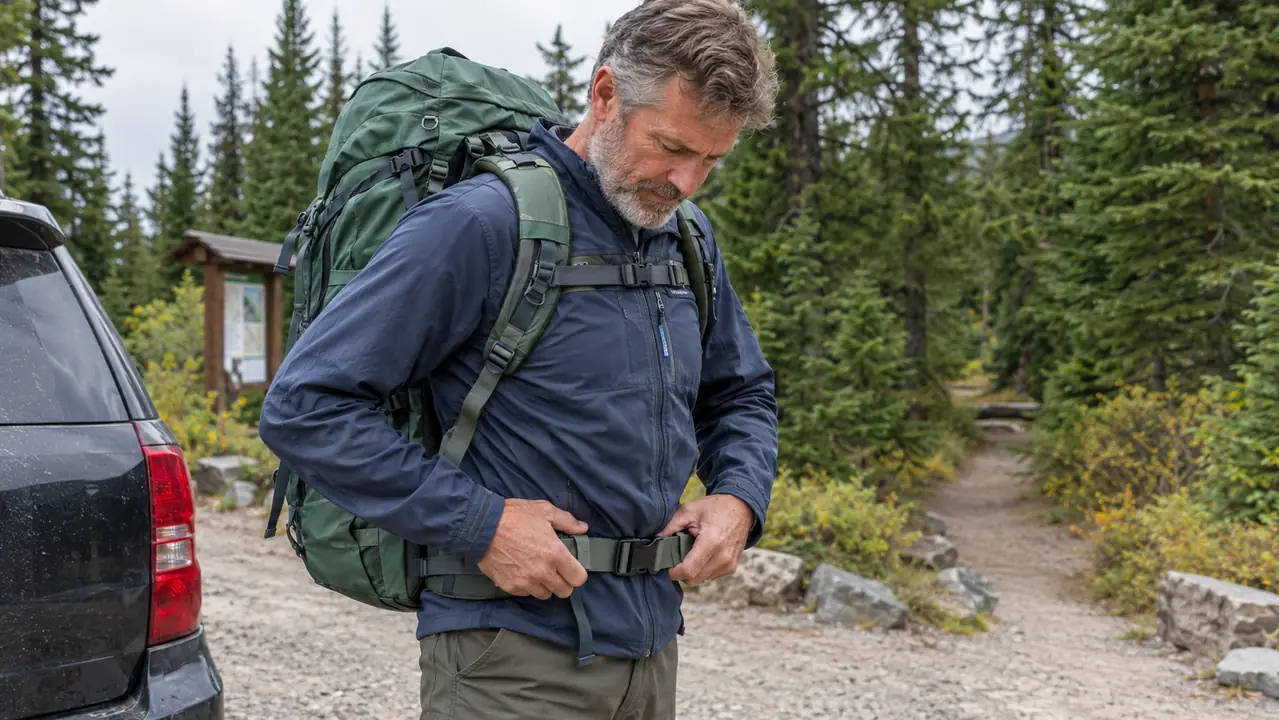
The whole point of an internal frame is transferring the load to your hips, where your body is built to carry it. On a six-mile stretch of the Sheltowee Trace with about 32 pounds on my back, my shoulders were fine at the end of the day. My lower back was fine too. That never happened with my old pack, and it's the reason I stopped dreading the first mile of every trip. The frame does the work so my body doesn't have to.
The load rides close, so your balance stays with you
Internal frames hug the load against your back instead of pushing it out behind you the way an external frame does. On the rocky descents at Big South Fork, that makes a real difference. You feel the trail under your feet, not the pack trying to pull you backward. For a weekend trip, where every mile counts, that balance is worth a lot. I notice it most on the way down, when I'm already tired and the trail gets rough.
Compression straps keep the load from shifting
A shifting load is exhausting. Every step you take fighting it is a step you don't get back. The compression straps on the Explorer pull everything tight against the frame, so the weight stays where you set it, even on the climb out of Red River Gorge. By Sunday afternoon, I'm not constantly re-adjusting, and that's the kind of thing you only notice when it stops happening. It's the difference between walking and wrestling.
65 liters is the sweet spot for two or three nights
For a weekend trip I need room for my tent, sleeping bag, foam pad, food, water filter, and an extra layer or two. The Explorer's 65 liters swallows all of it without making me carry an expedition-sized pack. It's the difference between packing for a weekend and packing for a month. I still have space left over for a book, which is the whole point of a pack this size. Big enough to be useful, small enough to stay honest.
Load lifters let you fix the fit at the trailhead
I spent ten minutes adjusting the load lifters on my first trip and another five on the second. Now I know the settings that work for me. That's the thing about a real internal frame: you can tune it. My lower back is a pretty good fit-testing instrument, and it stopped complaining once I got the tension right. A pack you can adjust on the trail is a pack that still fits at mile eight, and that's exactly what a weekend pack needs to be.
It doesn't snag in the rhododendron tunnels
The Smokies are full of places where the trail squeezes through rhododendron thickets, and I've ducked through more of them than I can count. An external frame catches on every branch. The Explorer's internal frame keeps the profile slim, so I can slide through instead of fighting the brush. On a weekend trip, that means fewer stops and a lot less cussing. It also means I'm less likely to tear a strap or snag a pocket on the way through.
You can lash the wet tent to the outside
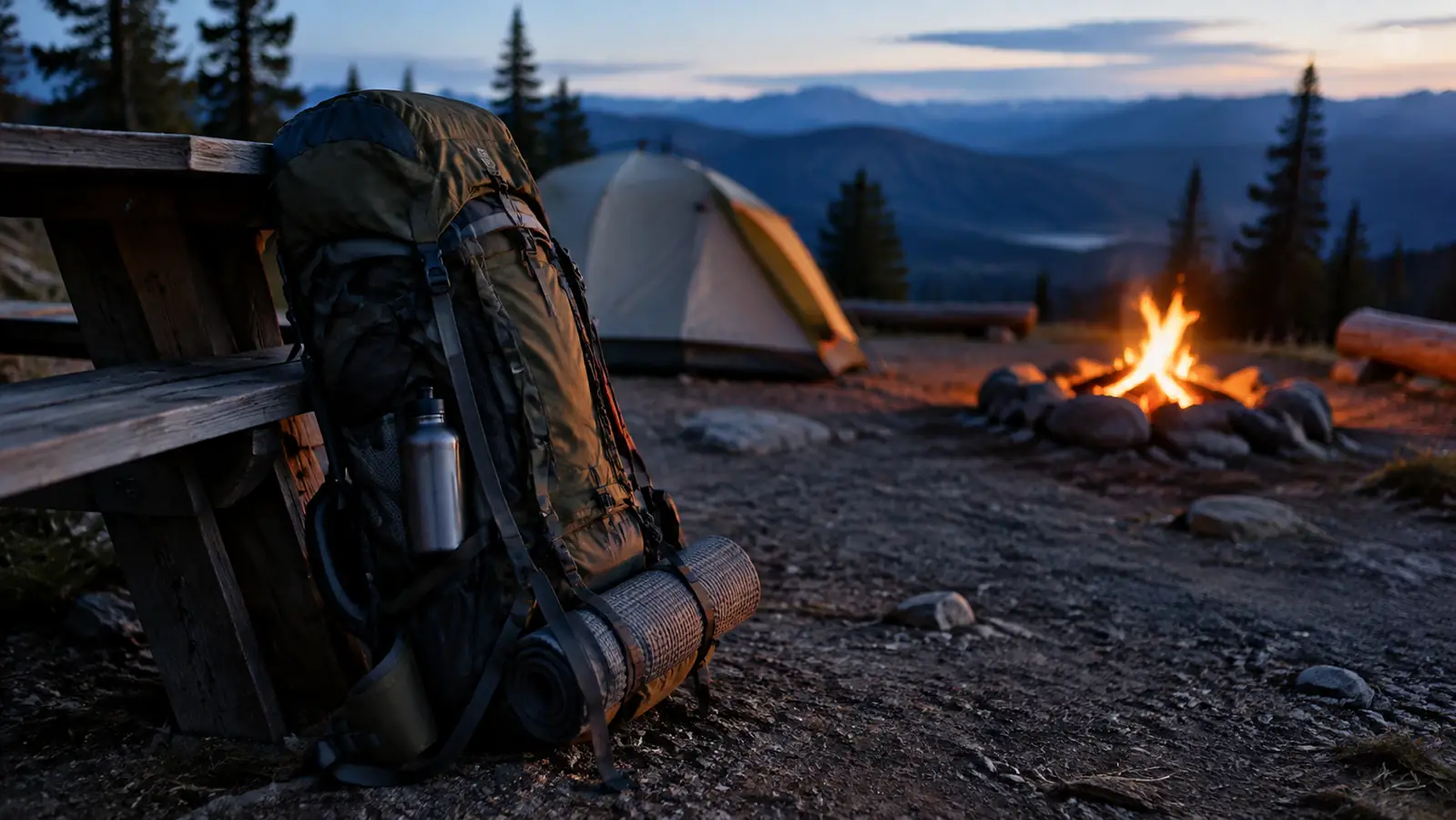
A wet tent on a Saturday morning is a fact of life in Kentucky. With the Explorer, I strap the tent to the outside and let it dry as I walk, while the inside of the pack stays dry. That's a small thing that makes a big difference on the second night of a trip. A dry sleeping bag is the difference between a good weekend and a miserable one, and I've learned not to risk it.
A stable load is easier on my left knee
I've got a cranky left knee, and I use trekking poles on every descent. A pack that shifts with every step makes that worse. Because the internal frame holds the load steady, I can focus on my footing instead of fighting the weight. My knee noticed the difference by the end of the season, and that alone convinced me the design was right.
The frame holds its shape, so packing is less of a puzzle
A frameless pack collapses into a lump the moment you set it down. The Explorer keeps its shape, which means I can load it in a sensible order and find things without unpacking everything. On a short trip, that saves me ten minutes every morning. When you're breaking camp in the rain, ten minutes is a lot of time. It's a quiet benefit, but it shows up on every single trip.
One pack covers overnighters and weekends both
I've used the Explorer for one-nighters and for three-night trips, and it handles both without complaint. I don't need a quiver of packs for different trip lengths. One internal frame pack, sized right, does the job. For a weekend backpacker, that's the whole argument: buy one good pack that fits, and it'll carry every trip you throw at it. Mine has earned its place in the back of the Outback.
How It Fits Into My Weekend Routine
A typical trip for me starts Friday afternoon: pack the TETON Sports Explorer, throw it in the back of the Subaru Outback, and drive to Red River Gorge or Big South Fork. Saturday is all trail, Sunday is the walk out. The Explorer lives packed and ready between trips, so I can be out the door in ten minutes. That's what a weekend pack should do: stay out of the way until you need it, then carry everything without a fight. Dana and I take the big family tent when we car camp, but when I'm on my own, this pack and the Cloud-Up 2 are the whole kit.
What I'd Skip
If you're counting grams and planning a thru-hike, this isn't the pack for you. The Explorer is built sturdy, and sturdy weighs something. On a two or three night trip, that weight is a fair trade for the comfort. On a 200-mile trail, I'd want something lighter. I'd also skip it if you regularly carry more than about 40 pounds. This is a weekend pack, and it's best at weekend jobs. For everything else, there are lighter, more specialized packs, and you should buy one of those instead.
Thirty-two pounds on my back, six miles on the Sheltowee Trace, and my lower back didn't complain once. That's what a hip belt that actually works feels like.
The pack I reach for every weekend
After a full season with the TETON Sports Explorer 65L, I keep coming back to the same conclusion: it carries a weekend load the way a pack should. If you're in the market, check today's price.
Amazon Check Today's Price on Amazon →