
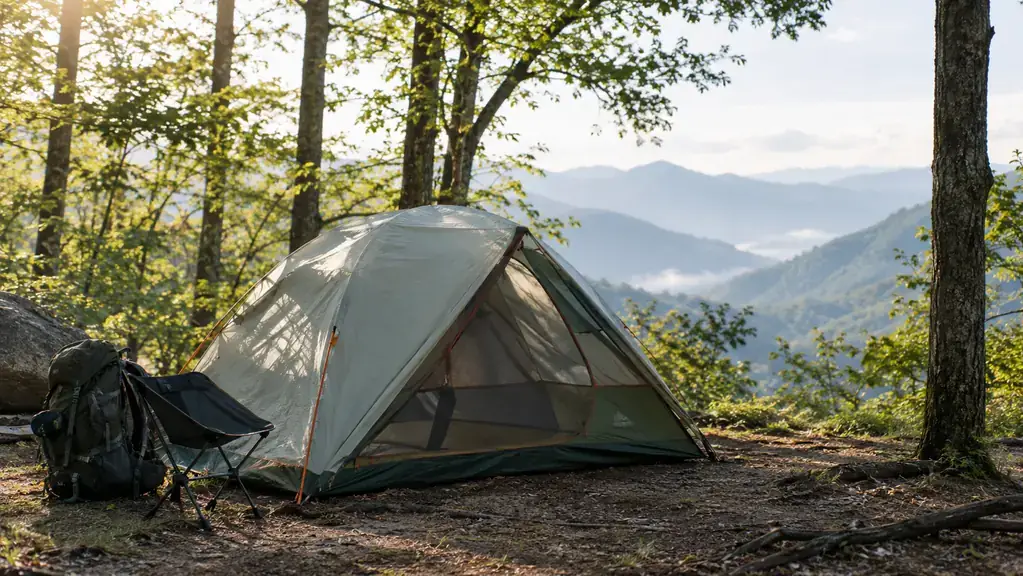
Every time I used to pitch a tent that needed the ground to hold its shape, I found myself hunting for the perfect patch of dirt. Too rocky and the stakes wouldn't go in. Too sandy and they'd pull right out. Too sloped and I'd sleep with my feet downhill. That is the whole argument for a freestanding backpacking tent, and after a full season with the Naturehike Cloud-Up 2, I can give you ten reasons it's worth the extra ounces. I'm Wes Harlan, a retired PE teacher from outside Louisville, and I've spent the last 8 of my 20 camping years backpacking Kentucky and Tennessee.
Quick note on what freestanding means before I get into the list. A freestanding tent holds its shape from its poles alone. You don't need stakes to make it stand up, which means you can pitch it on a rock slab, a wooden platform, or a patch of dirt that would laugh at a tent stake. Stakes still matter for wind, and I'll talk about that. But the tent stands on its own, and that one fact changes how you camp.
The tent I keep reaching for
After a season of trips to Red River Gorge, the Sheltowee Trace, and the Smokies, the Naturehike Cloud-Up 2 is the freestanding tent I pack for solo weekends. Light enough for my back, simple enough to set up in the rain.
Amazon Check Today's Price on Amazon →It pitches on ground that won't take a stake
The biggest reason I switched to a freestanding tent is the rocky ground in the Red River Gorge. I used to carry a cheap big-box tent that needed every corner staked just to stand up. On a shelf of sandstone, that tent was useless. The Cloud-Up 2 stands on its poles. I've pitched it on rock, on packed gravel beside the Sheltowee Trace, and on a tent platform in the Smokies. Stakes are for holding it down in wind, not for holding it up. I carry a few anyway for wind, but they're a backup, not a requirement.
You can pick it up and move it
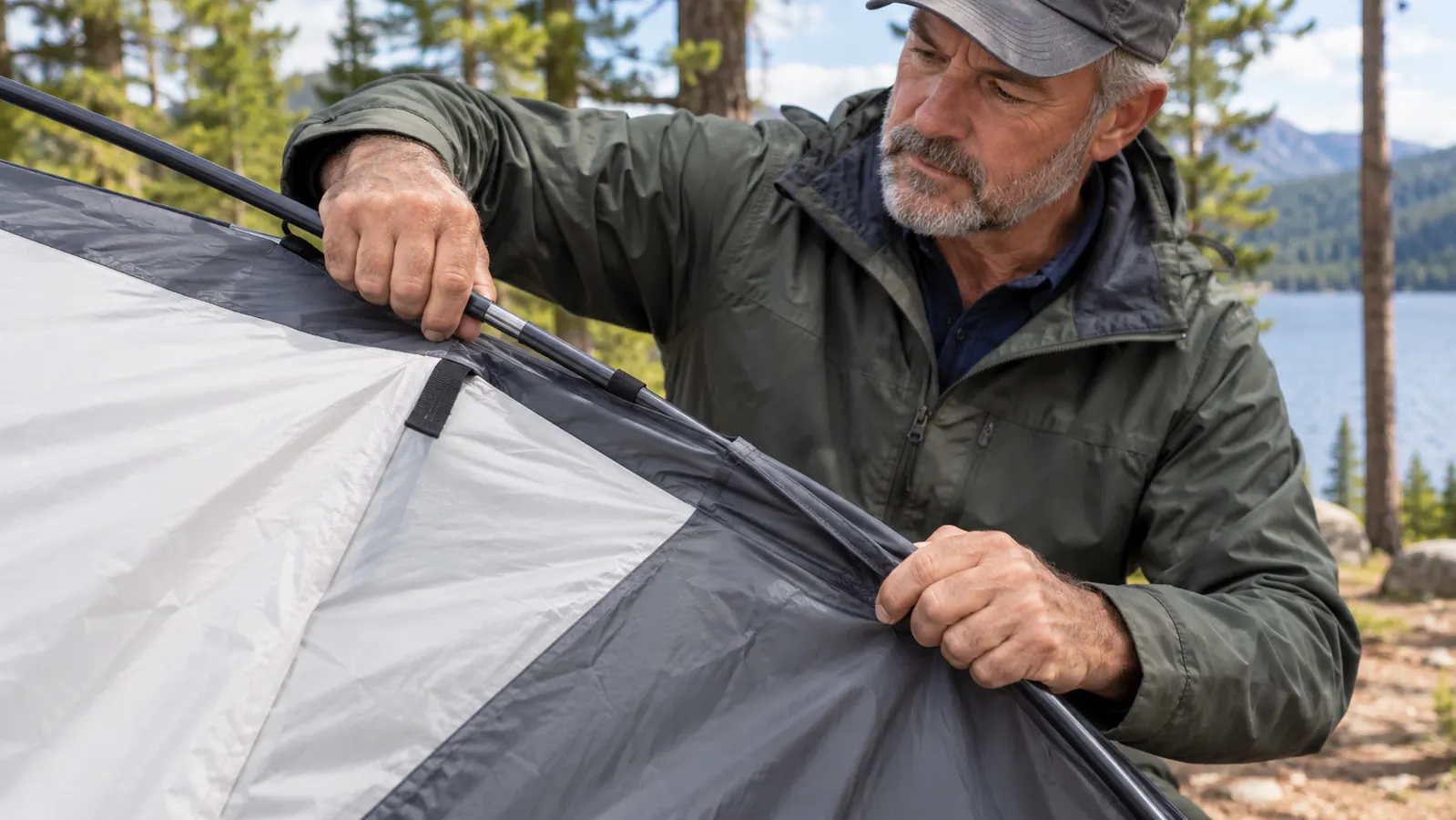
Say you pitch and then notice the ground dips right where your hip will be, or a root runs under your shoulder. With a freestanding tent like the Cloud-Up 2, you grab the frame, lift the whole thing, and set it down two feet away. Takes about ten seconds. With a non-freestanding tent, you're pulling stakes, re-anchoring, and re-tensioning. That matters when your lower back is the thing that tells you when you've done too much bending.
Setup in the rain stops being a race
Rain in the Smokies is not a maybe, it's a when. A freestanding tent goes up in a few minutes because the poles clip together and the body hangs from them. You can get the fly over the top fast and climb inside to finish. My record with the Cloud-Up 2 in a steady drizzle is about four minutes, and I wasn't hurrying. The fly went on first, the body went up under it, and I stayed mostly dry. With my old tent, I'd be soaked before the stakes were in.
Less bending, and my back noticed on day one
I'm 54, and my lower back is the first thing to complain on a trip. Freestanding tents like the Cloud-Up 2 let you work from a kneeling position instead of crouching and reaching for stake loops spread across the ground. You assemble the poles, lay them over the body, and the whole thing pops up. No crawling around the perimeter. My knees and back felt the difference on the first trip out.
The walls stand up, so the inside feels bigger
Because the poles carry the weight, the walls of the Cloud-Up 2 run up instead of sloping to the ground. That means I can sit up straight, change clothes without a fight, and keep my pack in the vestibule without it pressing against the mesh. For a two-person tent that I use solo, the near-vertical walls make it feel like a small room instead of a bivy.
It dries out faster in the morning
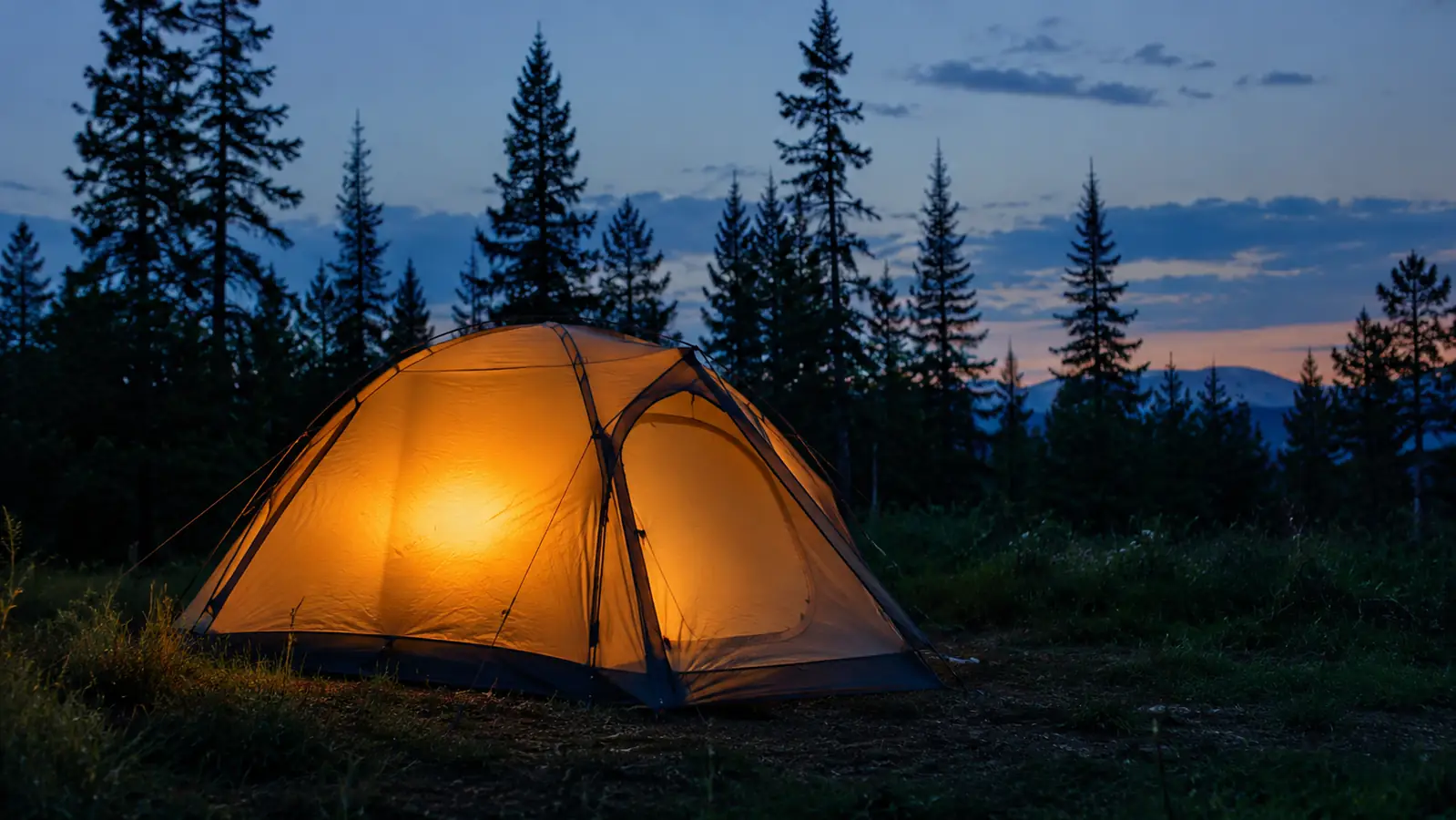
When you pack up a wet tent, you have two choices: stuff it wet and deal with it at home, or dry it before you go. With a freestanding tent like the Cloud-Up 2, you can lift the whole thing, shake the water off, and carry it to a patch of sun while you eat breakfast. I've done exactly that on the Sheltowee Trace after a night of rain. The poles give you something to grab that a floppy non-freestanding tent doesn't.
It works on platforms and porches
On the Appalachian Trail, and at a few Smokies sites, you'll find wooden tent platforms where stakes won't go. A non-freestanding tent is a problem there. The Cloud-Up 2 sits on the platform and stays put, and I tie the corners to the platform cleats when the wind picks up. For anyone who hikes where shelters and platforms are part of the deal, freestanding is the difference between a good night and a bad one.
It handles wind better than I expected
I'll be honest: freestanding doesn't automatically mean windproof. But because the poles create a taut, rounded shape, the Cloud-Up 2 sheds gusts instead of catching them. When a front moved through Big South Fork last fall, I staked all four corners, added the guy lines, and slept through the worst of it. The next morning the tent was still standing and the fly was still tight. The trick is to stake it out when the weather turns, and this tent gives you the points to do that.
You can set it up alone, no partner needed
I backpack solo two or three times a season, and Dana stays home on those trips. A freestanding tent is the only kind I'd want for solo work. There's no moment where you need a second pair of hands to hold a pole while you stake the opposite corner. The Cloud-Up 2 goes from stuff sack to standing in under five minutes with one person. That's the whole job, done.
It's a tent you'll actually trust
After a season of trips, the thing I value most is trust. The Naturehike Cloud-Up 2 has been pitched in rain, wind, and a September night that dropped into the low forties. It has never collapsed, never leaked, and never fought me at midnight when I just wanted to be horizontal. For about two and a half pounds of pack weight, that reliability is the reason it stays in my gear closet. A tent you trust is a tent you use.
What I'd Skip
If you only car camp and your tent rides in the trunk, a freestanding backpacking tent is a luxury you don't need. The Cloud-Up 2 is built light, and light means thinner fabric and a smaller footprint than a big family tent. When Dana and I car camp, we use a separate, much bigger tent that stays in the Subaru. And if you're a thru-hiker counting every gram, there are lighter non-freestanding shelters out there, and they're worth a look. Freestanding is a trade, not a free lunch. You trade a few ounces for convenience, and on weekend trips that's a trade I make every time.
After a season of trips, the Naturehike Cloud-Up 2 has never collapsed, never leaked, and never fought me at midnight when I just wanted to be horizontal.
Ready to make camp easier?
The Naturehike Cloud-Up 2 is the freestanding tent I pack for solo weekends in Kentucky and Tennessee. If your back and knees tell you the same things mine do, it's worth a look. Check the current price and see if it fits your trips.
Amazon Check Today's Price on Amazon →