
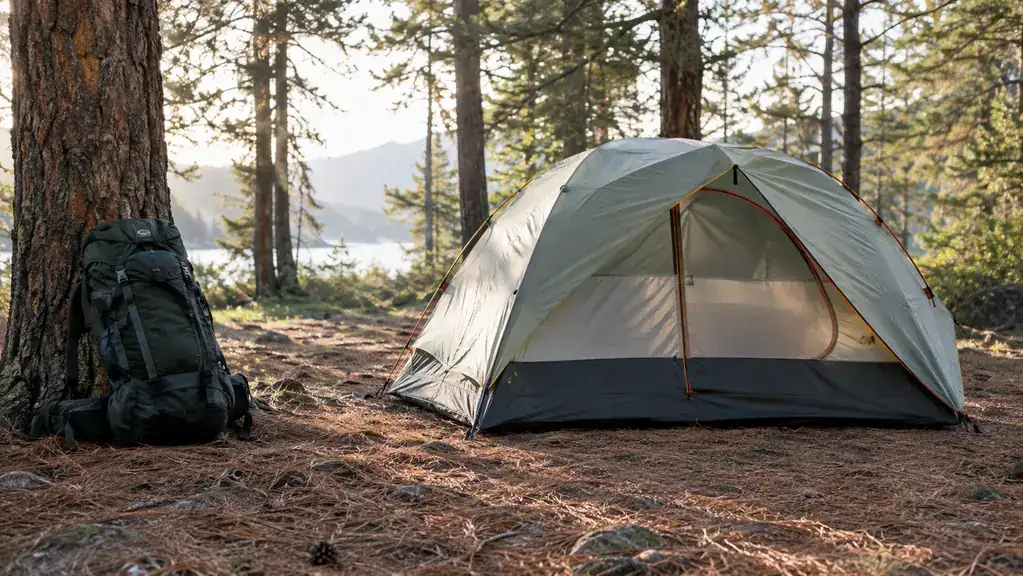
Two tents, one question: do you want the lightest thing you can carry, or the roomiest thing you can split with another person? I spent a full season with the Naturehike Cloud-Up 2 on my back through Red River Gorge and the Sheltowee Trace, and I borrowed a Kelty Grand Mesa 2 for a wet three-day stretch in the Smokies. Same sleeping pad, same trekking poles, same 65-liter pack. The difference between these two tents is not about which one is better. It's about which one matches the way you actually camp. I've been camping for about 20 years, backpacking for maybe 8 of them, and I've learned that the best tent is the one you don't think about once it's up.
The short answer: if you backpack solo or split the tent between two packs and you measure success in pounds off your back, the Naturehike Cloud-Up 2 wins. If you camp with a partner who wants to sit up inside the tent, or you drive to most of your campsites, the Kelty Grand Mesa 2 is the better tent for you. I'll walk you through the tradeoffs the way I'd explain them to a friend over a fire, with the honest caveat that my left knee and lower back make me biased toward lighter gear.
| Naturehike Cloud-Up 2 | Kelty Grand Mesa 2 | |
|---|---|---|
| Weight | About 3.5 lbs all in with footprint | About 5 lbs 4 oz |
| Packed size | Slides sideways into a 65L pack | Bulky, rides on the outside |
| Interior space | Two pads side by side, snug | Two pads with room to spare |
| Headroom | Sit up in the center, not the edges | Sit up near the walls |
| Fabric | Thinner fly, footprint included | Heavier fly and floor, tougher against brush |
| Setup ease | Two poles, clips, about 5 minutes | Two poles, clips, about 6 minutes |
| Wind stability | Fine in moderate gusts | Holds shape in stronger wind |
| Best for | Solo and lightweight backpacking | Car camping and roomy duos |
How I Tested Them
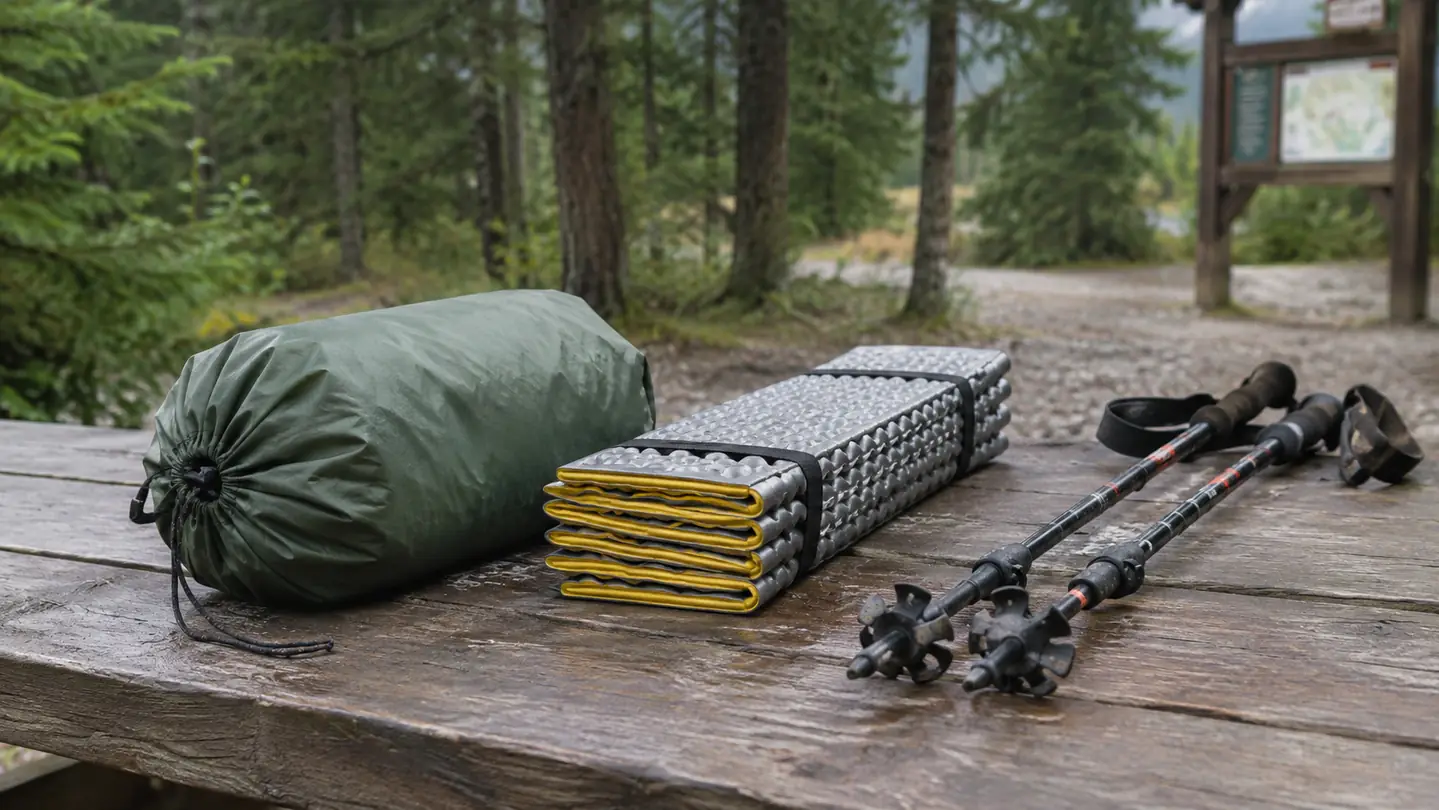
Both tents went up in my backyard in Louisville before they ever saw a trail. I wanted to learn the poles and the clips in daylight, not in the rain. Then the Naturehike came with me on four overnight trips and one three-day loop on the Sheltowee Trace. The Kelty got a long weekend in the Smokies during a stretch where it rained most of the daylight hours. I slept on the same Therm-a-Rest Z Lite Sol pad in both, used the same Black Diamond trekking poles to stake out the corners, and carried both in the same TETON Sports Explorer 65L pack.
I judge gear the way a retired PE teacher would judge a student: does it do the job, does it hold up, and does it make the next mile easier? My left knee complains on descents and my lower back tells me when a pack is loaded wrong. So weight and packed size matter to me more than they do to someone who camps next to their car. That bias is in every word below, and you should know it before you trust my take.
The Sheltowee loop included a 1,200-foot climb and a rocky ridgeline. The Smokies trip was mostly rain. That gave me both ends of the spectrum: one tent on a hard climb, the other in steady weather. I also set up both tents in the yard with Dana watching, because she's the one who would have to live in whichever one we kept for car camping. She called the Kelty the hotel and the Naturehike the coffin, which tells you exactly where her priorities sit.
Where Naturehike Wins
The Naturehike Cloud-Up 2 is a backpacking tent first. The whole kit, including the footprint, comes in around three and a half pounds. That's roughly a pound and a half less than the Kelty Grand Mesa 2. A pound and a half might not sound like much when you read it on a screen, but it's a pound and a half on every step of a six-mile climb with a 65L pack already full of water, food, and a sleeping bag. My knee noticed the difference by the second trip.
It also packs smaller. The Cloud-Up 2 compresses into a stuff sack that fits sideways inside my TETON pack, down against my sleeping bag. The Kelty has to strap to the outside or eat up the main compartment. When you're trying to keep the pack's center of gravity close to your back, that's a real advantage. And the included footprint means I don't stress about the thinner floor on rocky sites. I've pitched it on gravel and pine needles and never poked a hole through.
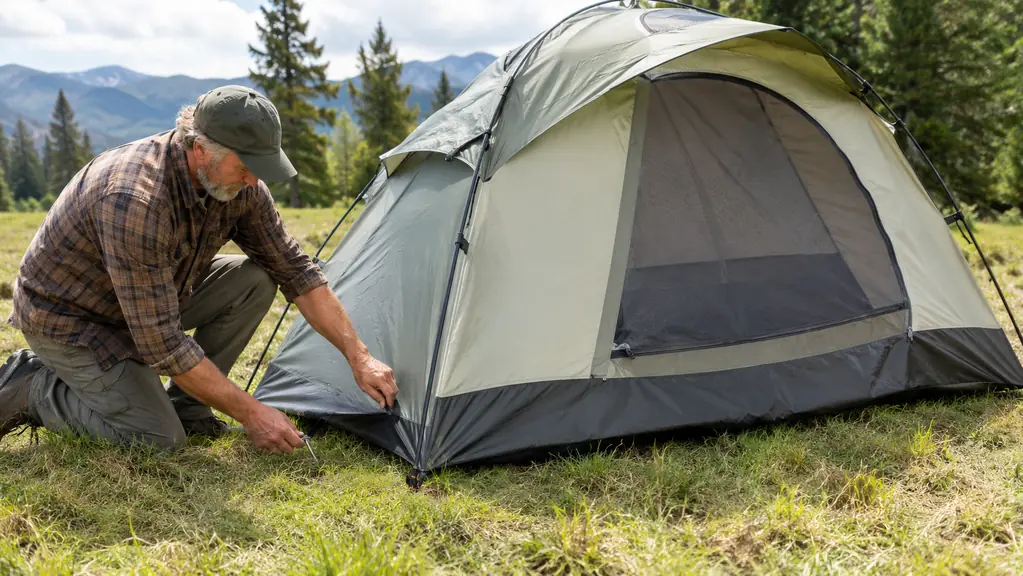
Setup is genuinely simple. The two poles cross in the middle, the clips snap onto the body, and the fly goes over the top. I can have it standing in about five minutes, even in the dark. The color-coded corners are a small thing, but when you're setting up at dusk after a long day, they save you from walking around the tent trying to figure out which end is which.
The vestibule on the Cloud-Up is small. It fits a pair of boots and a small pack, but not much else. I learned to keep my cooking stuff in the main body or under the fly edge. That's a tradeoff for the weight, and it's worth knowing before you buy. If you're the kind of camper who likes to keep a camp chair in the vestibule, this isn't the tent for you.
The mesh on the Naturehike is fine for summer, but it's not bug-proof enough for me to skip the bug spray in early June. The Kelty's mesh is a little tighter and the zippers seal better. I wouldn't call either one a fortress, but if you camp where the mosquitoes are thick, the Kelty feels more secure.
Where Kelty Wins
The Kelty Grand Mesa 2 is a tent you can live in. The interior is noticeably bigger. Two wide pads fit side by side with room to spare, and you can sit up near the walls, not just in the center. On a rainy day in the Smokies, I spent a solid afternoon inside reading and sorting gear, and I never felt like I was in a coffin. The Naturehike is snug with two people, fine for sleeping, tight for hanging out.
The Kelty also feels tougher. The fly and floor are heavier, and the poles are thicker. It shrugs off brush and wind that would make me nervous in the Cloud-Up. During that wet weekend, the Kelty stayed dry and held its shape in gusts that had other tents flapping. If you're hard on gear, or you camp in open, windy spots, that extra weight buys real peace of mind.
The extra room shows up in the details. The vestibule is bigger, so wet packs and muddy boots can live outside the sleeping area. The interior pockets are placed where you actually reach for them. And the door opens wider, which matters when you're crawling out in the middle of the night. These are the things you don't see on a spec sheet but you feel after the first night.
The Kelty's weight is the price you pay for that space. At over five pounds, it's not a tent you want on a long climb. I carried it a mile and a half from the trailhead to the campsite in the Smokies and felt every ounce. If you're planning a multi-day backpacking trip, that weight adds up fast. But if your longest carry is from the car to the campsite, you'll never notice.
Take the weight off your back on your next overnight
The Naturehike Cloud-Up 2 is the tent I reach for when the trail is the point. It's light enough to forget it's in the pack and simple enough to set up in the dark. The included footprint handles the rough ground.
Amazon Check Today's Price on Amazon →How They Handle Weather
Rain is the real test. I had the Naturehike out on a night when it rained hard from midnight to dawn, and the fly kept the interior dry. The bathtub floor and taped seams did their job. The Kelty saw the same kind of weather in the Smokies, and it also stayed dry. The difference is that the Kelty felt calmer in the wind. The heavier poles and lower profile meant less flapping and less noise. I slept better in the Kelty on that windy night, and that's a real point in its favor.
Condensation is another story. Both tents breathe okay, but the Naturehike's lighter fly means you have to be more careful about venting. I woke up with a damp footbox in the Cloud-Up one morning after I closed the vents too early. The Kelty's bigger fly and higher ceiling gave me more room for air to move. Neither tent is a condensation-free wonder, but the Kelty is more forgiving.
One night on the Sheltowee, a storm blew through around 3 a.m. The Naturehike held up fine, but I did have to get up and check the stakes once. The Kelty never made me worry. That's the difference between a tent you trust and a tent you monitor.
What the Specs Don't Tell You
The numbers tell you about weight and floor area, but they don't tell you how a tent feels at 2 a.m. when you need to pee. The Naturehike's door is on the side, and the vestibule is just big enough for a pair of boots. You can get out without stepping on your partner, but it's a shuffle. The Kelty's door is wider and the vestibule is deeper, so the midnight exit is easier. That sounds like a small thing until you've done it three nights in a row.
The zippers matter too. The Naturehike's zippers are lighter, which is fine for most trips, but they snag more easily if you're rushing. The Kelty's zippers are heavier and smoother. I never had a snag with either, but I could feel the difference. If you're the kind of person who is patient with gear, the Naturehike is fine. If you're not, the Kelty will test your patience less.
The Footprint Question
The Naturehike Cloud-Up 2 includes a footprint, which is a big deal for a tent in this weight class. It protects the floor and lets you pitch the fly alone on warm nights. The Kelty Grand Mesa 2 does not include a footprint, so you're either careful about the floor or you buy one separately. That's a point for the Naturehike, especially if you camp on rocky ground like I do in the Red River Gorge.
Alternatives I Considered
Before I settled on the Naturehike, I looked at a couple of other lightweight two-person tents. The ones I found were either heavier or lacked the included footprint, and a few had single-wall designs that worried me about condensation. I'm not saying the Cloud-Up 2 is the only good lightweight tent out there. I'm saying that for the way I camp, it hit the balance of weight, features, and simplicity better than the others I looked at. The Kelty is the one I'd pick if I didn't care about weight.
Who Should Buy Which
Buy the Naturehike Cloud-Up 2 if you're a solo backpacker, or if you and your partner split the tent between two packs. It's also the right call if your back or knees make every ounce count, which is exactly why I own one. The footprint is included, the setup is simple, and the weight savings show up on every climb.
Buy the Kelty Grand Mesa 2 if you mostly car camp with a partner, or if you want a tent that can take a beating and still look after you in wind. It's roomier, tougher, and more forgiving if you're not careful about where you pitch it. The extra weight is a fair trade when you're not carrying it very far.
And if you're somewhere in between? That's the honest part. If you only backpack two or three times a season, the Kelty might be the smarter buy because it does double duty at car campgrounds. If you're building a lightweight kit and plan to hike more, the Naturehike is the one you'll actually carry. There's no wrong answer here, only the wrong tent for your kind of trip.
One more thing: if you're a solo hiker who wants the option of a two-person tent for extra gear space, the Naturehike is the better choice. It's light enough to carry alone, and the extra room is a bonus. The Kelty is overkill for one person, both in weight and in space.
And if you're buying for a scout or a teenager who is just getting into backpacking, the Naturehike is the better first tent. It's light enough for them to carry, simple enough to set up alone, and the footprint protects it while they learn. The Kelty is a better tent for a family that camps together.
The Bottom Line
The Naturehike Cloud-Up 2 is the better backpacking tent. The Kelty Grand Mesa 2 is the better camp tent. They're not competing for the same job, and that's okay. I own the Naturehike because I'm a backpacker first and a car camper second. If your math comes out the other way, get the Kelty and don't apologize for it.
Before you decide, think about the last three trips you actually took. If most of them involved hiking more than a mile from the car, the Naturehike will serve you better. If they involved a cooler, a camp chair, and a partner who likes to read in the tent, the Kelty is the one you'll reach for. Both are good tents. The right one depends on your legs, not your gear closet.
Still weighing it? Start with the one that's easier to carry
The Naturehike Cloud-Up 2 handles the miles, and the included footprint handles the rough ground. See today's price and read the latest owner photos to see if it fits your setup.
Amazon Check Today's Price on Amazon →