
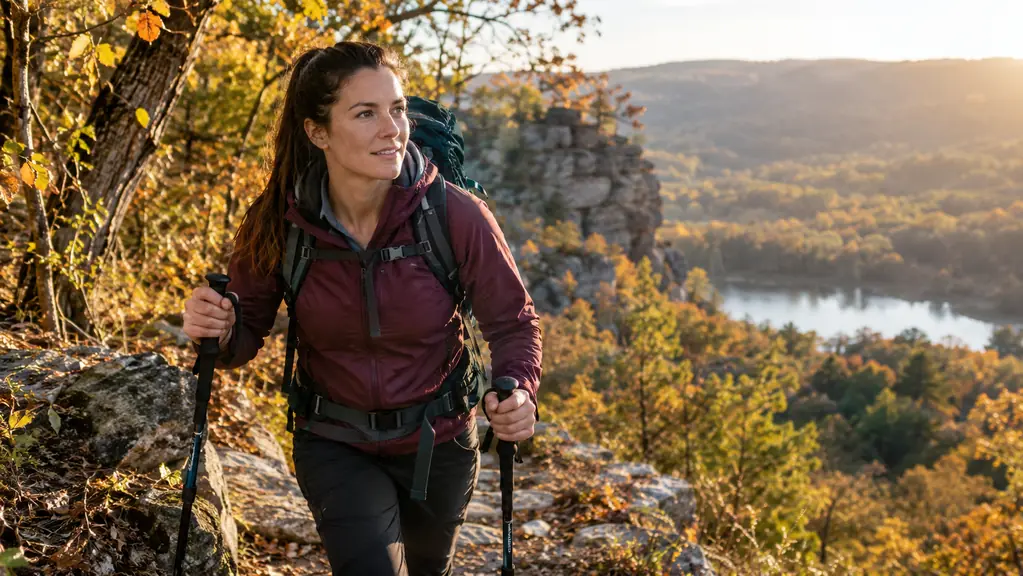
I bought these BLACK DIAMOND Trail Trekking Poles last fall, before a season that ended up covering about 180 miles of Kentucky and Tennessee trails. I'm 54, I have a cranky left knee, and I have spent enough years on a high school gym floor to know when a piece of gear is actually saving me from something. These poles are. I didn't expect to have much to say about a pair of sticks, but after a full season, I do. And I've told more than one friend at the trailhead that they should try a pair.
The short version: they took the sting out of every downhill mile. The longer version is what follows, because poles are one of those things you can't judge from a spec sheet. I used mine from October through April, on the Sheltowee Trace, at Red River Gorge, and on a wet week in the Smokies. I also used them on shorter day hikes and a few car-camping weekends. By the end, I stopped thinking about them entirely, which is the highest compliment I can give a piece of gear. Here's what I learned.
The Quick Verdict
The best pair of trekking poles I've owned for the money, especially if your knees complain on descents. Not the lightest or the fanciest, but they're tough, simple, and easy to live with.
Amazon Check Today's Price →The poles that saved my left knee this season
I used these BLACK DIAMOND Trail poles on 180+ miles of rocky trail. They're still going strong. Check today's price on Amazon and see if they fit your hiking style.
Amazon Check Today's Price on Amazon →How I've Used It
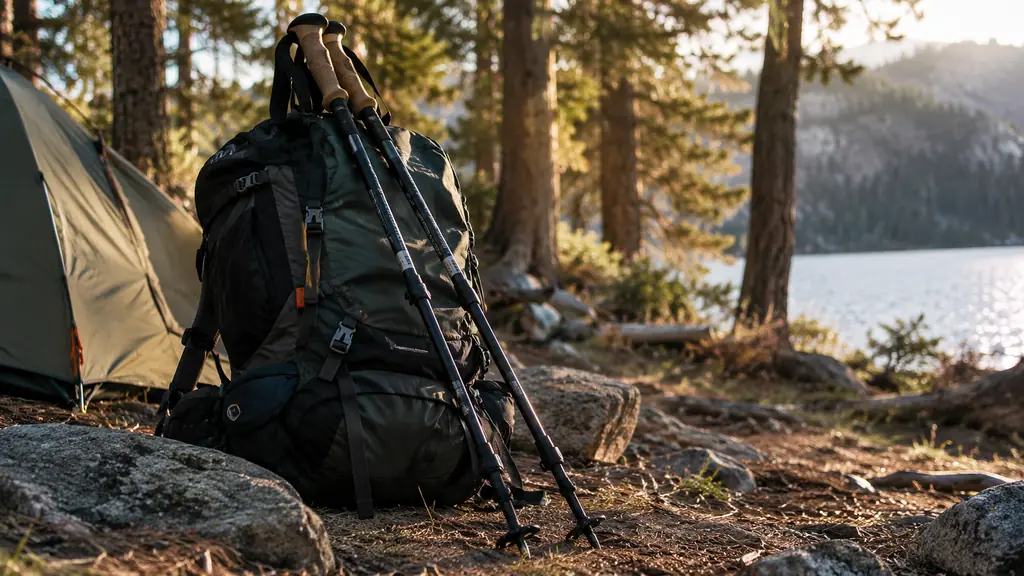
I'm a weekend backpacker, not a thru-hiker. I carry a TETON Sports Explorer 65L pack on overnight trips, and I've used the Naturehike Cloud-Up 2 tent on solo overnights. The poles came along on every trip where I knew I'd be descending with weight on my back. That's the situation my left knee hates most.
I set them to the length that puts my elbows at about 90 degrees when the tips are on the ground. On the flats I keep the straps loose. On descents I shorten them a bit and lean into them. It took me two or three trips to stop overthinking it, but once I did, the rhythm felt natural.
I also used them on a few car-camping weekends with my wife Dana. She doesn't backpack, but she borrowed them once for a two-mile walk at Big South Fork and commented on how much easier the hills felt. That says something, because she is not easily impressed by gear.
I also used them on shorter day hikes without a pack. That's where I noticed the difference most. On a five-mile loop at Jefferson Memorial Forest, with no weight on my back, the poles still took pressure off my knees on the downhills. I expected them to help with a full pack. I didn't expect them to help as much on a light day.
What the Trail Poles Actually Do
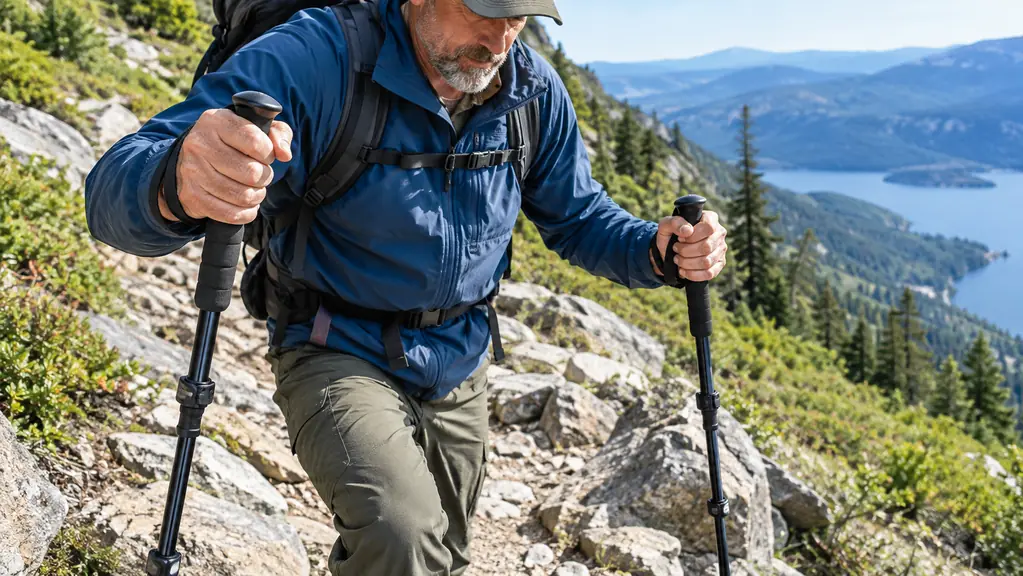
The Trail poles are aluminum, which means they're not the lightest option on the market. But they are light enough for a full day, and the tradeoff is durability. I've banged mine against rocks, dropped them on gravel, and once wedged a tip between two boulders on the Sheltowee Trace. They came out fine.
The locking mechanism is the part I was most worried about, because cheap twist locks slip. These use a lever-style lock that I could tighten with one hand, even in cold weather. I never had a pole collapse on me, and I checked them often because I expected them to fail. They didn't.
The grips are foam, not cork. Cork fans will tell you foam gets slippery when your hands sweat. I found the foam fine on warm days, and the shaped grip gave my hand a clear place to sit. The straps are padded enough that I could hang weight from them without the strap digging in.
One detail I appreciate: the baskets are small enough to stay out of the way but big enough to keep the tips from sinking into mud. On a wet stretch of the Sheltowee Trace, I never had a pole punch through and leave me off balance. That's the kind of thing you don't notice until it doesn't happen.
How They Held Up Over a Season
I put about 180 miles on these poles between October and April. That includes a wet week in the Smokies where it rained four of six days. The aluminum shafts show a few scratches. The baskets still fit snugly. The tips have worn down some, but that's normal, and replacement tips are easy to find.
The only real issue I had was with the rubber tips that come in the box for walking on pavement. I used them on a couple of road walks and they wore through faster than I expected. I took them off and left them off, because I spend almost all my time on dirt. That's a minor gripe, not a dealbreaker.
The lever locks were still tight at the end of the season. I did not have to retighten them once. I know that's the thing that breaks on cheap poles, so I paid attention. After a full season, I have no complaints about the hardware.
The only maintenance I did was rinsing them off after the Smokies trip. The locks got a little gritty after a day of rain and mud, but a quick rinse and they were back to normal. I didn't need to oil anything or tighten anything. That's the kind of low-maintenance behavior I want from gear I carry into the woods.
How the Poles Feel on a Descent
Here's the part that matters most to me. On a steep downhill, with a 30-pound pack, my left knee used to start complaining within the first mile. With these poles, I can put a good chunk of my weight through my arms instead of my legs. The descent becomes a rhythm instead of a punishment.
I tested this on the Chimney Top trail at Red River Gorge, which has a rocky descent that always bothered me. With the poles shortened a couple of inches, I felt stable on the loose gravel and the big steps down. My knee was sore the next day, but not the way it used to be. That's the difference.
The straps matter here. I keep them snug enough that I can push down through the strap without gripping the handle hard. That means my hands don't tire out, and the pole becomes an extension of my arm. It took a few tries to get the strap tension right, but once I did, it made a real difference.
I also learned to use the poles on the uphill sections, not just the downhills. Planting the pole and pulling yourself forward takes a little pressure off your legs, and on a long climb it adds up. I used to think poles were only for descents. Now I use them the whole way.
The Tradeoffs I Found
The biggest tradeoff is weight. These are not the lightest poles you can buy, and if you're counting every ounce for a thru-hike, you can find carbon poles that weigh less. For a weekend backpacker carrying a 30-pound pack, the difference is small, and the durability is worth it.
The second tradeoff is the foam grip. I already mentioned it, but it's worth saying plainly: if you have your heart set on cork, these aren't the poles for you. Cork molds to your hand and handles sweat better. Foam is easier to clean and does not absorb water. I chose foam because I hike in rain a lot.
The third tradeoff is that these are not the poles you want if you plan to use them for tent poles or emergency shelter poles. They're trekking poles, built for walking. I use a separate tent, so that's not a problem for me, but it's worth knowing before you buy.
One more thing to know: the poles come in one piece, not three. That makes them a little awkward to pack. I strap them to the outside of my TETON pack and they ride fine, but if you're someone who wants poles that fold down small enough to fit inside a suitcase, these aren't that. It's a tradeoff I accepted.
Alternatives I Considered
I looked at cork-handled poles, because a lot of long-distance hikers swear by them. There's a real decision to make between foam and cork, and I thought about it for a while. Cork is softer and molds to your hand. Foam is lighter in wet weather and easier to clean. I went with foam.
I also considered a lighter carbon pair. In the end, I decided I'd rather carry a few extra ounces and not worry about snapping a shaft on a rocky trail. The BLACK DIAMOND aluminum build feels like it can take a beating. After a season, I'm confident I made the right call.
I also looked at a pair with cork grips and a slightly different locking system. The cork felt nice in the store, but I kept coming back to the foam because I hike in rain and I didn't want grips that soak up water. I don't think there's a wrong answer here, just a different answer depending on where you hike.
One alternative I didn't seriously consider was a set with a different locking system, because the lever locks on these worked so well for me. But I did handle a pair at a shop and the mechanism felt solid. It's a matter of preference. I'll stick with what I know works.
What I Liked
- Aluminum build feels tough without being heavy
- Lever locks held tight all season
- Foam grips work well in rain
- Easy to adjust length on the trail
- Baskets and tips held up on rocky terrain
Where It Falls Short
- Not the lightest poles on the market
- Rubber tips wore out quickly on pavement
- Foam grips won't please cork fans
I checked the locks on these poles after every trip because I expected them to fail. A full season later, they were still tight.
Who This Is For
If you're a weekend backpacker with a cranky knee, or a day hiker who wants to take some load off your joints on descents, these poles are a solid fit. They're also good for anyone who wants a simple, durable pair that doesn't need much fussing. If you hike rocky trails in the Southeast like I do, the aluminum build is a plus. And if you're planning a trip to the Smokies, these are worth packing.
If you're new to poles, these are also a good place to start. They're simple, they don't need much adjustment, and they're forgiving if you're still figuring out your rhythm. I wish I'd bought a decent pair years ago instead of the cheap ones I started with.
I'd also recommend these to anyone who hikes with a partner who doesn't use poles. Dana borrowed mine once and immediately understood why I carry them. If you're on the fence, try a pair on a short descent and see how your knees feel the next day.
Who Should Skip It
If you're a thru-hiker counting every ounce, you'll probably want a lighter carbon pole. If you have your heart set on cork grips, these won't satisfy you. And if you do most of your walking on pavement, the rubber tips will wear out faster than you'd like. For everyone else, these are worth a look.
If you already own a pair of carbon poles and you're happy with them, you don't need these. And if you're the kind of hiker who wants the lightest possible gear, the aluminum build will feel heavy to you. There's no shame in that. It's just not what these poles are. You'll be happier with a carbon pair, and that's a fine choice.
One more group: people who mostly hike on flat, smooth trails. If you're not dealing with steep descents or rough ground, the benefits of poles are smaller. You might be fine with a single walking stick or nothing at all. These poles earn their place on the kind of trails I hike, but they're not mandatory everywhere.
Ready to take the sting out of your next descent?
I used these BLACK DIAMOND Trail poles for a full season on Kentucky and Tennessee trails. They held up, they're comfortable, and they made my left knee happier. Check today's price on Amazon to see if they're right for your next trip.
Amazon Check Today's Price on Amazon →