
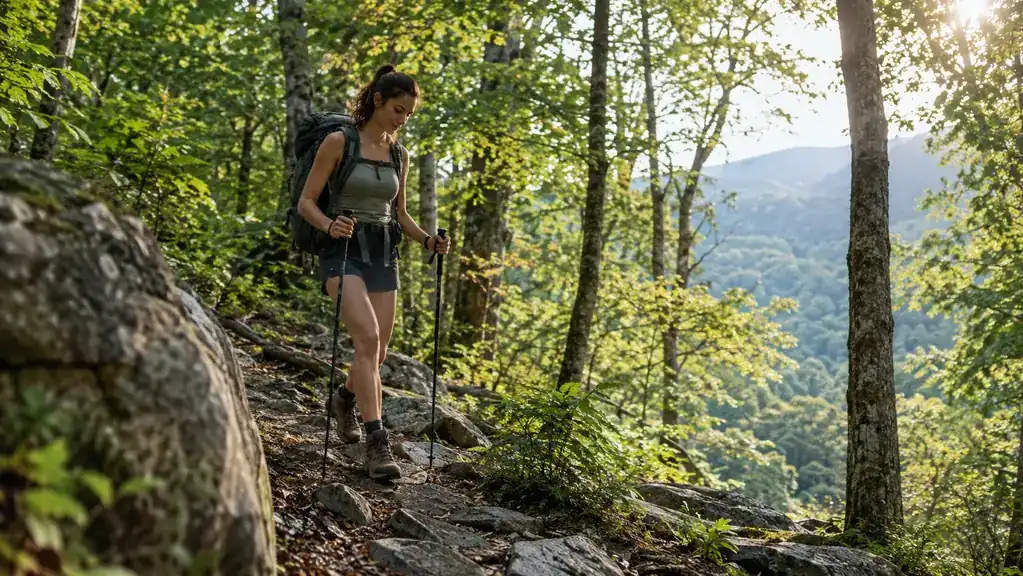
Every time I pull out my poles at a trailhead, somebody asks the same question: are the cheap cork-grip poles fine, or should I spend the money on a real pair? I've used both, and I get it. Trekking poles look like the simplest tool on earth until you're a mile deep on a rocky descent and one of them collapses under your weight. I'm Wes Harlan, 54, a retired PE teacher from outside Louisville, and I've got a cranky left knee that has opinions about every downhill in Kentucky and Tennessee. This season I carried the BLACK DIAMOND Trail poles on Red River Gorge, the Sheltowee Trace, Big South Fork, and a week in the Smokies, and I spent the early part of the year on a pair of cork-grip poles to see what the fuss was about. Same pack, same trails, same knee, different results. I'm not a thru-hiker and I don't pretend to be. I'm a weekend backpacker who wants to keep hiking until my knees give out, and that changes how I judge gear.
Here's the short answer before I get into the weeds. If you hike the kind of rooty, rocky trails we have around here, the BLACK DIAMOND Trail poles are the pair I'd buy again. They lock where you set them, they stay locked, and they've taken a beating without complaint. Cork grips are more comfortable in the heat and usually cheaper, and for easy trails or occasional day hikes, they're a legitimate choice. But a pole that slips on the one descent that matters is worse than no pole at all, and that's the difference that decided this comparison for me. I'll walk you through how I tested both, where each one honestly wins, and who should buy which.
| BLACK DIAMOND Trail Poles | Cork-Grip Poles | |
|---|---|---|
| Price | A fair price for a pair that holds up to rough trails, with a real warranty behind it. | Usually the cheaper buy on the shelf, and the reason most people try cork first. |
| Grip comfort | Foam grips that work wet or cold and need no break-in. | Cork that molds to your hand and stays cool on hot, sweaty days. |
| Grip durability | Foam shrugs off scrapes and hard use without showing it. | Cork dents and chips if you smack a rock, and it dries out over time. |
| Locking mechanism | FlickLock lever you can set with gloves on, and it stays put. | Twist locks on many budget cork poles slip under load mid-hike. |
| Weight | Aluminum shaft, sturdy, a few ounces heavier than carbon. | Carbon versions are lighter on the wrist; aluminum versions are about the same. |
| Tips and baskets | Carbide tips and interchangeable baskets sized for real trail conditions. | Basic tips, and the baskets are often not replaceable. |
| Warranty | Backed by BLACK DIAMOND, a company that stands behind its gear. | A gamble with a generic brand, and support is hard to find. |
| Best for | Rocky descents, rough trails, all-day durability with a loaded pack. | Easy day hikes and hot weather where grip comfort is the priority. |
How I Compared Them
To keep this fair, I didn't just swap poles between trips and trust my memory. I also wrote down what happened on each hike, because memory lies after a long day. For the first half of the season I hiked the same loops with the cork-grip pair: the Auxier Ridge loop in Red River Gorge, the section of the Sheltowee Trace near the Nada Tunnel, and a couple of day hikes at Big South Fork. Then I switched to the BLACK DIAMOND Trail poles and repeated those same trails with the same pack weight, which was right around 24 pounds with water on the overnight trips. I kept a scorecard on three things: whether the lock held on descents, whether the grip got slick or sore, and whether anything broke, bent, or needed fiddling with on the trail. The first test was a Saturday in late April, an 8.2-mile loop with a 1,400-foot climb, and it set the pattern for everything that came after.
The cork-grip poles I tested were a basic big-box pair, nothing fancy, the kind you see hanging on a pegboard next to the camp chairs. I didn't expect much from them, which is exactly why I tested them first. The BLACK DIAMOND Trail poles are a step up in engineering, and the test was whether that engineering showed up where it counts: on a wet rock, on a long downhill, on the third day of a trip when your hands are tired and your attention is gone.
Where BLACK DIAMOND Wins
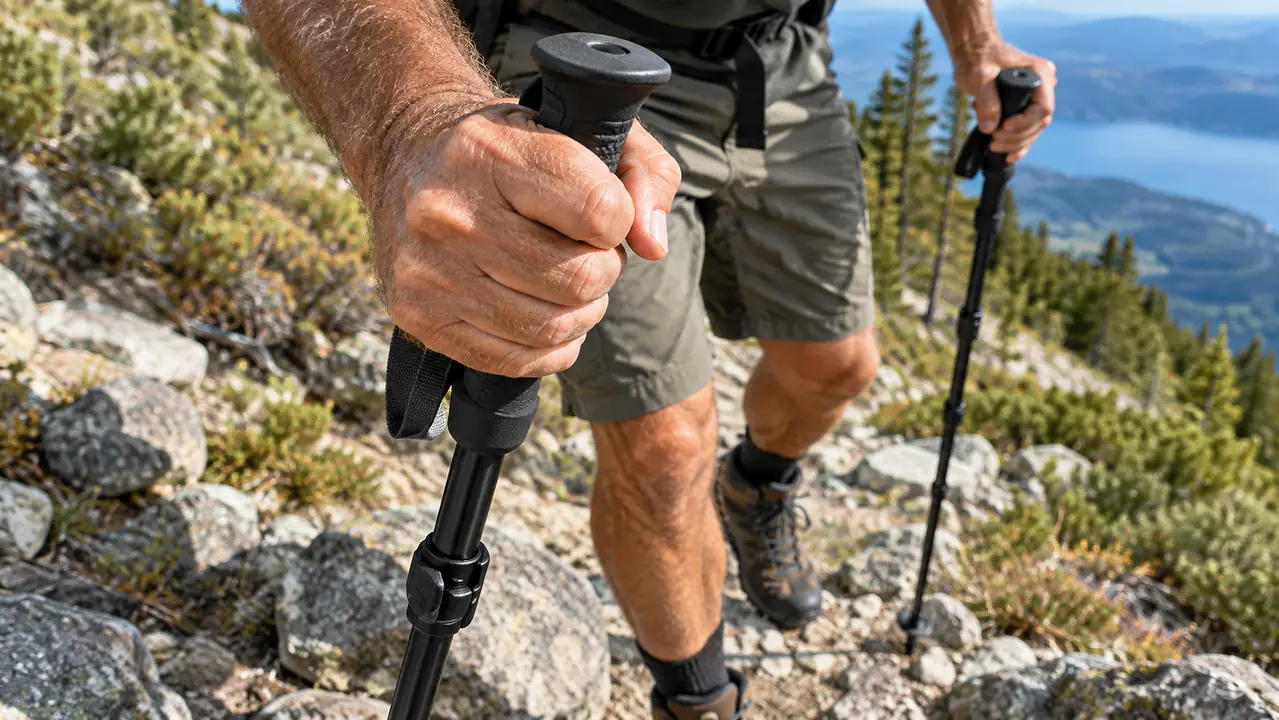
The lock is the whole ballgame. The BLACK DIAMOND Trail poles use a FlickLock, a lever that snaps shut with a click you can feel even through a glove. I set both poles to the same length at the trailhead and they stayed there for nine miles. The moment that sold me came on the descent from Chimney Top in the Gorge, a stretch of bare sandstone and loose gravel where the trail drops about 800 feet in a mile. I set the poles at the top, and at the bottom they were still exactly where I set them. The cork-grip pair I used before had twist locks, and on a humid day they crept. I'd look down mid-descent and see the lower section had slid a few inches. That's not a small annoyance. When a pole is the wrong length, your shoulder and your knee take the hit, and with my left knee, I can't afford that.
The other win is durability. Foam grips don't need babying, and the BLACK DIAMOND Trail poles have taken a beating this season. On one trip in Big South Fork I used them to brace myself crossing a slick log over the creek, then smacked them on boulders for the next hour, and the grips still look close to new. I've dropped them on gravel, left them strapped to my pack in a rain shower, and once wedged one between two rocks to steady myself on a steep bank. The tips are carbide, and the baskets screw off so you can swap them for a smaller summer set or snow baskets. That sounds like a minor detail until a basket cracks on day two of a trip and you realize the cheap pole you brought can't be fixed on the trail.
Where Cork-Grip Poles Win
I'll be honest, because this surprised me: cork feels better in your hand on a hot day. The BLACK DIAMOND Trail poles have foam grips, and foam is perfectly fine, but cork breathes and slowly shapes itself to your palm. On a July hike along the Sheltowee Trace, the temperature hit 91 by noon and the humidity made it feel like more. I carried a 20-pound pack on a 6-mile out-and-back, and by the last mile my hands were slick and my mind was on getting to the car. The cork stayed comfortable in a way foam doesn't on a day like that. If most of your hiking is warm-weather day hikes, the grip alone is a good reason to look at cork.
Cork-grip poles are also usually the cheaper buy, and that's not nothing. When I was getting started about eight years ago, I wasn't ready to spend real money on a pair of sticks, and the cork pair I bought got me on the trail and showed me what poles were for. Mine came with a thin foam pad over the top of the cork, and the pad wore through in the first season, which told me everything about how much thought went into the design. If you're not sure poles are for you, or you hike a few times a year on easy ground, the budget argument is legitimate. The problem is that the money you save often shows up in the lock, and the lock is the one part you can't afford to have fail.
For the trails we hike, the lock matters more than the grip.
The BLACK DIAMOND Trail poles carried me through a season of rocky descents without slipping once. If your hikes look anything like mine, that's the difference worth paying for.
Amazon Check Today's Price on Amazon →A pole that slips on the one descent that matters is worse than no pole at all.
What Nobody Tells You About Cork Grips
Cork is a natural material, and it behaves like one. It dents when you smack it on a rock, it chips if you drop the pole on gravel, and it dries out and gets crumbly after a few seasons in a hot car, which mine spent plenty of time in. Foam doesn't do any of that. The cork-grip pair I owned developed a divot where my thumb sat by the end of that first spring, which sounds like a feature until the divot starts rubbing a hot spot on a long day.
There's also the sweat factor. Cork absorbs moisture, which is great for your grip and less great for the pole. On a wet day, a cork grip holds water like a sponge, and it stays damp for a while. On a rainy afternoon at Big South Fork, the cork grip on my left pole stayed wet for the better part of an hour after the rain stopped, and my hand started to slip on the climb out. Foam sheds water and dries fast. Neither is a dealbreaker, but if you hike in the kind of weather we get in the Smokies, where one afternoon can dump an inch of rain, it's worth knowing before you pick.
The Straps and the Details
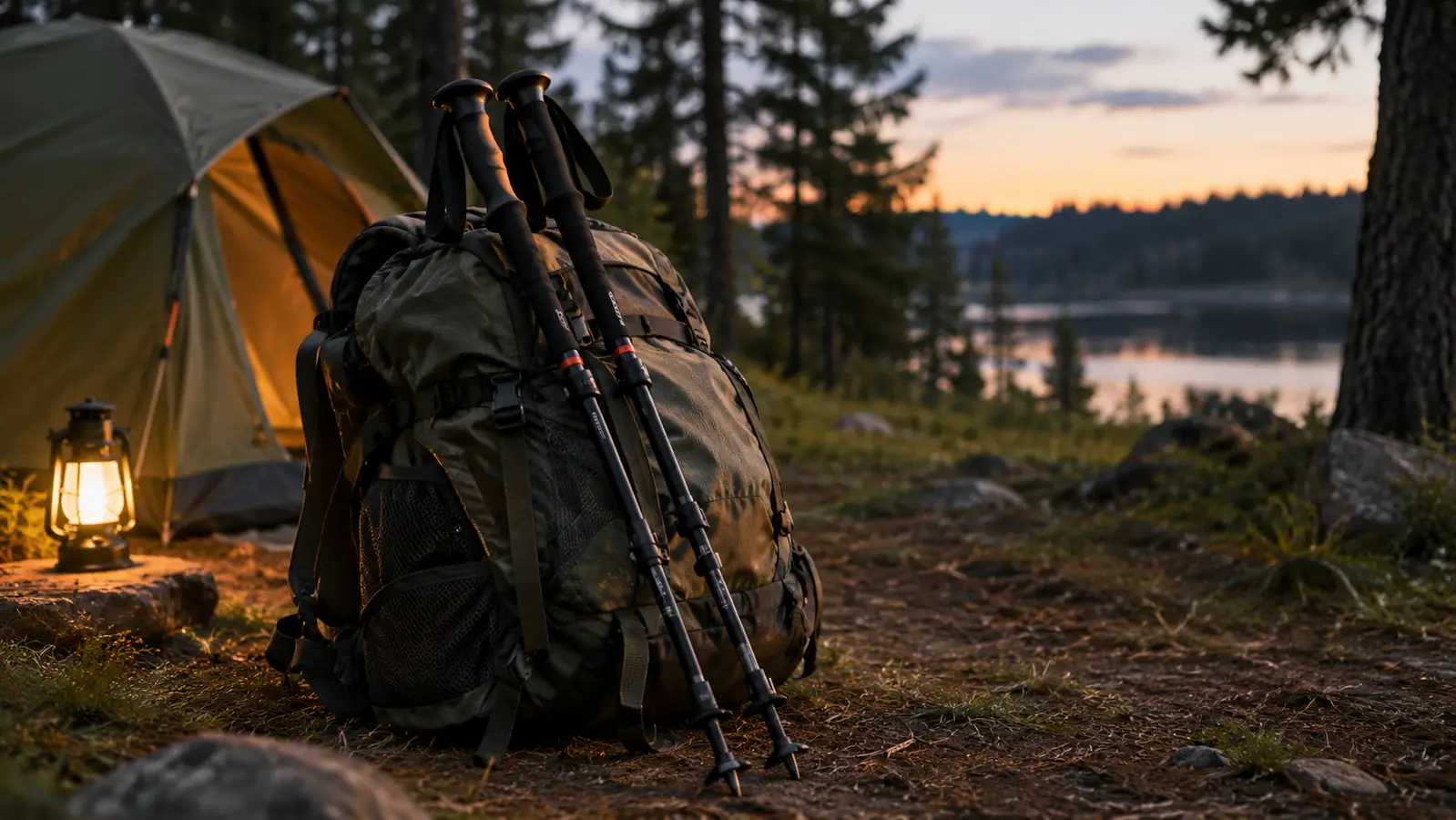
One thing that doesn't show up in the spec sheet is the strap, and the BLACK DIAMOND Trail poles get this right. The straps are wide enough to spread the load across your hand, and they cinch down so you can relax your grip on a long climb and still keep the pole with you. On the climb out of the Cumberland River gorge, a stretch that gains about 900 feet in under a mile, I let go of both poles at once to shake out my hands, and both stayed right where they were, hanging off my wrists. The cork-grip poles I used had thinner straps that twisted and dug in after a few miles. It's the kind of detail you don't notice until you notice it, and then you can't un-notice it.
The other detail is how the poles pack down. Both pairs collapse, but the BLACK DIAMOND Trail poles have a simple, solid feel when they're folded up and strapped to my TETON pack. The sections mate cleanly and don't rattle. That matters when you're carrying them for a mile of trail before the first climb, and it matters again at the end of the day when you're tired and just want to lash them on and go. I strapped them to the outside of my pack for a full day on the Sheltowee Trace and never once had to stop and reseat a section.
Why I Carry Poles at All
If you're still deciding whether poles belong in your pack, here's my short pitch. I'm 54, my left knee has been cranky for years, and my lower back tells me when a pack is fitted wrong. Poles take a surprising amount of load off both. On descents, they're the difference between arriving at camp feeling fine and arriving with a knee that's talking to me for the next two days. On the last trip of the season, a 9-mile day in the Smokies with about 2,000 feet of climbing, I planted a pole on every step of the descent and my knee was quiet the whole way home.
The research backs up what my knee already knows. Trekking poles reduce the impact on your knees on downhill sections, and for someone who plans to keep backpacking into his sixties, that's the whole argument. The full case for why trekking poles save your knees is worth a read on its own, but the short version is this: if you hike downhill with a pack, you're the exact person who should be carrying a pair.
Who Should Buy Which
Buy the BLACK DIAMOND Trail poles if you're like me: your hikes include rocks, roots, and descents that make your knees talk, and you want a pole that locks once and doesn't need attention until you're back at the car. Buy cork-grip poles if you mostly walk easy trails, hike mainly in warm weather, or just want the cheapest way to find out whether poles help you at all. Both will get you down the trail. One of them will still be locked at the length you set it when you get there. That's the one I carry. And if you're somewhere in between, start with the BLACK DIAMOND Trail poles. They may not be the cheapest pair on the shelf, but they're the pair that will still be working after two seasons of real trails.
A pair that still clicks at the same length on mile nine.
After a full season of Kentucky and Tennessee trails, the BLACK DIAMOND Trail poles are the pair I reach for every time. Check today's price on Amazon, and the long-term review covers how they held up over the whole season.
Amazon Check Today's Price on Amazon →