
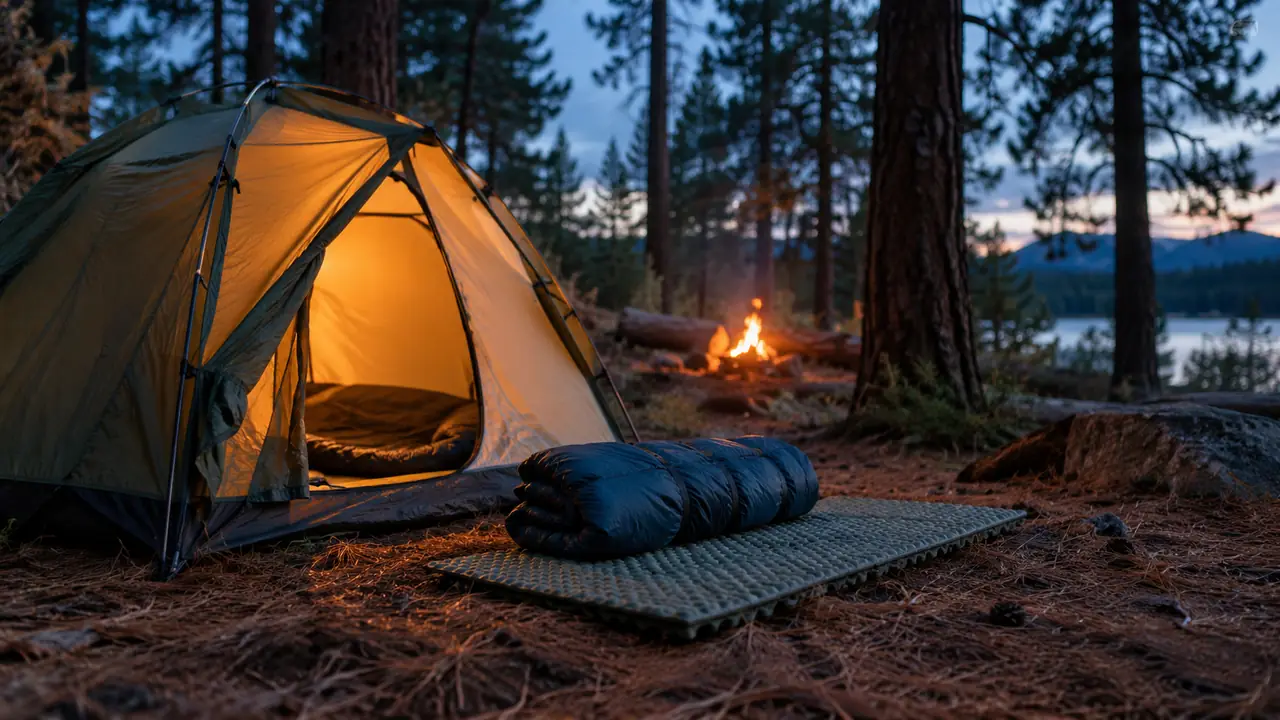
Cold ground is what wakes me up. I can have a good sleeping bag, a good night, and then at 2 AM my hip goes cold, I roll over, and I spend the rest of the night chasing a warm spot that never comes. For years I figured the fix was a heavier bag, a second blanket, or just tougher teeth. What actually fixed it was under me, not over me. A sleeping pad, not a warmer bag, is what changed my cold nights.
The Therm-a-Rest Z Lite Sol is a closed-cell foam pad, and it is the first thing I pack when the forecast says cold. I bought one for my back, kept it for my sleep, and after a full season of nights on the ground in Kentucky and Tennessee, it is the piece of gear I trust most when the temperature drops. This is the exact system I use.
Sleep warm on the cold ground, starting tonight
The Therm-a-Rest Z Lite Sol is the pad I have used for a full season of cold nights. It stops the ground cold, weighs almost nothing, and takes about thirty seconds to set up. These are the steps I follow every time.
Amazon Check Today's Price on Amazon →Why a foam pad for cold ground
The ground is a heat sink. It is usually colder than the air, and it pulls warmth out of you all night long. A sleeping bag does almost nothing about that, because your weight compresses the insulation underneath you until it is about as thick as a blanket. The only real fix is a layer between you and the ground that does not compress. That is the whole job of a sleeping pad.
Inflatable pads do the same job, and they are softer. But they can leak, they need to be blown up, and a leak in the middle of a cold night is a bad night. A closed-cell foam pad cannot leak. It cannot pop. It weighs next to nothing, and it costs a fraction of what a good inflatable costs. The tradeoff is firmness, and for my back, firmness is a feature, not a bug.
I am not saying foam is better than inflatable for everyone. I am saying that for sleeping warm on the ground, reliably, with nothing to go wrong, a foam pad is the simplest answer I have found. The Therm-a-Rest Z Lite Sol is the one I use, and these are the steps I follow to get the most out of it.
Step 1: Pick a campsite that holds heat
The pad matters, but the ground you put it on matters almost as much. Cold air settles. It runs downhill and pools in low spots like water, so the bottom of a valley or a shallow depression is the coldest place to sleep, even when the tent is good. I learned that the hard way on a frosty night in Big South Fork.
I look for a spot that sits slightly higher than the ground around it, with a slope that lets water drain away. A flat patch on a small rise, a few feet above the low ground, is worth ten minutes of extra walking. I also look for a natural windbreak: a fallen log, a rock, a stand of trees. Wind strips heat off a sleeping bag faster than cold air alone, and a good windbreak is worth a few degrees all by itself.
One more thing I check is what is under the tent. Pine needles and deep leaves insulate. Bare dirt and wet grass do not. If I have a choice between a flat patch of dirt and a slightly lumpy patch of pine straw, I take the pine straw every time and let the pad handle the lumps. The pad is firm enough to smooth out a lot.
Step 2: Clear the ground and add a layer under the pad
Before the pad goes down, the ground under it needs a once-over. I sweep the tent floor clean of pebbles, twigs, and pine cones. A foam pad is firm, and a pebble under your hip feels like a brick by 3 AM. It takes thirty seconds, and it saves the whole night. I do this even when I am tired, because I have paid for skipping it.
Then I put a ground cloth under the pad. A footprint, a cheap tarp, even a cut-down emergency blanket works. The job is to keep moisture from the ground off the pad and the bag. The Therm-a-Rest Z Lite Sol is closed-cell foam, so it will not soak up water like an old sponge pad, but keeping the underside dry means the warmth stays on your side of the pad. Damp is the enemy of warm.
Inside the tent, I lay the pad where my hips and shoulders will be, not centered under the tent. Most people sleep in the middle of the floor, but I slide the pad to the side and put my bag on it so my head is near the door and my feet are against the back wall. That keeps my breath from dampening the whole tent, and it gives me a little extra room for gear. Small choices like this add up over a cold night.
Step 3: Lay the pad flat with the reflective side up
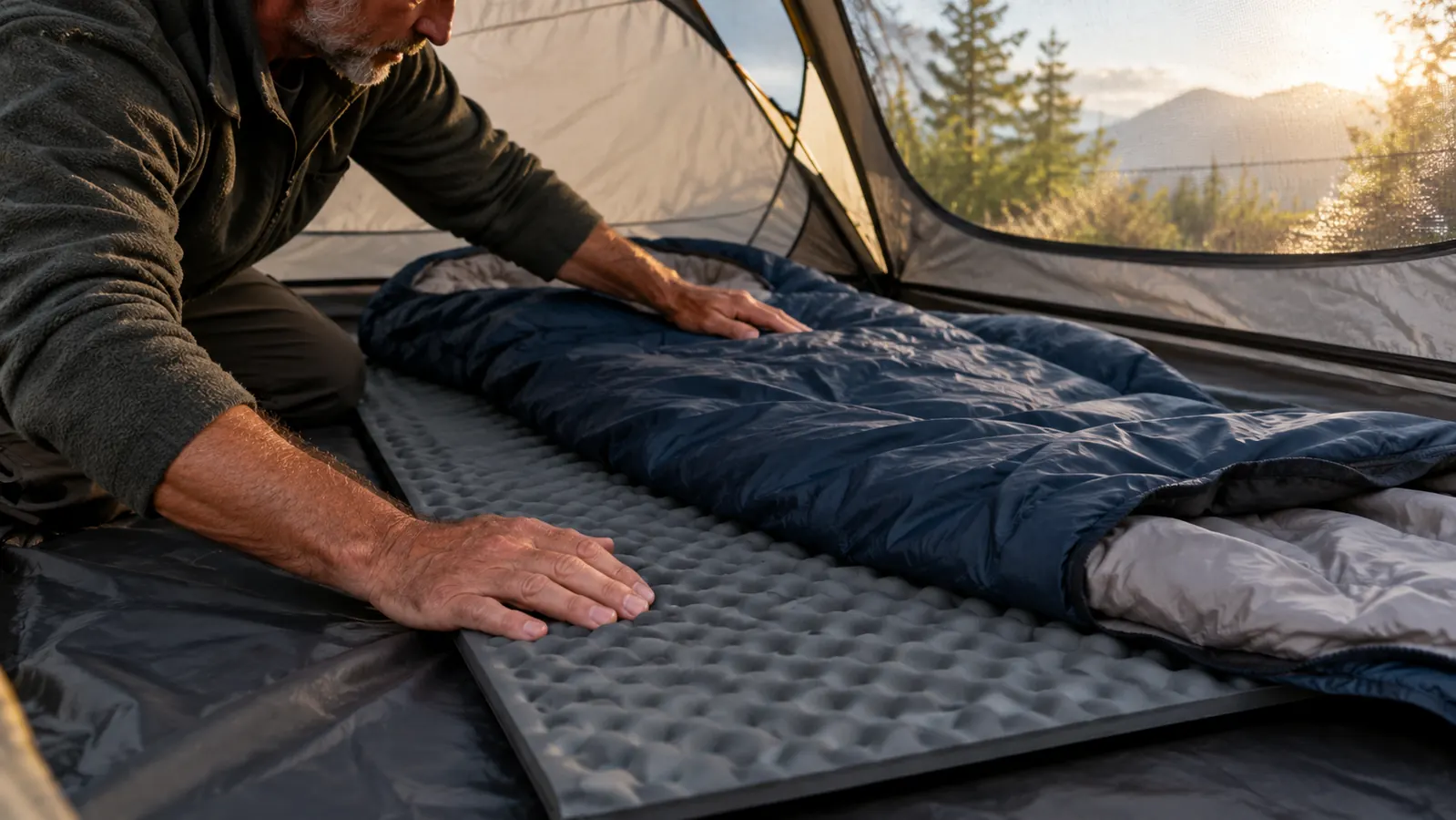
The Z Lite Sol has a reflective coating on one side. That side faces up. It is a thin metalized film that bounces your body heat back at you instead of letting it sink into the ground. It is not magic, it is just physics, and it is worth the few seconds it takes to get it right. I check it every single time I set up.
Lay the pad flat and make sure it is fully extended. The Z Lite Sol folds into a compact stack for packing, and if you leave one fold tucked under itself, you get a hard ridge under your back. I run my hand over the pad before I put the bag down, feeling for any fold or twist, and I flatten it out. Thirty seconds of fussing saves hours of tossing.
If you are using an inflatable pad too, the foam pad goes underneath it. The closed-cell foam takes the worst of the cold ground and the lumpy stuff, and the inflatable on top gives you the plush. That two-layer setup is the warmest way to sleep on the ground I have found, and the foam pad is the layer doing the heavy lifting. It is also the layer that never fails.
Step 4: Build the sleep system around the pad
The pad stops the cold from below. The bag handles the cold from above. But the two only work together if you do a few small things right. First, do not crank the drawcord on your bag so tight that you compress the insulation under you. The part of the bag under your body is already compressed by your weight, which is exactly why the pad has to do that job instead. Let the bag loft up and let the pad carry you.
Second, get into the bag warm. I eat a snack before bed, do a dozen squats, and climb in. A warm body heats a bag in minutes. A cold body takes all night to catch up. This sounds too simple to matter, but it is the difference between a 2 AM wake-up and a full night. I do the squats even when I am tired, because they work.
Third, wear the right amount to bed. A light base layer and a hat beat a heavy fleece that makes you sweat. Sweat in the bag is the fastest way to get cold at 3 AM, because damp insulation stops insulating. The Z Lite Sol does not care about sweat, it is closed-cell foam, but your bag does, so keep the moisture on your side of the system low. If you wake up sweating, take something off before you go back to sleep.
Step 5: Manage moisture and air the pad out
Moisture is the quiet killer of warm sleep. Your breath puts a liter of water into the air every night, and in a closed tent some of that lands on your bag and your pad. In the morning I flip the pad over and let it air before I pack it. The foam does not absorb water, so a few minutes of air is enough. It is the cheapest insurance I own.
I also sleep with the tent vent open, even on cold nights. A little cold air moving through beats a lot of damp air sitting still. I would rather wake up with a cool nose than a damp bag. Ventilation is the difference between a dry morning and a wet one.
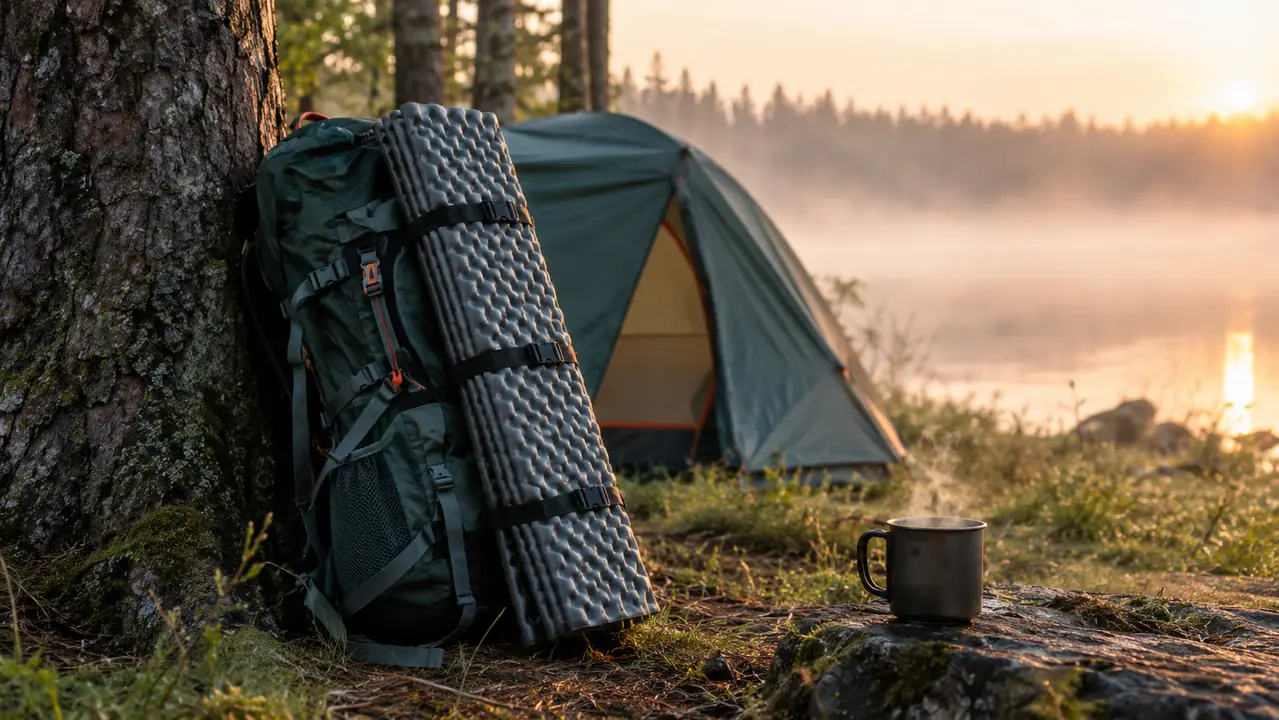
When I pack, the Z Lite Sol goes on the outside of my TETON pack, strapped flat against the back panel. It doubles as a sit pad at every break, keeps my back off a cold log at lunch, and gives me something dry to kneel on when I am filtering water with my Sawyer Squeeze. A pad that works all day is easier to justify carrying all night. Mine has earned its spot on every trip this season.
The mistakes I made first
Before I figured this out, I made every mistake in the book. I put the pad on bare dirt in the lowest spot in the valley. I slept with the reflective side down. I left a fold under my hip and woke up with a bruise. I wore a heavy fleece to bed, sweated, and spent the last two hours of the night shivering in a damp bag. Each one was a setup error, not a gear failure.
None of those failures were the pad's fault. They were all setup errors, and they are exactly why I am writing these steps down. The gear was fine. I was using it wrong. If you are cold on the ground, go through this list before you go shopping for a warmer bag. The fix is usually under you, not over you.
The other mistake was expecting one piece of gear to fix everything. The pad stops the cold from below. It does not fix a drafty bag or a wet base layer. The system only works when all the layers work together, which is why these steps are about the whole setup, not just the pad. Get the setup right and the pad does its job quietly.
What Else Helps
A few things that are not the pad but make the pad work better. A ground cloth under the tent keeps dew from wicking up. A warm hat and a dry base layer do more than a second blanket. And if the night is genuinely cold, below freezing, I put my puffy jacket over my legs inside the bag. That traps heat where the bag is thinnest and keeps my core warm.
I also use my Naturehike Cloud-Up 2 tent with the fly staked low to hold heat and block wind. The tent is not a heater, but a still pocket of air around the bag is worth a few degrees. And I keep my Black Diamond trekking poles outside the tent, never inside, so I am not tripping over them at 2 AM. Little habits like that keep the night smooth.
One honest note: a foam pad is firm. It is not plush, and if you are used to a thick inflatable, the first night will feel like a board. That firmness is what protects your back, which is why I bought the Z Lite Sol in the first place, but it is worth knowing before you buy. Give it two nights before you judge it.
One more thing: test your setup at home before you trust it in the woods. I have slept on the Z Lite Sol in my own yard more than once, just to check a new bag or a new layering system. A bad night in the backyard costs nothing. A bad night on the Sheltowee Trace costs a whole trip. Test first, then go.
The Z Lite Sol took me from waking up cold at 2 AM to sleeping through a 28-degree night in the Red River Gorge.
Here is what I tell people around the fire. You do not need a winter bag to sleep warm on the ground. You need to stop the cold from coming up through the floor, and a closed-cell foam pad is the simplest way to do that. The Therm-a-Rest Z Lite Sol has been under me for a full season of nights in Kentucky and Tennessee, and it has not let a cold night wake me up since I learned to use it right. Start with the ground, then build up from there.
The one layer that changed my cold nights
If you sleep on the ground and wake up cold, this is the fix I would try first. The Therm-a-Rest Z Lite Sol is the pad I reach for every time the forecast drops below 40. It is firm, it is simple, and it works.
Amazon See Today's Price on Amazon →