
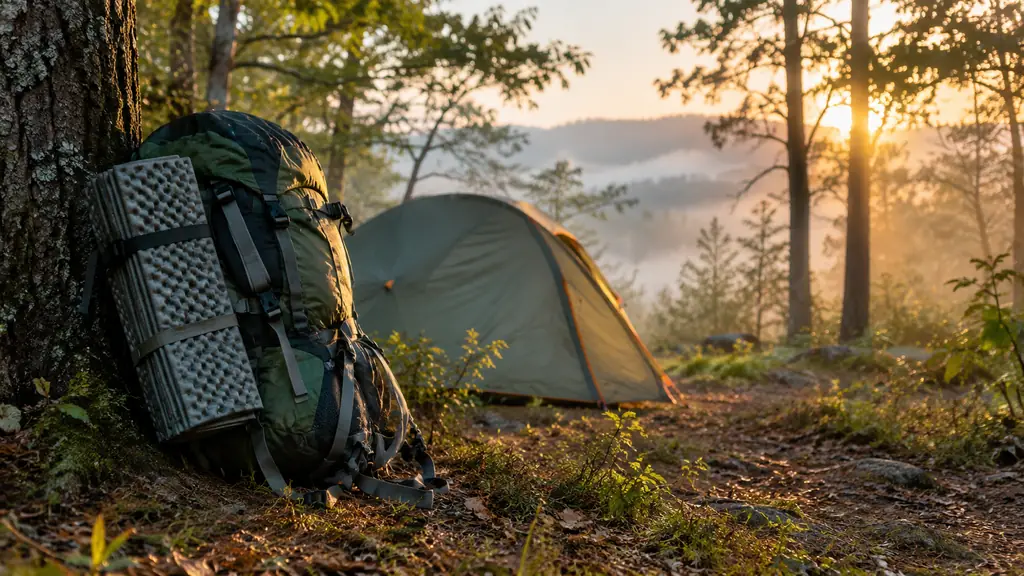
Here's what nobody tells you about the Therm-a-Rest Z Lite Sol: it will annoy you for the first two trips, and then it will quietly become the piece of gear you trust the most. It is not the most comfortable sleeping pad I own. It is not the easiest thing to pack. But after a full season of nights on it, from the ridgelines of Red River Gorge to a rainy week in the Smokies, it is the one piece of sleep gear I would replace first if my pack got stolen. That surprised me, because on paper it shouldn't work as well as it does.
I've been camping for about twenty years, backpacking for eight of them. I'm not a thru-hiker and I don't pretend to be. I'm a retired PE teacher from outside Louisville who gets out two or three times a season solo, plus car camping with my wife Dana. My back is cranky and my left knee complains on descents, so I care about sleep and weight more than most weekenders. This is the honest version of what I learned sleeping on the Z Lite Sol.
The Quick Verdict
The most comfortable pad? No. The most reliable thing I have ever carried into the woods? Yes. Buy it if you want one less thing to fail at 2 a.m.
Amazon Check Today's Price →The sleeping pad that never has to be inflated, patched, or babied
After a full season, the Z Lite Sol is the one piece of my kit I never worry about. It is firm, it is bulky, and it works every single night. See today's price on Amazon.
Amazon Check Today's Price on Amazon →How I've Used It
Every piece of this review comes from one full season of nights on the pad. I bought it in early spring, used it on three solo backpacking trips through the summer and fall, and slept on it every night of our annual week in the Smokies with Dana, where it doubled as my camp seat while she read by the fire. That is fourteen nights total on trail, plus a handful of test nights on the floor of my basement to see if my back would tolerate it before I trusted it in the woods.
Most of those nights were in my Naturehike Cloud-Up 2 tent, on the TETON Sports Explorer 65L pack I carried all season. The pad rode strapped to the outside of that pack, which is the first thing you have to accept about it. It does not compress. It does not stuff. It straps. I used the Black Diamond Trail poles I bought for my knee to help me get up from the ground in the mornings, which is a detail that matters more than you'd think on a foam pad.
I should say what this review is not. It is not a lab test. I did not measure heat loss with sensors or compare the pad against a dozen others on a grid. It is one guy, one pad, one season, and a lot of nights on the ground in the places I actually camp. That is the kind of review I trust, so it is the kind I wrote.
What Nobody Tells You About the Foam
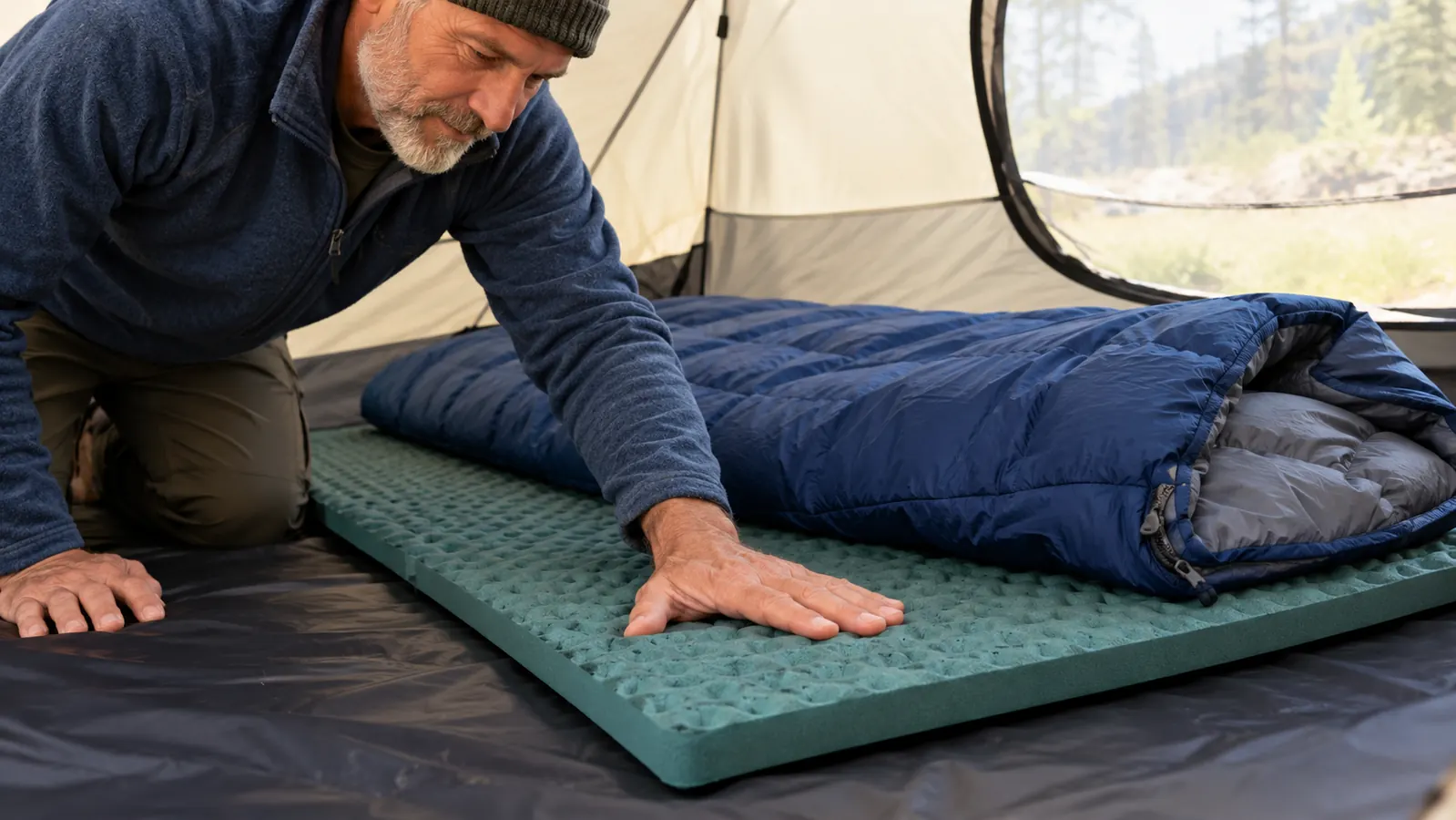
This is the part the product page does not say. The Z Lite Sol is a closed-cell foam pad with a reflective ThermaCapture layer bonded to the surface, and Therm-a-Rest rates it at R-value 2.0. That number means it is a three-season pad, not a winter pad. I slept on it down to about 38 degrees in the Smokies and was fine in a 20-degree bag with a puffy on. I would not want to push it much colder without adding something underneath or on top.
Closed-cell foam has one superpower that no inflatable pad can match: it cannot leak. There is no valve, no seam, no puncture point. I have watched friends patch inflatable pads around campfires and wake up on the tent floor with a hissing pad beside them, and I have never once had to do any of that with this one. The foam is also waterproof in the practical sense. You can set it on wet ground, wipe it off, and roll it back up. It does not absorb water. It does not gain weight. It does not rot.
The trade nobody mentions is firmness. The Z Lite Sol is 1.5 inches of foam, and it sleeps like 1.5 inches of foam. There is no sinking in, no cradling, no pillow-top. What you get instead is a flat, stable, predictable surface. For my lower back, that turned out to be exactly right. When I borrowed a friend's inflatable pad for a night last fall, I woke up with my hips sunk and my spine curved. The foam keeps everything in a line. My back feels better in the morning on this pad than on anything else I have tried.
The Bulky Part
Now the part the title promised. The Z Lite Sol is bulky. There is no way around it. Folded, it is about the size of a loaf of bread, and it does not get any smaller no matter how hard you push. You cannot stuff it into a compression sack, you cannot squeeze it into the bottom of your pack, and you cannot pretend it is not there. It lives on the outside of your pack, usually strapped to the back or the bottom, and it will catch on branches, brush against rocks, and generally remind you that it exists on every tight section of trail.
I learned to strap it flat against the back panel of my TETON pack with the side compression straps, which kept it from swinging. The first time I carried it loose, it flopped around and threw off the whole balance of the pack. That is the kind of thing nobody warns you about. Once you get the straps right, it rides fine. But the pad is also a sail in wind. On the ridgeline above the Gorge one afternoon, a gust caught it and twisted the whole pack. I had to stop and tighten everything.
It also does not fit in a tent vestibule the way you'd hope. In my Cloud-Up 2, I sleep with the pad inside the tent, which is fine, but when I wanted to keep it dry during a rainy night, I had to make room for it in the foot of the tent. It is a piece of gear you make space for, not a piece of gear that makes space for itself.
What It's Actually Like to Sleep On
The honest answer: it is firm, and you get used to it. The first night I slept on it, I thought I had made a mistake. My hip felt the ground through the foam and I turned more than I do at home. By the third or fourth night, I stopped noticing. What replaced the discomfort was something I did not expect: I stopped checking the pad. I never woke up wondering if it was losing air. I never woke up cold from the ground. I never woke up on the tent floor.
For a side sleeper, foam pads are usually a bad idea, and I will be straight with you: I am a side sleeper. My hip is the first thing that touches the ground. The Z Lite Sol is 1.5 inches of closed-cell foam, which is thicker than most foam pads and thinner than most inflatables. On hard tent sites I could feel the ground through it. On soft sites, which is most of where I camp in Kentucky and Tennessee, it was fine. If you are a strict side sleeper with a bony hip, an inflatable pad deserves a serious look before you commit to foam.
One more thing about sleeping on it: it is quiet. Inflatable pads crinkle every time you turn. Foam pads make no sound at all. That matters more than you'd think when you are sharing a tent or when you are trying to get back to sleep at 2 a.m. without waking yourself fully up.

The Verdict After a Full Season
After fourteen nights on trail and a full season of use, here is the honest accounting. The pad looks almost exactly like it did the day I bought it. The ThermaCapture coating has a few scuffs from being strapped to the outside of my pack, but the foam itself is perfect. There are no holes, no soft spots, no delamination. The z-fold creases are as crisp as when it was new. I have washed it once with a hose, dried it in the sun, and put it back in service. That is the whole maintenance routine.
The thing that changed is my opinion of what a sleeping pad is for. I used to think comfort was the only thing that mattered. This pad taught me that reliability matters more. A comfortable pad that fails at 2 a.m. is worse than a firm pad that always works. I have never once been woken up by this pad, and I have never once had to fix it. For a guy with a cranky back and a low tolerance for gear that fails, that is worth more than a few inches of cushion.
The only thing I would change is the bulk, and there is no fixing that without changing the whole idea of the pad. Foam that does not compress is foam that takes up space. You are not buying a pad that disappears into your pack. You are buying a pad you never have to think about once it is strapped on. For me, that trade is worth it.
Alternatives I Considered
I will be honest: I almost did not buy this pad. I spent a month going back and forth between the Z Lite Sol and an inflatable pad, reading reviews, weighing ounces, and annoying Dana with the pros and cons of foam versus air. In the end, the decision came down to two things: my back and my patience. Inflatables are more comfortable, no question. They also have valves, seams, and a puncture risk that foam simply does not have. I have seen too many inflatable pads fail on trips to trust one as my only pad.
The other alternative I seriously considered was carrying no pad at all, which is a thing some ultralight hikers do. I tried it for one night on the floor of a shelter on the Sheltowee Trace and decided my 54-year-old back was done with that experiment. The Z Lite Sol is the compromise: the weight of a light pad with the durability of something that will outlast me.
I should also mention the obvious alternative: the plain Therm-a-Rest Z Lite, which is the same pad without the reflective coating. The Sol version weighs a little more and adds the reflective layer, and in exchange you get the ThermaCapture layer that reflects body heat back at you. I chose the Sol because I sleep cold and I wanted every degree of warmth I could get without moving to an inflatable. If you run warm, the plain Z Lite is worth a look.
What I Liked
- Weighs 14 ounces and never needs to be inflated
- Effectively indestructible: no valves, seams, or puncture points
- Firm, flat support that my lower back prefers
- Warm enough for three-season use with an R-value of 2.0
- Zero maintenance: hose it off, dry it, put it back in the pack
- Doubles as a camp seat, knee pad, or extra layer under an inflatable
Where It Falls Short
- Bulky when folded and has to ride on the outside of your pack
- Firm sleeping surface; side sleepers with bony hips will feel the ground
- Not a winter pad; you will want more insulation below 40 degrees or so
- Catches wind and branches when strapped to a pack
- No pillow effect and no cushioning for the hips
Fourteen ounces, zero moving parts, and after a full season it still looks like the day I bought it. No inflatable I have ever seen can say that.
Who This Is For
This pad is for the weekend backpacker who wants one less thing to fail. It is for the guy with a cranky back who sleeps better on a firm, flat surface than on a marshmallow. It is for the person who camps in the spring, summer, and fall, not the dead of winter. It is for anyone who has ever woken up on the tent floor at 2 a.m. with a hissing inflatable and decided they are done with that particular gamble. If that is you, the Therm-a-Rest Z Lite Sol will probably outlast every other piece of gear in your pack.
Who Should Skip It
Skip it if you are a dedicated side sleeper with a bony hip who has never been able to sleep on a gym mat. Skip it if you winter camp in serious cold, because foam alone will not keep you warm below freezing. Skip it if you want a pad that packs down to the size of a water bottle, because this one will not. And honestly, skip it if you want a plush night's sleep in the backcountry, because the Z Lite Sol is not plush. It is dependable. Those are two different things, and this pad is unapologetically the second one.
Here is the other thing nobody tells you: if you are not sure, the Z Lite Sol is a low-risk way to find out what you actually want from a sleeping pad. It takes up space in your pack, but it never fails, so the only thing you risk is learning that you prefer more cushion. Use it for a season and you will know exactly what to buy next.
The one piece of my kit I never worry about
After a full season, the Z Lite Sol is the pad I trust when everything else can fail. It is firm, it is bulky, and it works every single night. Check today's price on Amazon and see if it fits your setup.
Amazon Check Today's Price on Amazon →