
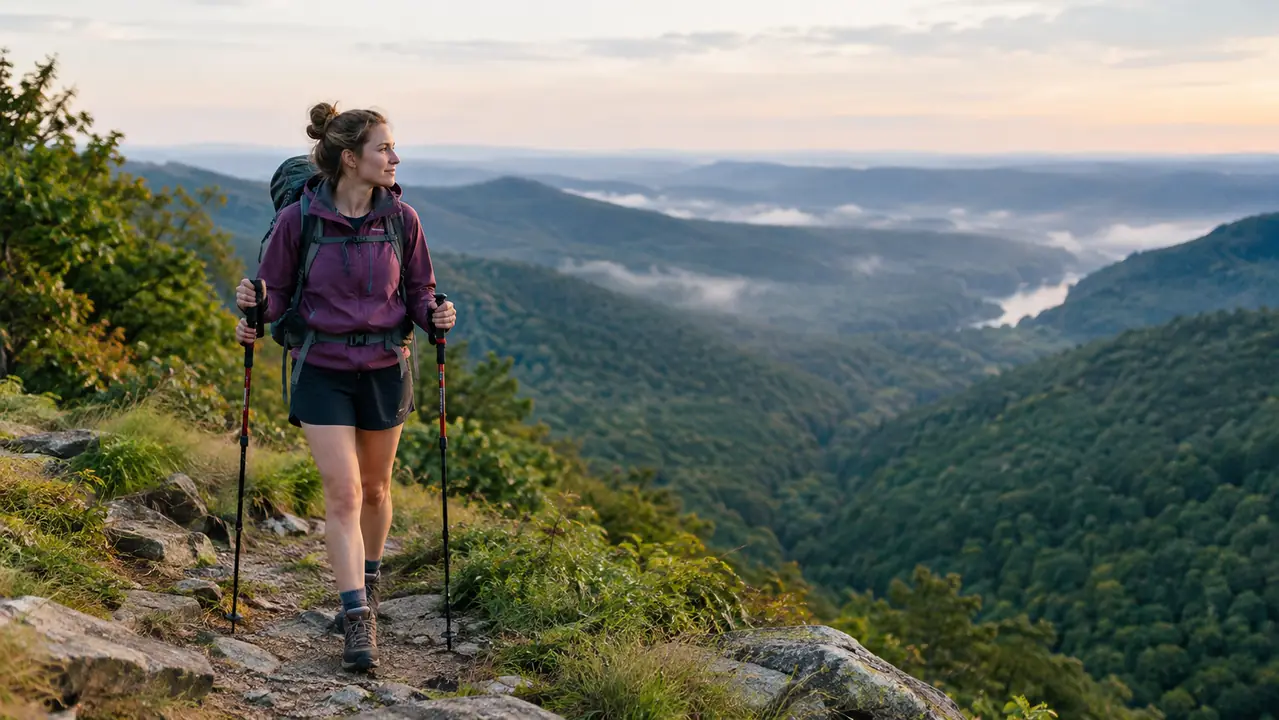
I bought a pair of BLACK DIAMOND Trail Trekking Poles in April, mostly because my left knee has been complaining on descents for two seasons. I am 54, a retired high school PE teacher, and I hike around Kentucky and Tennessee, places like Red River Gorge and Big South Fork. The poles I had before were fine for a season, but the locks slipped on every other hike and the grips gave me hot spots. I wanted something lighter, something with locks that actually held, and something I would not have to fight on the trail. What follows is the honest version of what I learned after a full season, including the parts the marketing photos do not show.
The short version is that these are good poles, but they are not perfect, and a few things about them surprised me. The grips are comfortable, the aluminum build is solid, and the locks work better than anything I owned before. There are tradeoffs, though, and if you are shopping for trekking poles, you should hear them before you spend money. I have no reason to sugarcoat this. I bought these poles myself, and I am not trying to sell you anything. I am just telling you what worked and what did not.
The Quick Verdict
A genuinely good pair of trail poles for the money, with one weak spot in the locking system that you can work around.
Amazon Check Today's Price →The poles I reach for on every descent
After a full season on rocky Kentucky trails, these are the poles that stay in my Subaru Outback. See today's price and current reviews on Amazon.
Amazon Check Today's Price on Amazon →How I've Used Them
I used these poles on about 25 hikes between April and October. That includes a week in the Smokies, several overnights on the Sheltowee Trace, and a bunch of day hikes in Red River Gorge. My pack for overnight trips is a TETON Sports Explorer 65L, and with a full load I am usually carrying close to thirty pounds. On descents, the poles take a real amount of my weight, especially on the left side where my knee complains. I set them to the right length for my height, which is about 5 foot 10, and I did not change the settings much after the first few hikes.
I also used them on flat rail trails and short walks near Louisville. That matters because a trekking pole that only works on steep ground is not a pole I trust. These handled both ends fine. The baskets are small but fine for dirt and gravel, and the carbide tips have held up better than I expected after scraping over rocks. I do not use the rubber tips that come with them, because the carbide bites better on the trails I walk.
The one thing I did not do is take them on a thru-hike. I am not a thru-hiker, and I do not pretend to be. My longest trip with them was six days in the Smokies. If you are planning a 2,000-mile walk, you might wear out any pole, and you should probably look at heavier-duty options. For weekend and week-long trips, they have been plenty. I would not hesitate to take them on another six-day trip tomorrow.
The weather I used them in ranged from hot and dry to cold and rainy. They got soaked on a three-day trip when the rain did not stop, and they dried out fine. The grips did not get slippery, which surprised me, and the locks did not freeze up. That is the kind of thing you only learn by using gear in real conditions instead of on a showroom floor. I also used them on a couple of early morning hikes where the temperature was in the forties, and they felt fine in my hands.
What Nobody Tells You About the Locks
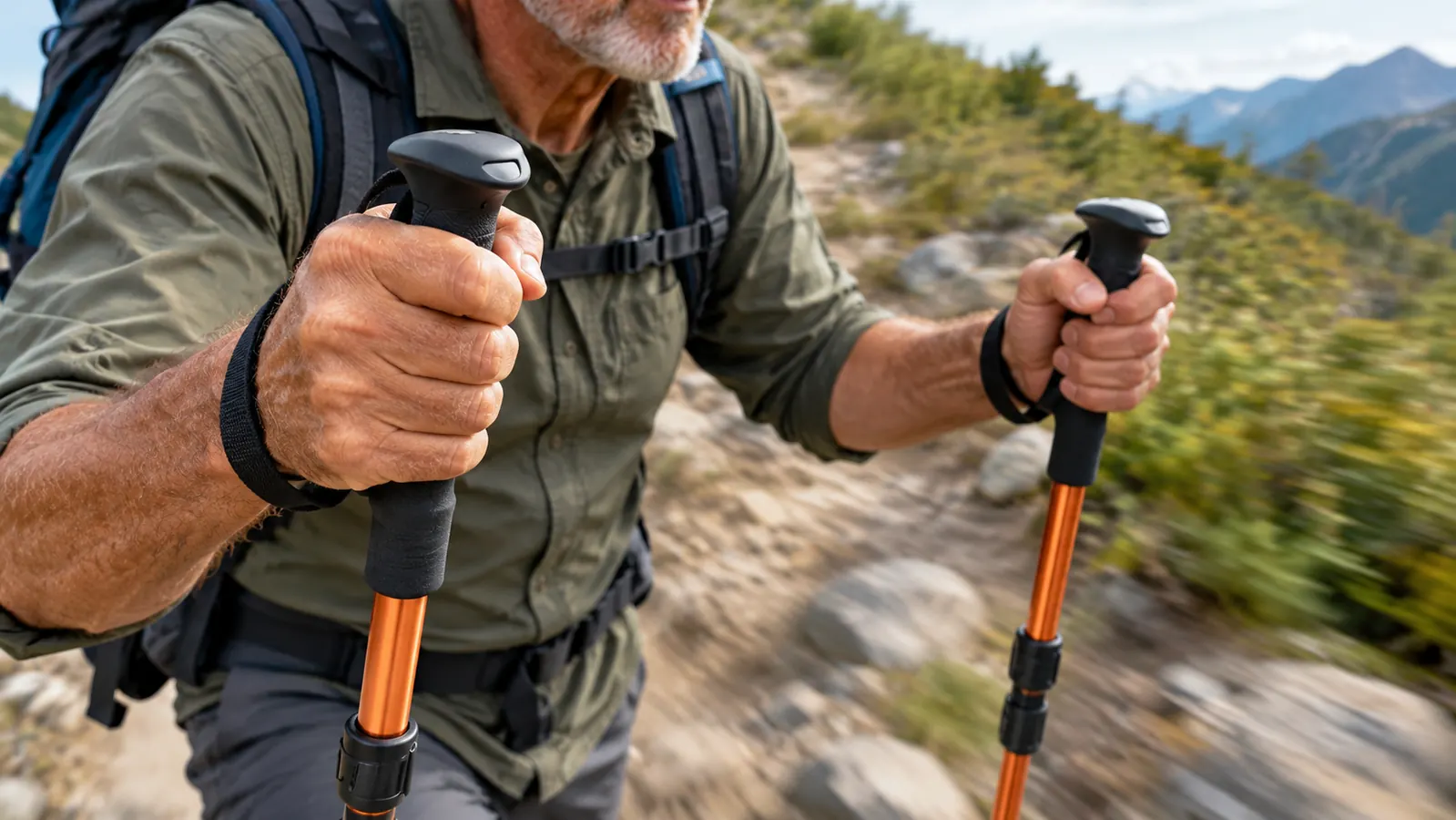
The twist locks are the part of these poles that gets the most complaints online, and I understand why. On my first trip, the lower section of the right pole slipped about half an inch during a long climb. It did not collapse completely, but it was enough to notice. I tightened the lock, and it stayed put for the rest of the day. The trick is that you have to close them firmly, more firmly than feels polite, and you have to check them after the first mile. Once I started doing that, the slipping stopped.
The honest part is that if you are used to flick locks, the twist locks will take some getting used to. Flick locks are easier to adjust on the fly. Twist locks are lighter and simpler, and that is a fair trade for the extra attention they need. Once I learned the right amount of force, I stopped having problems. I still check them at every rest stop, because I do not trust any twist lock completely. That is not a knock on these poles specifically. It is just the nature of the design, and it is the same with any twist lock I have tried.
One more thing nobody tells you: the locks work better when the pole sections are clean. Dirt and grit get into the joints, and the locks feel different. I wipe mine down after muddy hikes, and that has kept the locks predictable. It is a small habit, but it matters more than I expected. I keep a small rag in the back of my Subaru Outback just for this.
I also learned that the locks need to be loosened before you twist them. If you try to twist a fully locked section, you can torque the collar and make the problem worse. Loosen first, adjust, then tighten. That sounds obvious, but it took me a few tries to get the order right, and it made a big difference. Once I figured that out, I stopped fighting with the adjustment.
Weight, Aluminum, and the Tradeoff
The BLACK DIAMOND Trail Trekking Poles are aluminum poles, and they are not the lightest poles on the market. They are lighter than the cheap steel poles I used before, but a pair of carbon fiber poles will save you several ounces per pole. On a six-day trip, that adds up. I notice the difference most when I am carrying the poles in my hand on a flat section and not using them. For the kind of hiking I do, the extra few ounces are a fair trade for the durability.
Here is the tradeoff that most reviews skip: aluminum bends, carbon fiber breaks. I have banged these poles against rocks, caught them between logs, and once sat on them by accident at a campsite. They have a few scuffs and one small bend near the tip, and they still work fine. A carbon pole might have cracked in the same situations. For someone like me who is hard on gear, aluminum is the right choice. I would rather carry a few extra ounces than worry about snapping a pole on a remote ridge. The bend in my pole is a reminder that it worked the way it was supposed to.
The listed weight is fair for aluminum. They balance well, and the swing weight feels lower than the number on the scale. I would not want anything heavier, but I also would not trade the durability for a slightly lighter pole. That is the kind of honest tradeoff you only figure out after carrying them for a season. The numbers on a spec sheet do not tell you how a pole feels after mile eight.
When I pack for an overnight trip, the poles go into the side pocket of my TETON Sports Explorer 65L. At just over a pound for the pair, they do not change how the pack carries. I have carried heavier poles that made the whole pack feel lopsided, and these do not do that. They also do not rattle, which is more than I can say for some poles I have owned.
Grips and Straps
The grips are the part I did not expect to care about. BLACK DIAMOND uses a mix of foam and cork-like material, and they have held up well through a full season of sweat and rain. My hands do not blister with these, which is more than I can say for the rubber grips on my old poles. The grip shape is comfortable for both the standard palm-over-top grip and the lower grip you use on steep climbs. I have medium-sized hands, and the diameter feels just right. My wife Dana tried them on a car camping trip and said the same thing.
The straps are where I have a real complaint. The liner straps are fine, but they are not padded, and on a long descent with a heavy pack, they can dig into the back of your hand. I solved this by wearing light gloves on longer trips. It is not a dealbreaker, but it is the kind of thing you only learn after a few hours on the trail. If you have sensitive hands, plan for it.
The straps also take a minute to figure out. You are supposed to come up through the bottom of the strap and over the top, and the first few times I put them on wrong. Once I got the motion down, they worked well. If you are new to trekking poles, plan to spend five minutes at home practicing before your first hike. It will save you a lot of fiddling on the trail.
I have used these grips in temperatures from the high eighties down to the low forties. In the heat, the foam did not get sticky. In the cold, the material did not get hard and slippery. That even performance is something I did not expect from a grip in this class, and it is part of why I keep reaching for these poles. My hands run warm, and I never felt like I was losing my hold.
Performance on the Trail
On the descents, these poles do exactly what I need them to do. My left knee used to ache by the third mile of a downhill stretch. With the poles taking some of the load, I can hike a full day and feel only the normal tiredness, not the sharp ache. That alone is worth the money to me. I have done the same descents with and without poles, and the difference is not subtle. My left knee is the reason I bought these, and it is the reason I will keep buying this style of pole.
On the climbs, they are helpful but not magical. I use them to push off on steep sections, and they give me a little extra power. The baskets keep me from punching through soft ground, though I wish the baskets were a little larger for mud season. In wet leaves, the tips can slip if you do not plant them firmly. That is true of any pole, but it is worth saying. You still have to pay attention to where you put the tip.
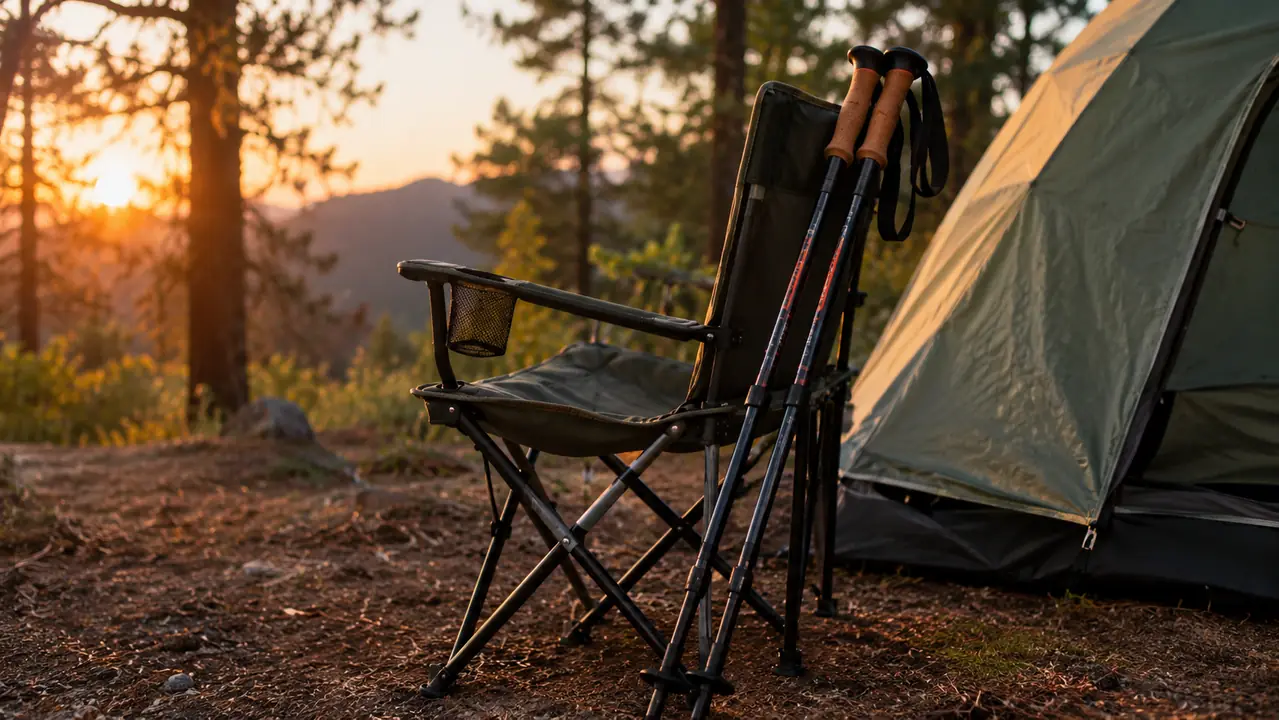
The three-section design means they collapse down to a reasonable length for packing. I put them in the side pocket of my TETON pack, and they have never fallen out. In the car, they fit easily in the back of my 2016 Subaru Outback, even with the family tent and camp chairs loaded around them. The fact that they collapse is what makes them practical for the kind of car camping and backpacking I do.
I also used them on a few muddy spring hikes where the trail turned to slick clay. The carbide tips bit into the ground better than I expected, and the baskets kept the poles from sinking too deep. On the way down, the poles gave me enough confidence to keep my pace steady instead of shuffling and bracing for a fall. That confidence is hard to measure, but it is real.
On rocky sections, the carbide tips are the difference between feeling stable and feeling like you are skating. I have caught myself on loose gravel more than once, and the poles have kept me upright every time. That is the kind of performance I did not fully appreciate until I had to trust them on a bad stretch.
What I Liked
- Comfortable grips that did not blister my hands over a full season
- Solid aluminum build that has taken real abuse without failing
- Twist locks, once you learn the right force, hold well
- Collapse small enough to fit in a pack side pocket
- Carbide tips have held up on rocky Kentucky trails
Where It Falls Short
- Twist locks can slip if you do not close them firmly enough
- Straps are not padded and can dig in on long descents
- Not the lightest poles on the market
- Baskets are a bit small for muddy conditions
Aluminum bends, carbon fiber breaks. After a full season of banging these poles on rocks, I am glad I chose the ones that bend.
Who This Is For
These BLACK DIAMOND Trail Trekking Poles are for the weekend backpacker who wants a dependable pair without spending a fortune. If you hike with a loaded pack, have knees that complain on descents, and do not mind checking a twist lock once in a while, these will serve you well. They are also a good choice if you are hard on gear and want aluminum that bends instead of carbon that cracks. I fit that description, and they have been the right tool for me.
I would also recommend them to someone who is just starting with trekking poles. The learning curve is short, the grips are forgiving, and you will not feel bad about scuffing them up. That is exactly the situation I was in a year ago, and these poles have been a good teacher. Start with a pair like this before you spend more on carbon, and you will know what you actually need.
One more thing: these poles do not make you a better hiker by themselves. They help, but you still have to plant them well and use your legs. I see people buy expensive gear and expect it to do the work. These poles will not do that. They will just make the work a little easier.
Who Should Skip It
Skip these if you need the absolute lightest pole you can carry, because carbon fiber will save you real weight. Skip them if you hate twist locks and want a flick lock you can adjust without thinking. And skip them if you are planning a thru-hike or expect to put thousands of miles on a single pair, because the straps and locks will likely wear out before the shafts do. None of that makes these bad poles. It just means they are not the right tool for every hiker.
I also would not buy these if you only hike on flat, smooth trails and never carry a pack. For that kind of walking, a lighter and simpler setup might serve you better. These poles earn their place when the trail gets steep and the miles add up. If you are not sure you will use them, borrow a pair from a friend before you buy.
One more group should probably skip these: anyone who wants a pole that is maintenance free. All trekking poles need a little care, and these need a little more because of the twist locks. If that sounds like a hassle, a flick lock pole might be a better fit.
One last thing: I have read reviews from people who had the locks fail completely on the first use. I believe them. The quality control on twist locks is not perfect, and you might get a pair that needs more attention than mine did. That is a real risk with this design, and you should know it going in. If that happens to you, return them and try again, because a good pair is worth having.
If I had to buy a pair today, I would buy these again. They are not perfect, but they are honest gear that does the job, and after a season of hard use, that is what I care about. The locks need a little patience, the straps need gloves on long days, and neither of those is enough to make me reach for something else.
Give your knees the same help mine got
After a season on the Sheltowee Trace and the Smokies, these are the poles I trust on every descent. Check today's price and current reviews on Amazon.
Amazon Check Today's Price on Amazon →