
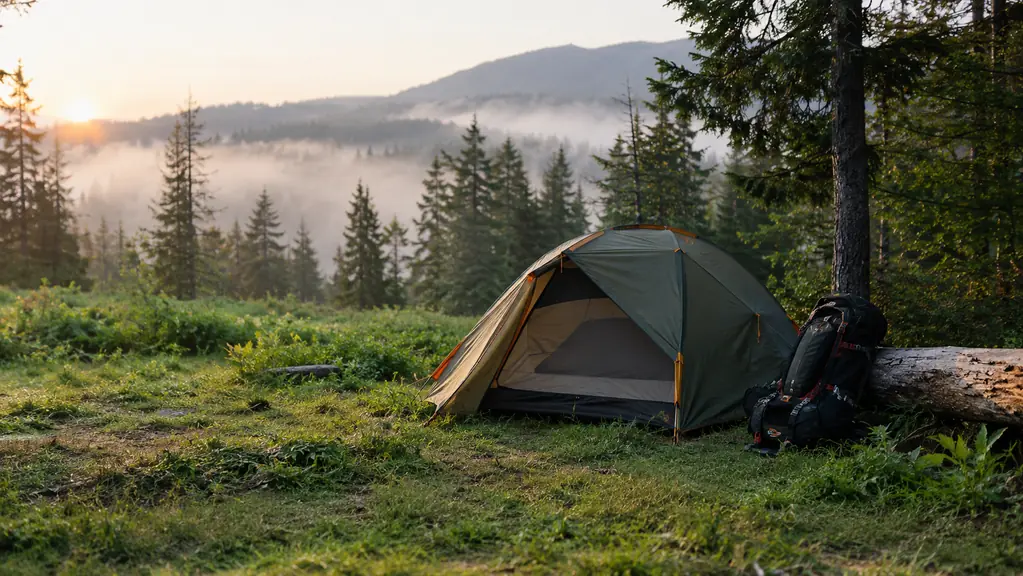
I have a rule about tent labels: when a company calls something a two-person tent, I assume one adult, one pack, and maybe a pair of boots fit comfortably. The Naturehike Cloud-Up 2 has tested that rule harder than any tent I have owned. After a full season of solo overnights across Kentucky and Tennessee, I can tell you what the product photos do not. It is a genuinely good tent. It is also not a two-person tent in the way most people mean, and that gap between the label and the reality is where this review lives.
Let me be plain about where I am coming from. I am a 54-year-old retired PE teacher who camps mostly in the Red River Gorge, along the Sheltowee Trace, and at Big South Fork, with one week a year in the Smokies. I am not a thru-hiker and I do not pretend to be one. I have a cranky left knee and a lower back that complains when a pack fits wrong, so I care about weight the way someone with a bad back cares about weight. I bought the Cloud-Up 2 with my own money in the spring and have used it on every solo trip since.
One more thing before I get into the weeds. I read a lot of reviews before I bought this tent, and most of them fell into two camps. The first camp loved it because it was light and easy to carry. The second camp hated it because it was not the tent the box promised. Both camps were right. I have no reason to flatter this tent and no reason to bury it. The Cloud-Up 2 is a great value and a great tent, and it is also a tent you have to understand. This review is my attempt to give you the understanding part.
The Quick Verdict
A spacious solo shelter with a two-person label. Buy it for what it is, not for the promise on the box, and you will be glad you did.
Amazon Check Today's Price →The short version: buy it as a solo palace, not a couple's tent
The Cloud-Up 2 is light, packs small, and includes a footprint most tents make you buy separately. If that matches the trips you actually take, it is an easy yes.
Amazon Check Today's Price on Amazon →How I've Used It
The tent has been on four trips since spring. Two overnights at the Red River Gorge, one weekend at Big South Fork, and one two-nighter on the Sheltowee Trace. It has seen a hard thunderstorm, a night of steady drizzle, one genuinely windy evening on an exposed ridge, and a lot of humid Kentucky air. That is not a brutal test by mountain standards, but it is a fair test of what most weekend backpackers in the Southeast will actually hand this tent.
I carry it in a TETON Sports Explorer 65L pack, along with a Therm-a-Rest Z Lite Sol pad and a Sawyer Squeeze for water. The tent rides in its stuff sack at the bottom of the pack, and honestly, I stopped thinking about it after the first mile. The listed weight is a hair over three pounds, and for the first time in a while, the number on the spec sheet matched how the pack felt on my back. My Black Diamond trekking poles do more work for my knee than the tent ever will, but the tent does not add to the problem, which is the highest compliment I can pay a shelter.
I took it on one car-camping trip with my wife Dana as well, mostly as a gear test. She slept in the big family tent and I spent the night in the Cloud-Up 2 to see how it felt on flat ground with room to spread out. It was the same tent, just easier. The lesson stuck with me: this tent rewards you when you give it space and punishes you when you crowd it.
The '2 Person' Rating Needs a Translator
Here is what nobody tells you until you are inside it: the Cloud-Up 2 fits two adults the way a sleeping bag fits two adults. It is technically possible, and it is not comfortable. Two regular-width sleeping pads will lie side by side with no gap and no spare room. If either person is broad shouldered, you will be touching shoulders all night. The ceiling is fine in the center and slopes hard at the foot, so the person on the outside edge will feel the wall against their face.
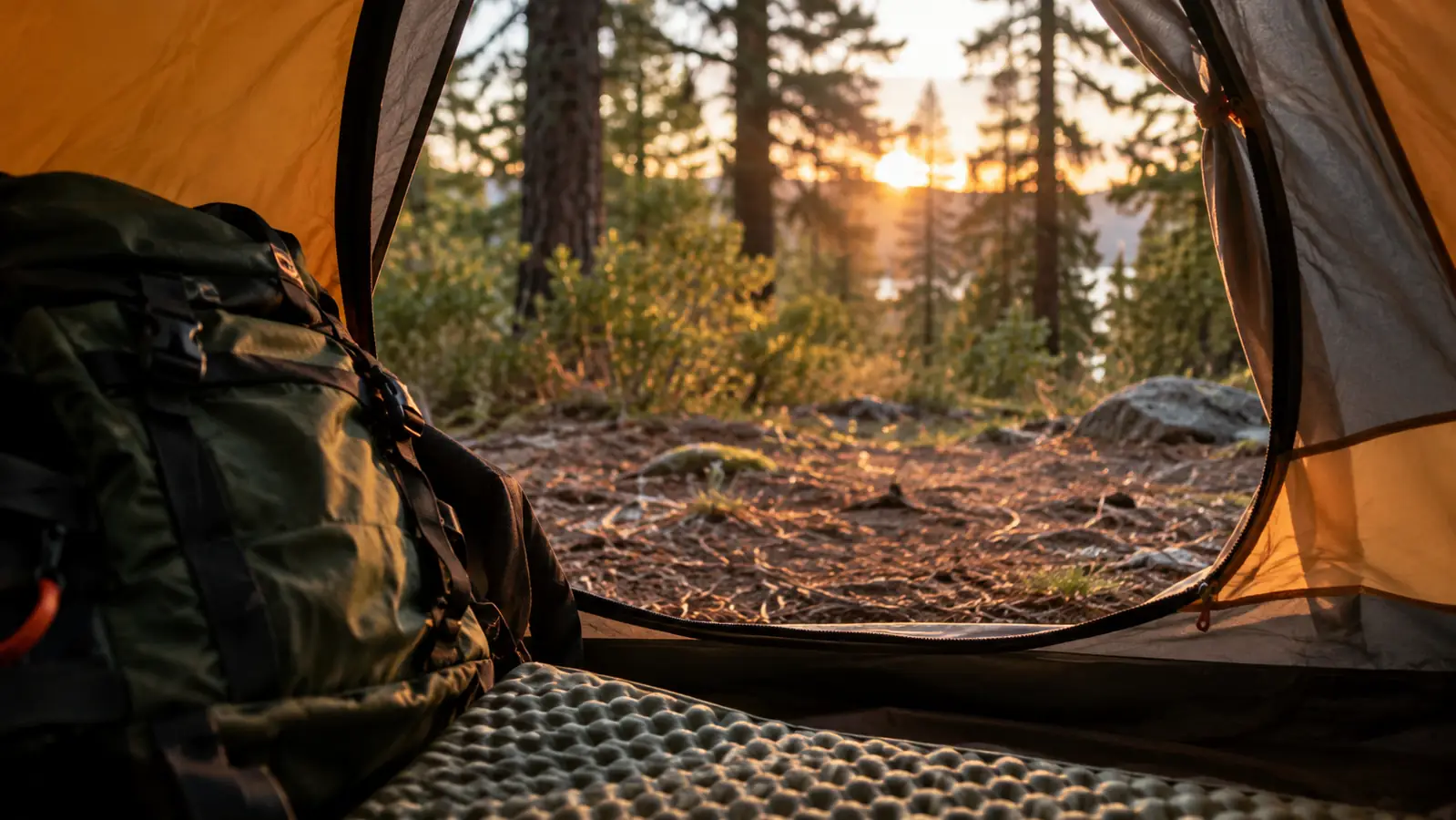
For a solo hiker, that same space is a palace. I spread my pad in the middle, keep my pack in the vestibule, and have room to sit up, change layers, and read without bumping the walls. That is the honest use case for this tent. It is a one-person tent with a two-person floor plan, and once you accept that, the whole thing makes sense.
If you are shopping for two, measure your pads before you buy. Two twenty-inch pads fit. Two wide pads do not. And if you and your partner are used to a big family tent, this will feel like a coffin. The Cloud-Up 2 is a shelter for moving through the woods, not for lounging.
The other thing nobody tells you: the floor plan works best if you sleep diagonally. Lying straight, my feet were against the wall. At an angle, I had room to stretch. It is a small trick, but it turns a cramped night into a comfortable one, and it is the kind of thing you only figure out after a few nights inside.
Condensation Is the Real Enemy, Not Rain
The tent handles rain fine. I sat through a real thunderstorm at Big South Fork, the kind where the rain sounds like gravel on the fly, and stayed dry. The fly is coated and the seams have held. Rain is not the problem. Condensation is the problem, and nobody warns you about it.
On humid Kentucky nights, the inside of the fly collects water like a glass of iced tea sweats. If you brush against the fly in the morning, you get a cold shower down the back of your neck. The mesh inner keeps you off the fly if you sleep centered, but the moment you roll toward the wall, you will feel it.
The fix is ventilation, and this is where the Cloud-Up 2 asks you to learn its habits. You have to open the vents and crack the doors, even when it feels wrong. On the driest nights I leave both doors unzipped at the top a few inches and the difference is night and day. Learn the venting dance and you will wake up dry. Skip it and you will wake up damp and grumpy.
This is not a defect unique to Naturehike. Every light double-wall tent does this. But the Cloud-Up 2 is light enough that the fabric is thin, and thin fabric condenses fast. I would rather know that going in than learn it at 2 a.m.
I also learned to dry the tent before I pack it. A wet tent stuffed into its sack will smell by the second day, and the Cloud-Up 2's thin fabric holds moisture. On sunny mornings I drape the fly over a branch and let it bake while I eat breakfast. It adds ten minutes to my morning, and it has kept the tent from getting that sour tent smell.
One trick that helped me more than any other: I stopped pitching in the lowest spot I could find. Low ground is cool ground, and cool ground pulls moisture. Pitching ten feet higher on a slight rise made a measurable difference on the same humid nights.
Setup Gets Easier, and the Footprint Is the Best Feature Nobody Mentions
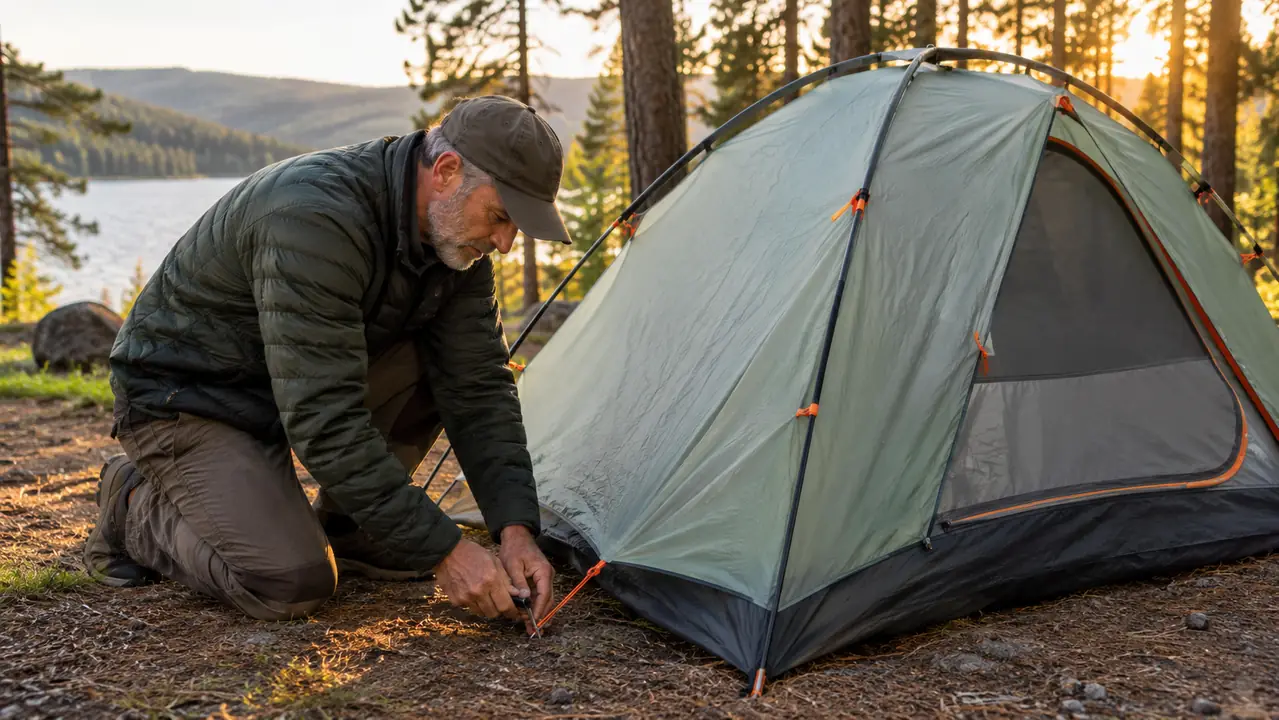
First setup took me close to twenty minutes and involved me reading the instructions twice. The poles are color coded and the clips match, which helps, but the sequence still took a couple of tries. By the third trip I could have it up in under ten minutes, and by the end of the season I could pitch it in the dark, which is the real test.
The included footprint is the feature nobody talks about, and it is the best part of the deal. Most tents in this weight class sell the footprint separately. Naturehike throws it in, and it changes how you use the tent. On wet days I stake the footprint, set the poles, and drape the fly over the top. The inner stays in the stuff sack, completely dry, and I clip it in after the rain has moved on. That is a genuine fast-pitch system, and it has saved me twice.
The tradeoff is that you have to stake the tent properly. The Cloud-Up 2 is not a tent you can toss down and crawl into. The fly needs tension to stay off the inner, and the footprint needs all four corners down. The stakes that come with it are light, and I bent one on the rocky ground at the Gorge. Carry a couple of spare stakes and you will be fine.
One more setup note: the pole clips are plastic, and they feel fragile the first time you snap them. They have held fine all season, but I treat them with respect. I clip from the bottom up and unclip the same way, and I have not broken one. If you yank on them, you might.
One more thing about the fast pitch: it only works if you stake the footprint tight. A loose footprint means a loose fly, and a loose fly means flapping and sagging. I stake all four corners, then the two side points, and only then do I lift the poles.
The Materials Are Thin Because the Weight Is Low
Here is the honest trade at the heart of this tent: to get the weight down, Naturehike uses thin fabric. The fly and floor are light nylon, and it shows when you handle it. You cannot be careless with it. I clear my site of sticks and pinecones before I pitch, and I use the footprint every single night, not just on wet ones. The bathtub floor is a real feature, but it is thin, and a sharp rock under the pad will find it.
I have not ripped mine, but I have come close. A branch I missed snagged the fly at the Sheltowee Trace and left a small scuff. It did not leak, and the coating held, but it was a reminder that this is a featherweight shelter, not a tank. If you are hard on gear, this tent will show it.
The zippers are fine. They are not luxury zippers, and they snag occasionally if you are rough with them, but they have not failed. The stuff sack is another story: it is tight. The first time I tried to get the tent back in, I stood there like a fool for five minutes. Roll it tight and it fits. Fold it wrong and it will not.
The footprint also does double duty as a ground cloth for the vestibule area, which keeps mud out of the tent. I lay it flat, pitch the tent on top, and fold the edges under. It has kept the floor clean on every trip, and a clean floor is a dry floor.
I will also say the fabric has broken in nicely. The first few nights it felt stiff and crinkly, like a new rain jacket. After a season it has softened, and the tent packs easier now than it did in May. That is a small thing, but it is the kind of detail long-term owners notice.
The Cloud-Up 2 is a one-person tent with a two-person label. Buy it for what it is, and it will serve you for years.
How It Handled the Weather I Actually Met
The worst night I gave it was a gusty one at Big South Fork, on a ridge with no shelter. The wind rattled the fly and the tent flexed with each gust, which is what a dome is supposed to do. Nothing broke, nothing bent, and I slept. I would not take this tent above treeline in a serious storm, but for the Southeast, where most of my storms are rain and thunder, it has been enough.
The rain test was a night on the Sheltowee Trace where it drizzled from dusk to dawn. The footprint kept the floor dry, the seams held, and the only water I found in the morning was condensation on the inside of the fly, which I have already told you about. For a tent that weighs a hair over three pounds, that is a good report card.
One honest note: the vestibule space is small. It is fine for a pack and a pair of boots, and that is about it. If you need to cook under cover or store a wet pack inside, you will be disappointed. I keep my pack in the vestibule and my shoes under the fly, and that works.
The one weather condition I have not tested it in is snow, and I will not. This is a three-season tent, full stop. The mesh inner is not built for winter, and the thin fly is not built for snow load. If you want a winter tent, this is not it, and no amount of staking will change that.
The other thing I will say about weather is that the tent is louder than I expected in wind. The thin fly snaps and flutters, and it took me a night to get used to it. It is not a problem, just a sound. Earplugs or a podcast handle it fine.
What I Liked
- A hair over three pounds, and the weight feels honest on the trail
- Included footprint that doubles as a fast-pitch rain cover
- Color-coded poles and clips make setup easy after a few tries
- Solid rain and wind performance for a featherweight shelter
- Roomy for one adult, with space for a pad, pack, and reading light
- Packs down small enough to disappear in a 65L pack
Where It Falls Short
- The '2 person' rating is generous; two adults are cozy at best
- Condensation builds fast in humid weather unless you vent carefully
- Thin fabric needs care and a clean site every night
- Included stakes are light and bend on rocky ground
- The stuff sack is tight and takes practice to repack
- Small vestibule space, too tight for cooking or storing a wet pack
Who This Is For
The Cloud-Up 2 is for the solo hiker who wants a little more room than a bivy or a one-person coffin, without paying for a two-person palace. It is for weekend backpackers in the Southeast who carry a 65L pack, sleep on a foam pad, and want a tent that disappears from their mind after the first mile. It is for anyone who values an included footprint and a fast-pitch trick in the rain. If that sounds like you, this is an easy tent to love.
Who Should Skip It
Skip it if you actually camp as two people. A couple who wants to sleep side by side will find it cramped, and a family will not fit at all. Skip it if you are hard on gear and do not want to think about site selection, stakes, and venting every night. Skip it if you need a winter shelter or a tent that can take a beating above treeline. And if you are tall and broad shouldered, try to borrow one before you buy, because the walls slope hard at the foot and you will feel them.
Still weighing it? That is fair. The honest answer is in the details above.
If a light, roomy solo shelter with an included footprint matches the trips you actually take, the Cloud-Up 2 is a strong pick. If you mostly camp with a partner, keep looking.
Amazon Check Today's Price on Amazon →